| Test case | President Xi Jinping's push to spread the wealth has sent shock waves through the Chinese economy, triggering speculation Beijing will reverse the reforms that lifted incomes nationally. To understand what Xi envisions for "common prosperity," look to a pilot program in the wealthy province of Zhejiang, home to 65 million people and some of China's most successful private companies. - An American chamber of commerce in the same Chinese city that saw a U.S. consulate shut amid political tensions is working to restart operations.
- Didi Global is helping workers establish their first union, a move other tech giants may follow as China imposes rules to protect blue-collar workers from exploitation.
Emergency response | After Hurricane Ida wrecked transmission lines and left New Orleans in darkness, infrastructure advocates see an opportunity to rebuild an electricity grid that's more resilient to increasingly violent storms from the Gulf of Mexico. A $550 billion infrastructure bill in Congress that's a key piece of President Joe Biden's economic agenda and could help pay for improvements may gain more Republican support as a result, one GOP senator said.  A billboard damaged by Hurricane Ida in Luling, Louisiana. Photographer: Luke Sharrett/Bloomberg Government in waiting | With the last U.S. troops off Afghan soil, the Taliban have indicated they're ready to announce a new government under the leadership of their top spiritual leader in the next few days. Meanwhile, U.K. Foreign Secretary Dominic Raab will be questioned by lawmakers today over the chaotic evacuations from Kabul and the failure to foresee the rapid collapse of the Afghan military. 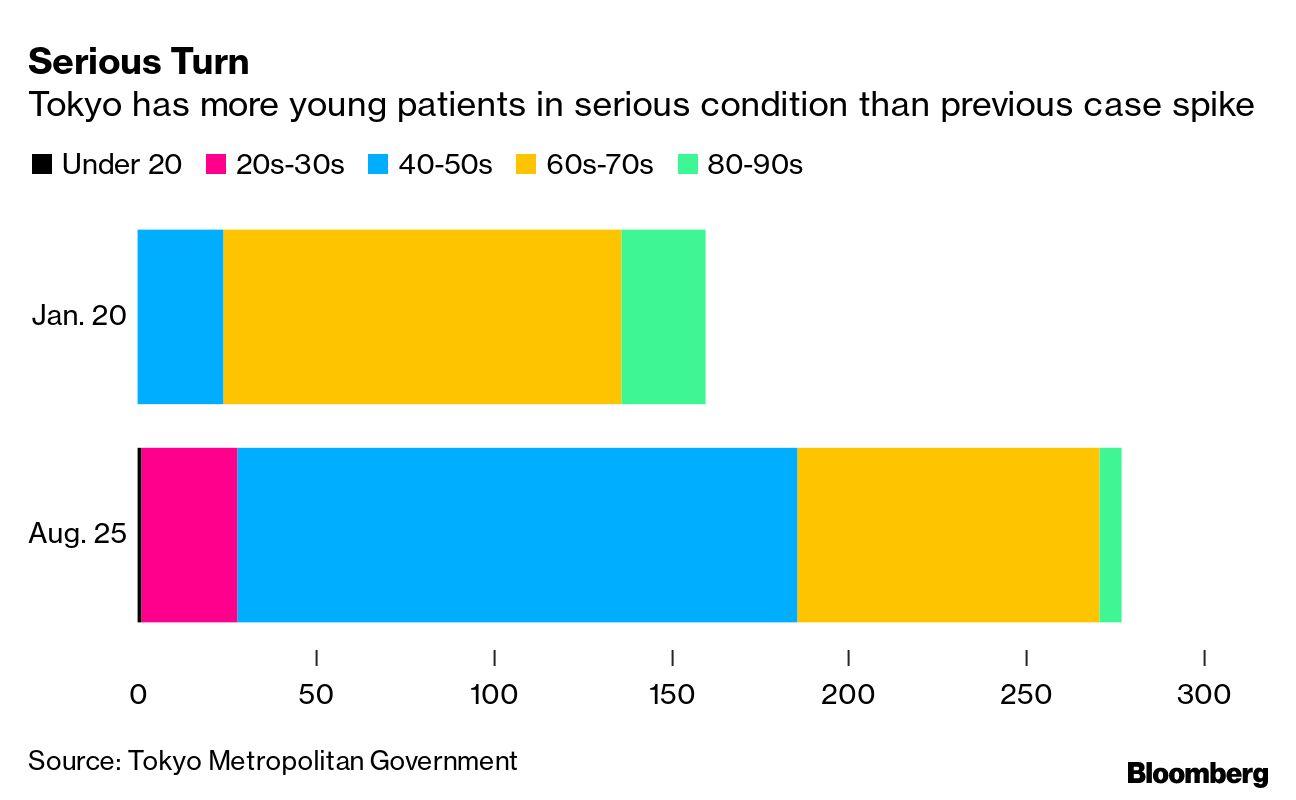 Japan's current Covid wave has mostly affected younger people, reflecting both the efficacy of its vaccination program among the elderly and the pitfalls of a slow rollout that hasn't reached most youth. In many areas of Tokyo, less than 20% of those in their 20s and 30s are fully vaccinated.
Party calculations | With political loyalties in flux after 16 years under Chancellor Angela Merkel, coalition building in Germany is more complex than ever, Arne Delfs reports. Five parties stand a chance of playing a role in government after the Sept. 26 elections, leaving whichever leader wins the vote facing a range of choices for potential partnerships. Election splurge | Canadian Prime Minister Justin Trudeau is set to release a campaign platform today promising tens of billions of dollars in spending on new initiatives that would be fully financed by a tax-revenue windfall from an expanding economy. Canadians vote on Sept. 20, and polls show the Liberals in a tough fight to stay in power as they are locked in a statistical tie with the main opposition Conservative Party. - Biden will reassure Ukrainian President Volodymyr Zelenskiy that the U.S. is committed to countering Russian expansion in the region as the leaders meet for the first time today at the White House.
- Democrats on the House committee in charge of turning Biden's tax plan into law are at odds over increasing the capital gains tax, with some opposing raising the rate on investment earnings for those making more than $1 million to 39.6%.
- A Texas law barring abortion after the sixth week of pregnancy took effect at least temporarily today as the U.S. Supreme Court deliberated over a bid by clinics and doctors to block the measure while a legal challenge goes forward.
- Zambian President Hakainde Hichilema said in an interview his government had uncovered a "bigger hole" in the nation's finances than previously thought as it prepares to seek a bailout from the International Monetary Fund.
- Iran's new government suggested that formal nuclear talks may not restart until November, casting doubt on a deal with world powers happening this year.
And finally ... When an explosion of hundreds of tons of ammonium nitrate devastated a huge swathe of Beirut last year, the damage seemed insurmountable. But as Lin Nouheid reports, within days a group called Bebw'shebbek, Arabic for Door and Window, was formed, helping repair the city's shattered communities and damaged homes. Now they're using authentic materials in a capital where red-roofed Ottoman-era jewels are often demolished to make way for luxury towers. 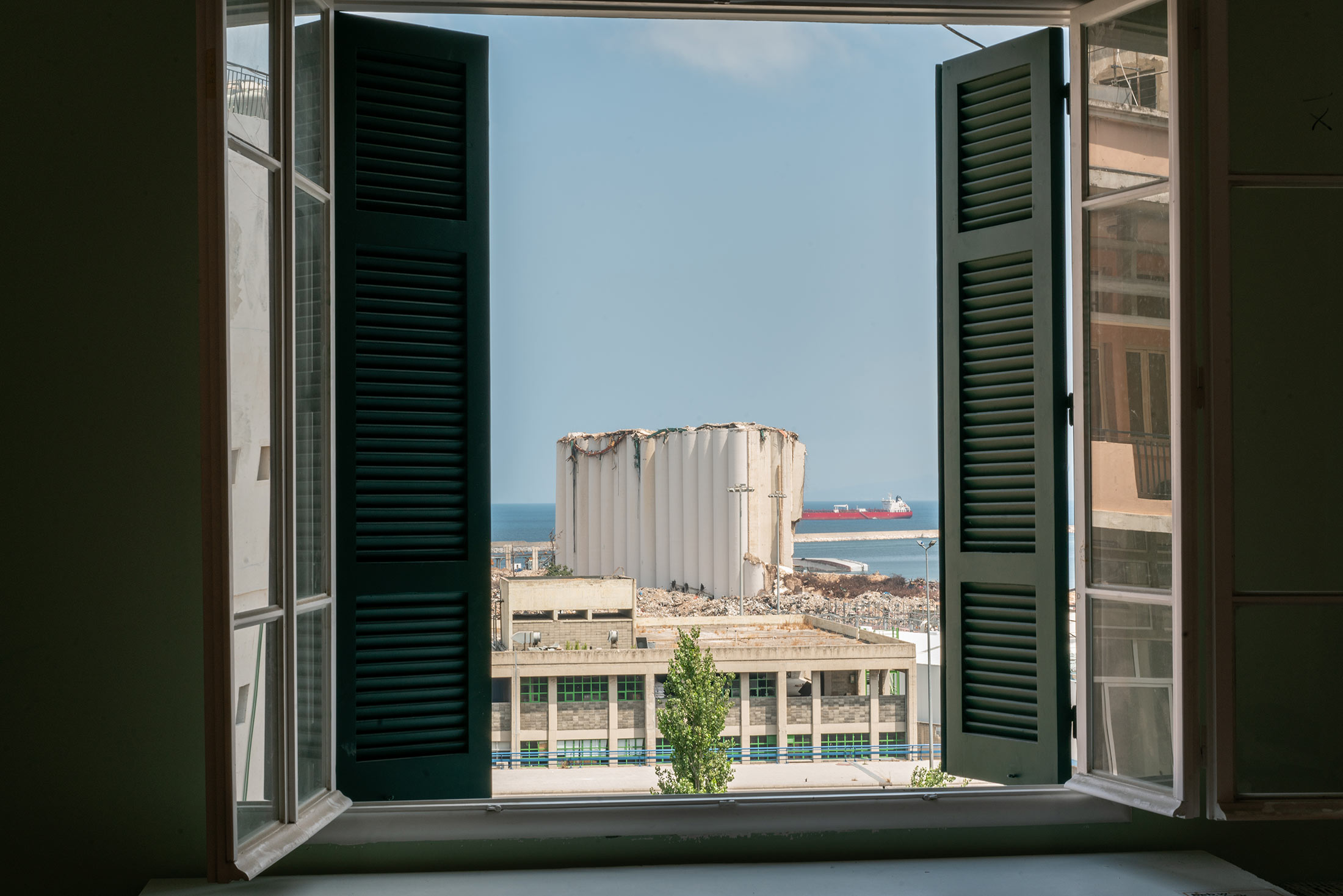 A grain silo at the Port of Beirut. Photographer: Manu Ferneini for Bloomberg Businessweek
| 





Post a Comment