| Pressure is increasing on managers of ESG-labeled investment funds to show they're being truthful with customers about what they're selling. The heat was really turned up last week when the U.S. Securities and Exchange Commission and BaFin, Germany's financial regulator, initiated a probe into allegations that Deutsche Bank AG's DWS Group asset-management arm has been misstating the environmental—and possibly the social—credentials of some of its ESG-labeled investment products. Regulators have signaled the review is at an early stage, and DWS has rejected claims it overstated ESG assets. Since then, researchers have raised questions about the credentials of money managers who claim they are marketing funds designed to address the climate crisis and social injustice. A London-based nonprofit called InfluenceMap said more than half of climate-themed funds are failing to live up to the goals of the Paris Agreement. Christiana Figueres, former executive secretary of the United Nations Framework Convention on Climate Change, said the world's sovereign wealth funds will be on the wrong side of history if they cling to strategies that don't acknowledge how rapidly the planet is warming. Figueres didn't accuse wealth funds of greenwashing, but she bemoaned what she said was the industry's failure to embrace strategies that commit to a lower carbon footprint. The timing of these comments is troubling for an industry that has ballooned to $35 trillion of assets, with many money managers betting that investors will keep pouring more money into funds marketed as adhering to the best environmental, social and governance principles. Marketed being the key word. The reality, however, is quite different. InfluenceMap found that 55% of funds marketed as low carbon, fossil-fuel free and green energy exaggerated their environmental claims, and more than 70% of funds promising ESG goals fell short of their targets. "As the number of ESG and climate-themed funds has exploded in recent years, so too have concerns among investors and regulators about greenwashing and transparency," said Daan Van Acker, an analyst at InfluenceMap. The SEC formed a task force in March aimed at investigating potential misconduct related to companies' sustainability claims. Gary Gensler, who took over the agency in April, has said his staff is working on a rule to boost climate disclosures by stock issuers, and that the regulator remains focused on ESG issues. 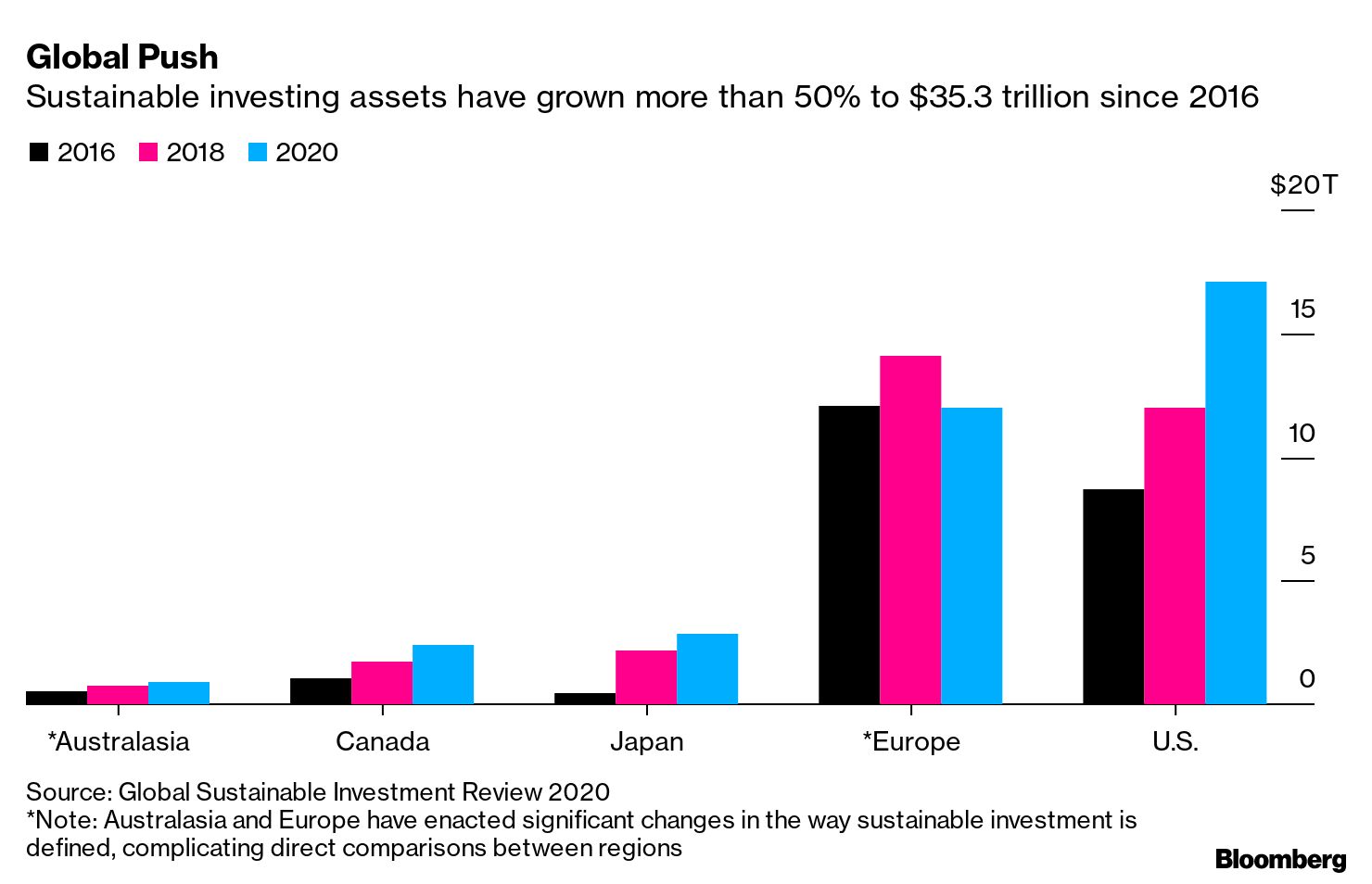 In a recent report, the Global Sustainable Investment Alliance erased $2 trillion from the European market for sustainable investments after anti-greenwashing rules were introduced in March by the European Union. The Sustainable Finance Disclosure Regulation, or SFDR, demands that fund managers evaluate and disclose the ESG features of their financial products. For ESG, there are now "light green" Article 8 funds, which are defined as those that actively promote environmental or social characteristics, and "dark green" Article 9 funds, which have sustainable investment as their main objective. Both groupings are subject to higher standards of disclosure under the SFDR. There aren't yet similar requirements in the U.S., so it's uncertain how many true-green ESG funds there really are. At the end of 2020, sustainable assets totaled about $12 trillion (after GSIA's decision) in Europe, compared with closer to $17 trillion in the U.S.
Given the shrinkage in Europe, the U.S. figure may see a similar reduction when more regulatory rigor is brought to bear. 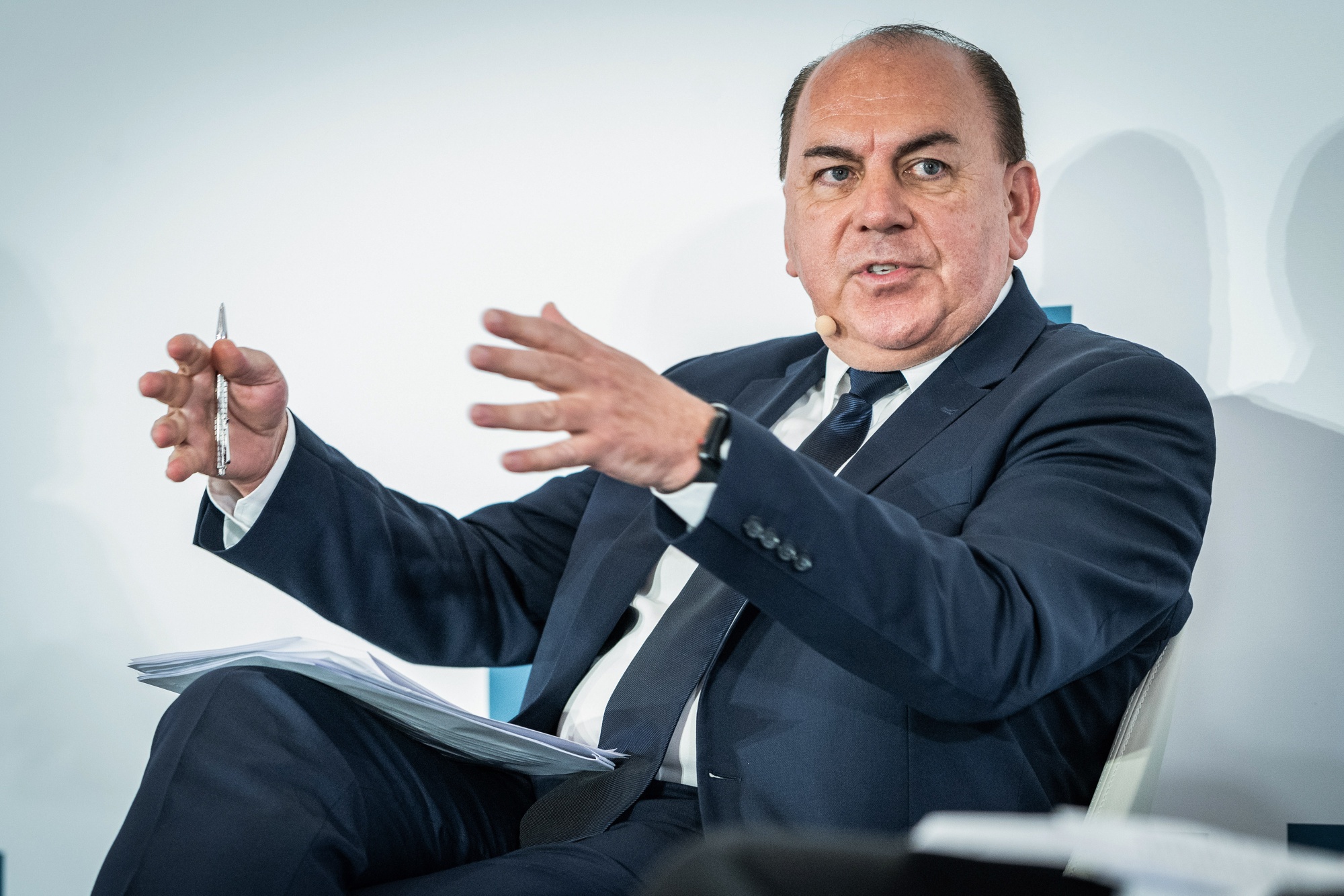 Axel Weber, chairman of UBS Group AG Photographer: Peter Juelich/Bloomberg Bloomberg Green publishes the ESG-focused newsletter every Wednesday, providing unique insights on climate-conscious investing. Like getting the Green Daily newsletter? Subscribe to Bloomberg.com for unlimited access to breaking news on climate and energy, data-driven reporting and graphics, Bloomberg Green magazine and more. You can read today's newsletter on our website here. HBCUs—The Path to Prosperity: Systemic barriers have persisted when it comes to philanthropic support for historically Black colleges and universities (HBCUs) and organizations. Join Bloomberg on Sept. 15 when we bring together leaders from government, higher education, philanthropy and business to discuss how these institutions can get the support they need to keep educating and uplifting diverse talent. Sponsored By UNCF. Register here. | 




Post a Comment