Header Ads

Immunity hurdle

One of the biggest arguments from Covid-19 vaccine skeptics was that if other people were inoculated they wouldn't need to be. Herd immunity — a magical point where Covid gets stopped in its tracks — would protect them.

But the longer the virus circulates, the bigger the risk that mutations will wipe out the sacrifices made in the war against the pandemic.

New data suggest that's already happening. The Infectious Diseases Society of America has warned the delta variant is twice as transmissible as the initial strain, pushing the required threshold for herd immunity to potentially 90% of the population of a country.

In the U.K., researchers have said new vaccines may be needed as the effectiveness of the current shots falls, while delta has prompted some countries such as Indonesia to shift away from the goal of herd immunity entirely.

Fully immunized people are still far less likely to catch the virus than those who aren't, and are less likely to suffer symptoms or infect others.

But only 13% of people are fully vaccinated globally, leaving poorer nations facing rising death tolls and the risk of becoming cauldrons for further virus mutations.

After months of hesitation, officials are taking action. Yesterday, New York followed France's lead to become the first U.S. city to require proof of vaccination for workers and customers of indoor restaurants, gyms and other venues. Companies from Walmart to BlackRock are demanding their workers get shots.

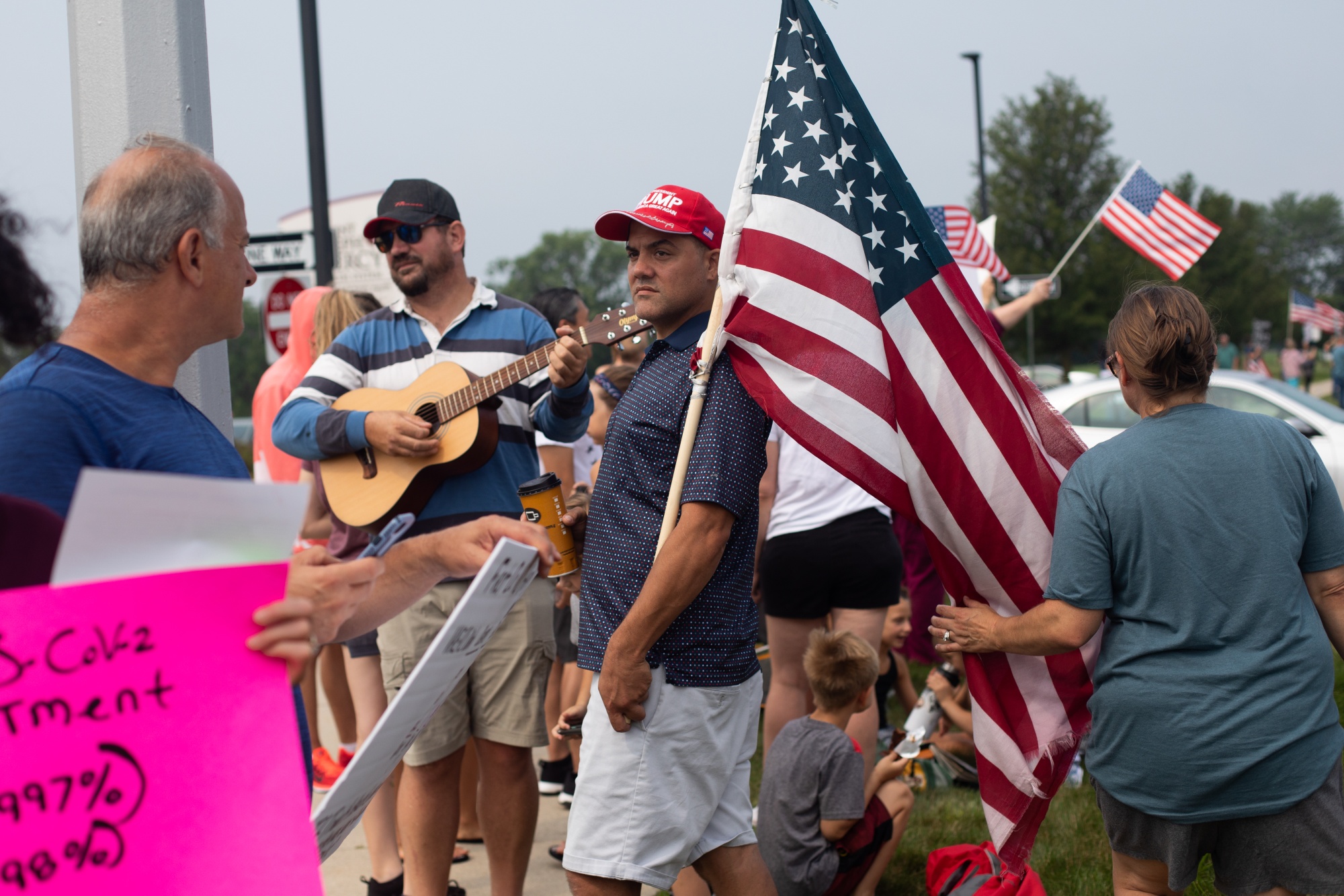
While backed by science, those moves will probably raise political risk, with citizens tired of lockdowns and objecting to being compelled to get vaccinated. There have already been protests in countries from the U.S. and France to Slovakia and Australia.

The months to come will bring tough decisions from governments around the globe on when, and whether, collective imperatives trump individual rights. Michael Winfrey

Protesters against mandatory vaccinations for healthcare workers in Michigan in July.

Photographer: Emily Elconin/Bloomberg

Click here to follow Bloomberg Politics on Twitter and tell us how we're doing or what we're missing at balancepower@bloomberg.net.

Global Headlines

Rickety state | The poor quality of America's highways, rail lines, and ports is causing delays in the arrival of imports vital to production, leaving it at a competitive disadvantage to the likes of Europe and China. As Mike Dorning explains, business leaders and officials are hoping Congress can deliver a major infrastructure investment package after years of political bickering.

Gulf tensions | A hijack of a ship in a major Middle East shipping route has ended, the British Navy said, days after a deadly drone attack on a tanker in the same area that the U.S. and its allies blamed on Iran. The events have stoked tensions in waterways vital for oil markets and come as Iran installs an ultraconservative president and weighs when to reenter talks with world powers over its nuclear program.

Spreading curbs | China's regulatory crackdown is now hitting even the most compliant billionaires, Venus Feng reports, with Tencent's mild-mannered boss Pony Ma losing more paper wealth over the past nine months than Jack Ma, the combative co-founder of Alibaba.

  • State media toned down criticism of the video-game industry today after a harshly worded piece triggered a plunge in shares of Tencent and similar companies.
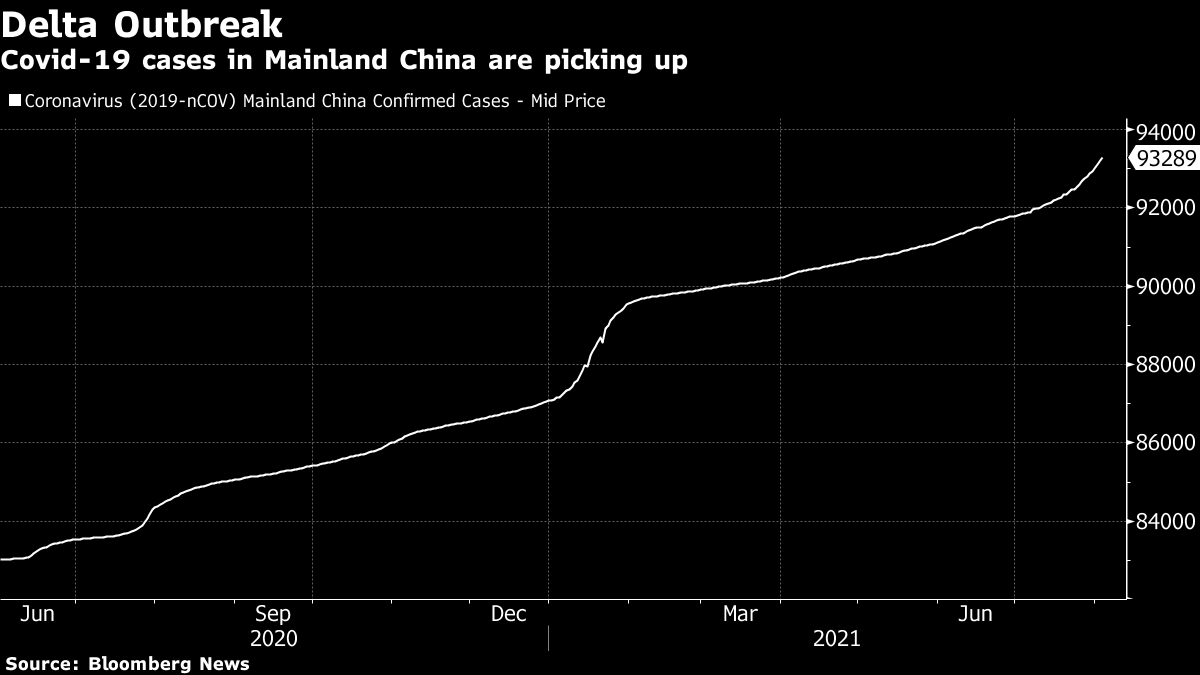
China's broadest Covid-19 outbreak since the beginning of the pandemic in late 2019 is hampering tourism and spending during the peak summer holiday, prompting analysts to review their economic-growth projections.

Best of Bloomberg Opinion

Final stage | Huawei's chief financial officer, Meng Wanzhou, faces long odds as her fight to avoid extradition to the U.S. enters its final phases. Her 2018 arrest during a routine stopover in Vancouver triggered an unprecedented diplomatic impasse between China, the U.S. and Canada and underscores the efforts by Washington to contain the technology giant it has designated a national security threat.

Defiant voice | Belarus opposition figure Maria Kalesnikava, who ripped up her passport to prevent officials deporting her, is on trial in closed court today as President Alexander Lukashenko steps up attempts to crush dissent over disputed elections held nearly a year ago. She and Maksim Znak, a lawyer and fellow activist, risk up to 12 years in prison on extremism charges.

What to Watch

  • U.S. President Joe Biden called on Andrew Cuomo to resign after a report by the state's attorney general found the New York governor sexually harassed multiple women.

  • A candidate endorsed by Donald Trump won a special Republican primary for a U.S. House seat in Ohio yesterday, bolstering the former president's influence heading into the 2022 congressional races.
  • The U.K. is considering blocking a takeover of Arm by U.S. chipmaker Nvidia due to potential risks to national security, sources say.
  • Biden has quelled for now a brewing confrontation with progressive Democrats with a new moratorium on evictions during the pandemic, but the order invites a legal fight the government may lose.
  • Malaysian Prime Minister Muhyiddin Yassin met the nation's monarch, saying afterward he has the numbers to remain premier and there is no reason for him to resign.

And finally ... Weather station 61223 went silent on April 1, 2012 after faithfully recording data on the temperature, wind and rainfall in the legendary city of Timbuktu for 115 years, Laura Millan Lombrana writes. The loss of the station as rebel Tuareg fighters took over the area was keenly felt by scientists trying to better understand the impact of global warming on the world's most data-sparse continent, and the consequences for the people of Mali were tragic.
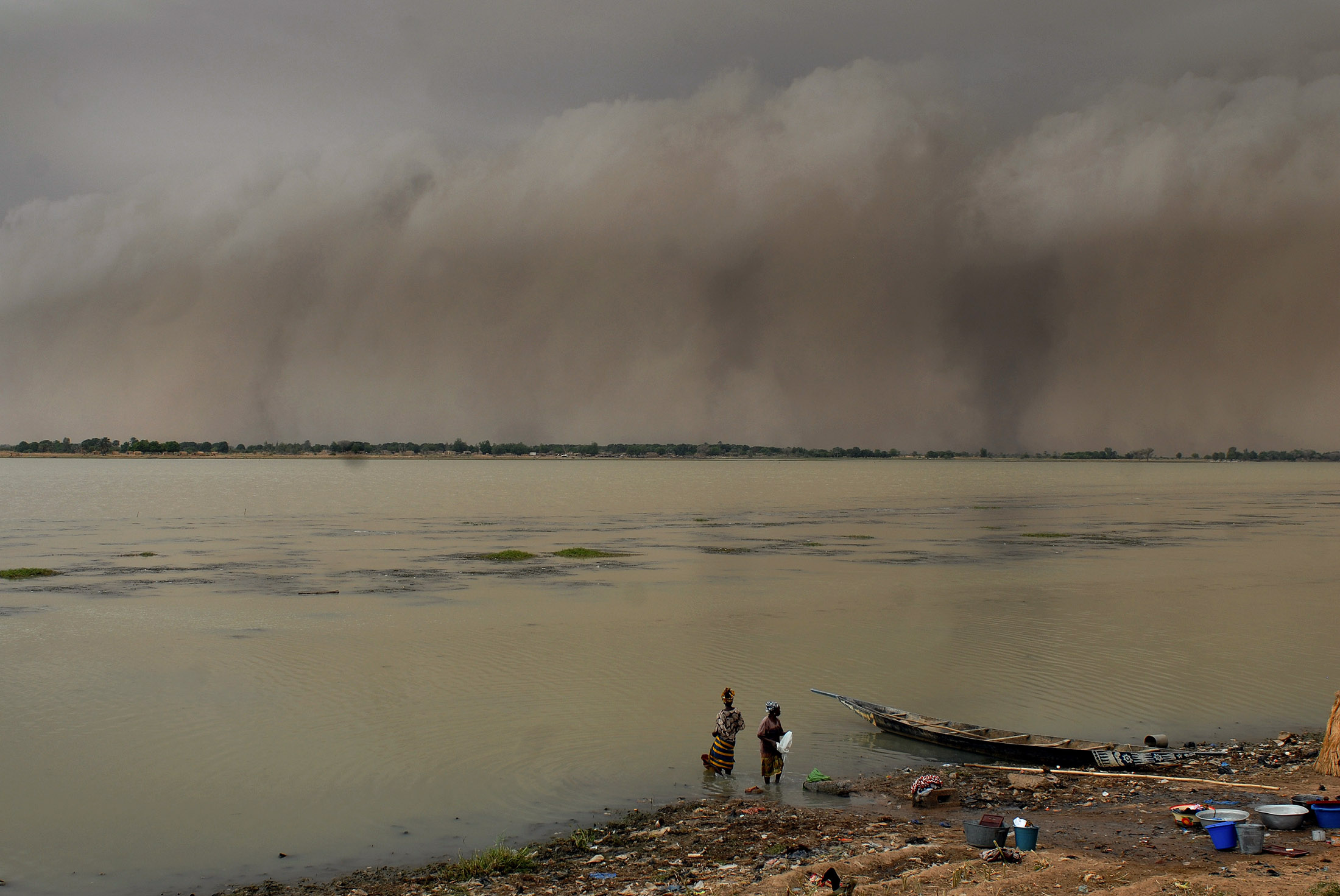
A sandstorm on the Niger river in Segou, Mali.

Photographer: Eric Vandeville/Gamma-Rapho


No comments