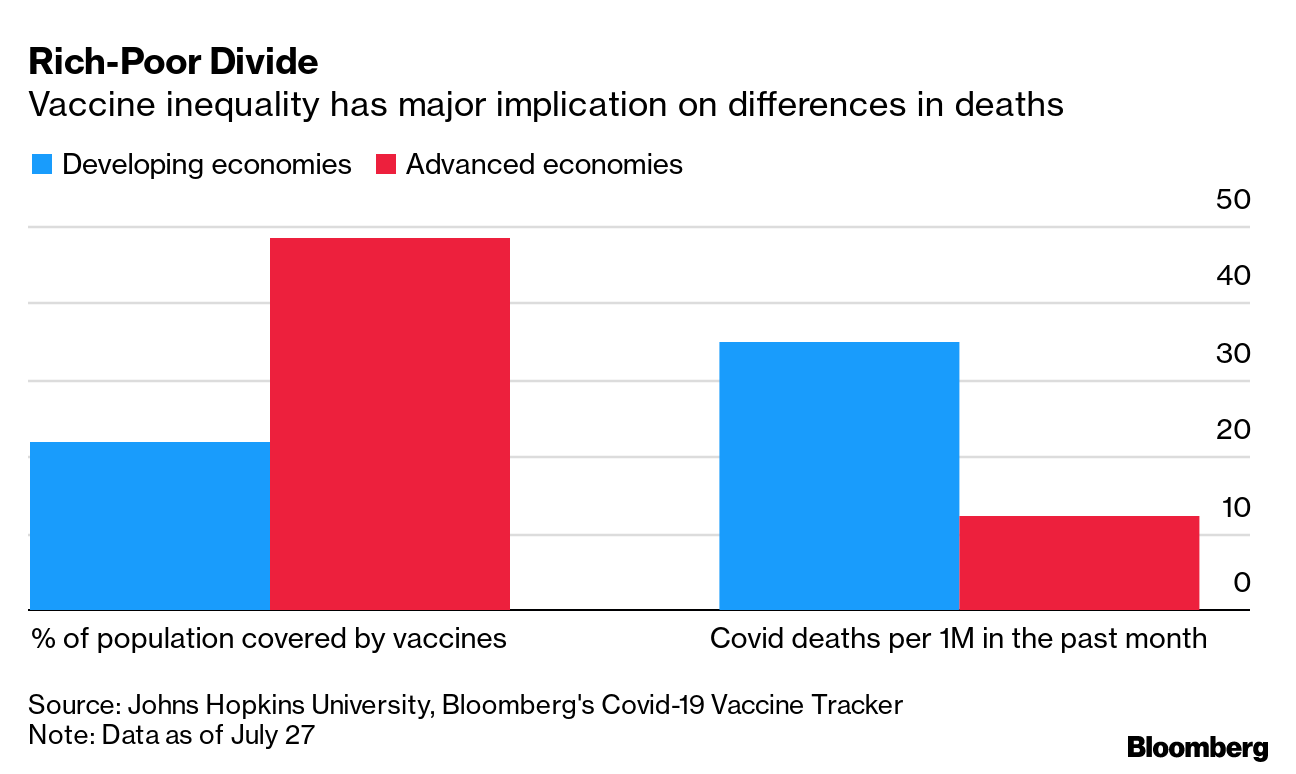
 Masks are back. The U.S. Centers for Disease Control revised its mask-wearing guidance this week, advising even fully vaccinated people to wear masks in some situations. The new protocols are yet another reminder that coronavirus is still a very real health risk for plenty of people, vaccinated or otherwise, and those risks remain unevenly distributed.
For people working remotely — largely white-collar professionals — tighter restrictions and mask mandates are small beer. For anyone who can't work from home, or who's being strongly encouraged to return to the office, it's the opposite.
Nowhere is this more apparent than in the U.K., which celebrated "Freedom Day" on July 19, lifting mask mandates and opening most indoor venues. The re-opening coincided with a surge in Covid cases and what people are calling a " pingdemic," after the National Health Service required more than 500,000 people to self-isolate for 10 days because they'd come into close contact with someone who'd tested positive for coronavirus. 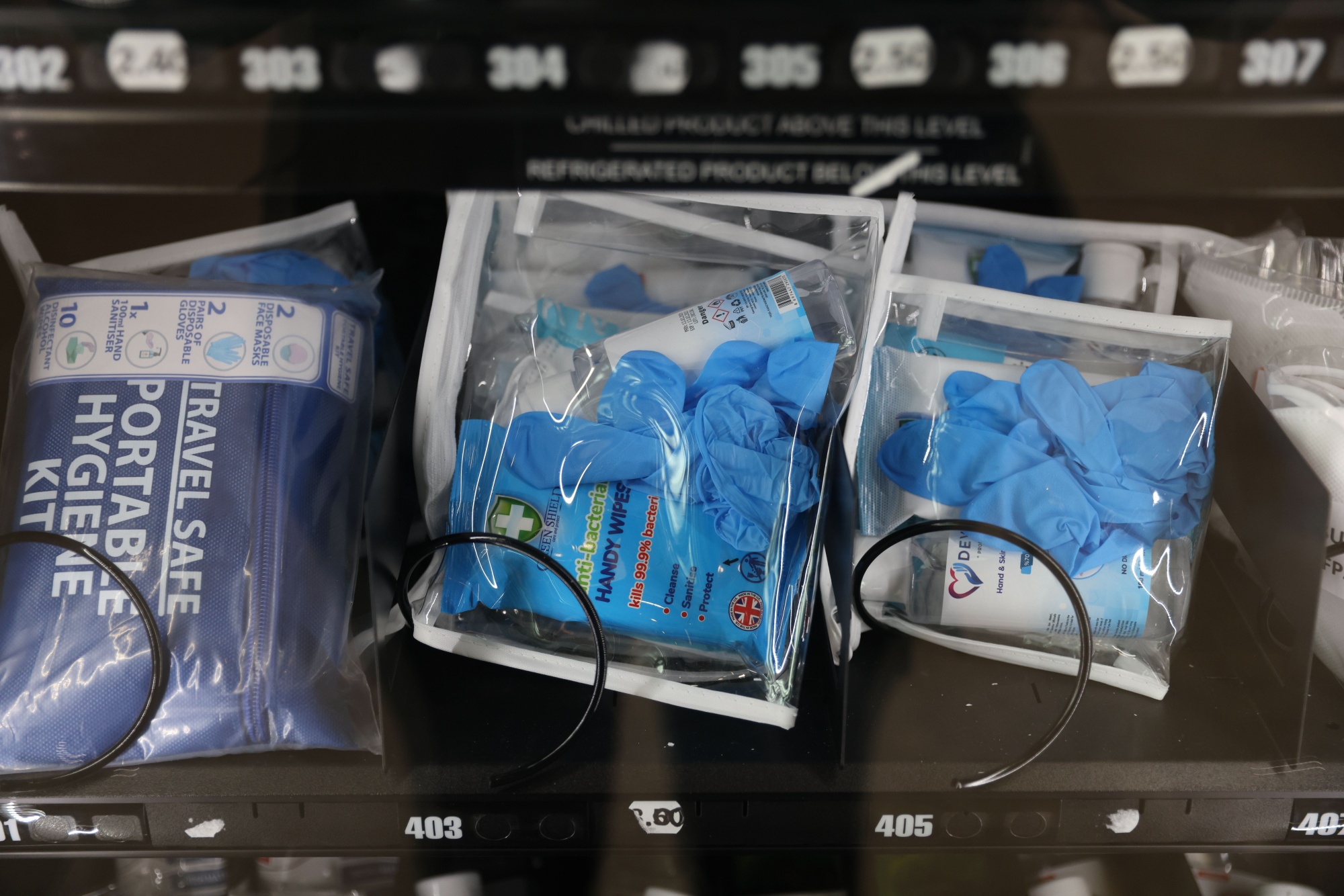 Hygiene kits for sale inside a vending machine near the International Arrivals gate at Terminal 5 at London Heathrow Airport Ltd. on July 27, 2021. Photographer: Hollie Adams/Bloomberg As many as one in five food and hospitality workers were self-isolating last week, according to data from a trio of trade groups. Employees have a right to sick pay while under mandatory isolation, but it's not much: just 96.35 pounds ($134) per week.
At the height of the pandemic, there was a significant commitment to support to displaced and unemployed workers. Now the U.K. government is winding down those programs, leaving workers — and businesses struggling to survive — without that critical safety net.
And what about the mask mandates? Transport for London has said it will still require masks on public transport, but plenty of people don't, or won't. Last weekend, I asked two young men riding next to me to put on their masks. One claimed he'd forgotten his; the other put one on — under his chin.
TFL advises passengers to ask rail staff for help in these kinds of situations, but I couldn't find anyone. The agency has been short-staffed, though, resulting in station closures and a general decline in service. The problem, it says, is that many of its front-line employees have been required to isolate. —Ruth David | 



Post a Comment