| New hawk | China dispatched a veteran diplomat known for pushing back against Western criticism to serve as U.S. ambassador, a sign it is bracing for prolonged tension with Washington. Qin Gang's arrival was accompanied by a commentary from the official Xinhua News Agency warning it was "unrealistic to solve the fundamental differences between the two countries quickly," and placing the onus on the U.S. to treat China as an equal. Seeking reciprocity | Germany accused the U.S. of hampering its business interests by continuing to restrict European travelers from entering America. The EU has opened its doors to Americans and it's time for the U.S. to do the same, according to Peter Beyer, the transatlantic coordinator for Chancellor Angela Merkel's government. Chip crunch | The road back from the computer-chip shortage that has affected companies from Tesla to Apple is easing, but not for everyone. As Ian King explains, even with some semiconductor supplies getting closer to normal, companies still lack the components to complete their devices.
 Wind, solar, hydro and other forms of renewable power cranked out a record of 834 terawatt hours in the U.S. during 2020, surpassing both coal and nuclear for the first time. Only natural gas generated more power, the U.S. Energy Information Administration said yesterday. Best of Bloomberg OpinionStatus question | No aspect of the U.K.'s departure from the EU has caused more political fury and even violence than the so-called Northern Ireland Protocol, Marc Champion writes. Less frequently heard is that many businesses see it as a competitive advantage that could boost jobs and growth in the only part of the U.K. able to trade with the EU as it did before Brexit. Cause for concern | Tanzania's new president Samia Hassan won accolades from Africa's richest men for reversing her predecessor's economic policies and embracing investors. Yet as Fumbuka Ng'wanakilala and Matthew Hill report, a crackdown on the main opposition — with its leader now charged with terrorism — is casting a shadow over what had appeared to be a good news story for the East African nation. - Malaysia's king issued a rare public rebuke of a minister for "misleading" parliament over emergency laws related to the pandemic, adding pressure to Prime Minister Muhyiddin Yassin's embattled administration.
- Peru's new president Pedro Castillo called for a new constitution and a crackdown on monopolies in financial services and utilities, sending bond markets falling.
-
Iran's Supreme Leader lashed out at the U.S. and other Western powers, as ultraconservative cleric Ebrahim Raisi prepares to take office as president next week. -
China will raise tariffs on the exports of some steel materials from next month, as it seeks to achieve twin goals of capping domestic production and taming prices that have fanned concerns about inflation. -
South Africa's port and rail company appears to have been targeted with a strain of ransomware that cybersecurity experts have linked to high-profile data breaches likely carried out by gangs from Eastern Europe and Russia. And finally ... Over 40 years, the Amazon has lost an area as big as California to deforestation and there's no end in sight. Jessica Brice and Michael Smith report that Brazilian President Jair Bolsonaro's government is engaged in an accelerated campaign to open up one of the world's greatest natural resources to privatization and development. Some scientists warn it's edging to the point where it will become a savanna rather than a rainforest. 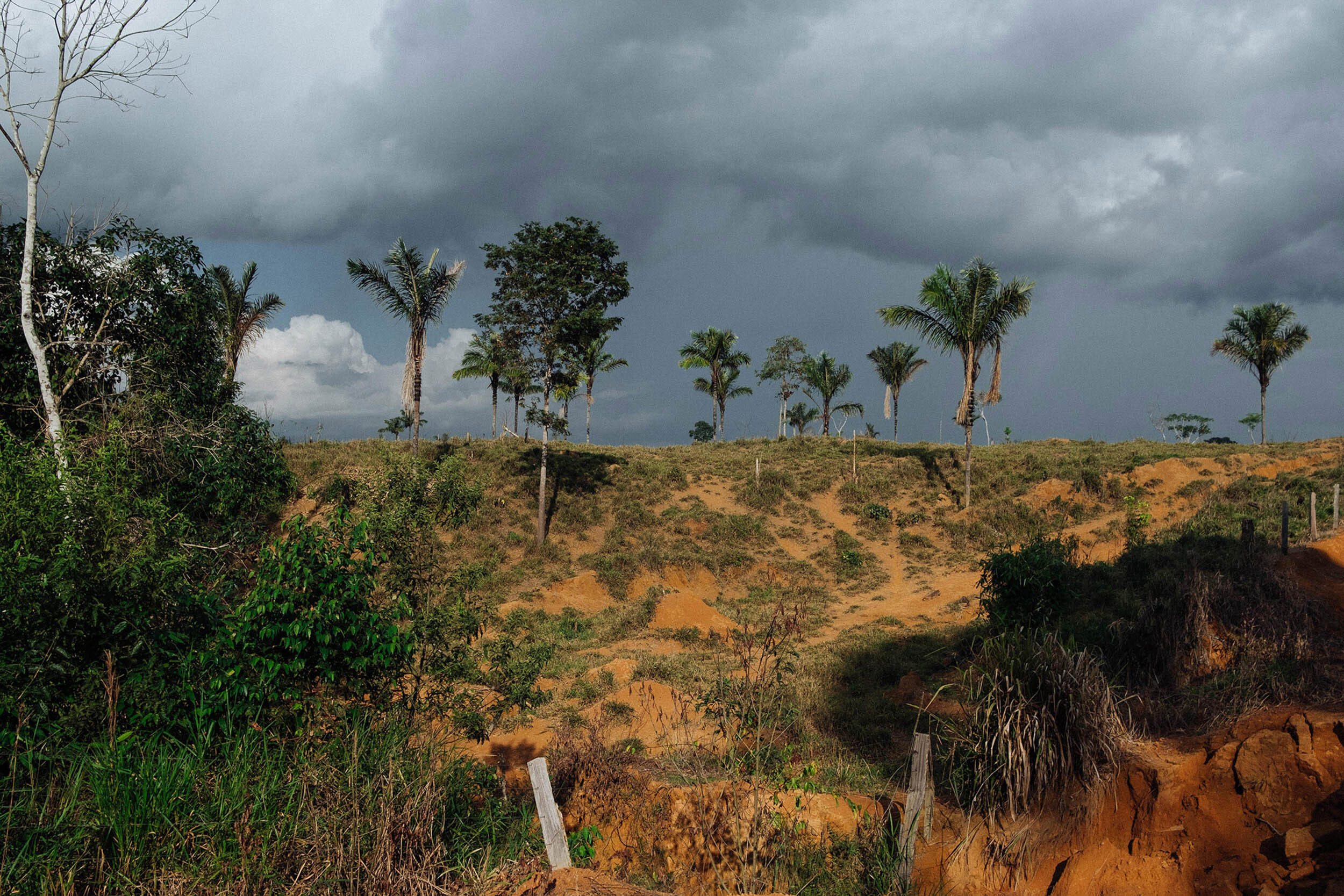 Farmland near União Bandeirantes, a community carved out of the jungle in the early 2000s. Photographer: Larissa Zaidan for Bloomberg Businessweek | 



Post a Comment