| It may be time to end New York's rivalry with Hong Kong for Chinese IPOs and declare Hong Kong the winner. Over the past two weeks, China has in quick succession slapped Didi with a probe days after the ride-hailing company's IPO, pledged to increase scrutiny of overseas share sales and introduced the need for firms to undergo a national security review of their data before listing abroad. Markets have interpreted these actions as Beijing frowning on selling shares in America. In the U.S., meanwhile, the losses inflicted on investors in Didi's IPO have not only prompted lawsuits against the company but also energized calls by lawmakers in Washington to delist Chinese firms because they don't allow U.S. regulators to reviews their audits. As Bloomberg Opinion columnist Tim Culpan pointed out recently, the only thing China hawks in Washington seem to see eye-to-eye on with Beijing is that Chinese listings on American exchanges are a bad idea. Unsurprisingly, there have been a slew of companies putting their U.S. IPO plans on hold, including medical-data company LinkDoc, fitness app Keep and vegetable-delivery startup Meicai. Enter Hong Kong, the most likely alternate destination to go public. Lalamove, a Chinese on-demand logistics and delivery firm, is an example of one company considering just that. Indeed, financial markets appear to have already spotted a winner from the recent tumult. Shares of Hong Kong Exchanges and Clearing, operator of the city's stock market, have surged almost 10% this month, far outperforming its global peers. 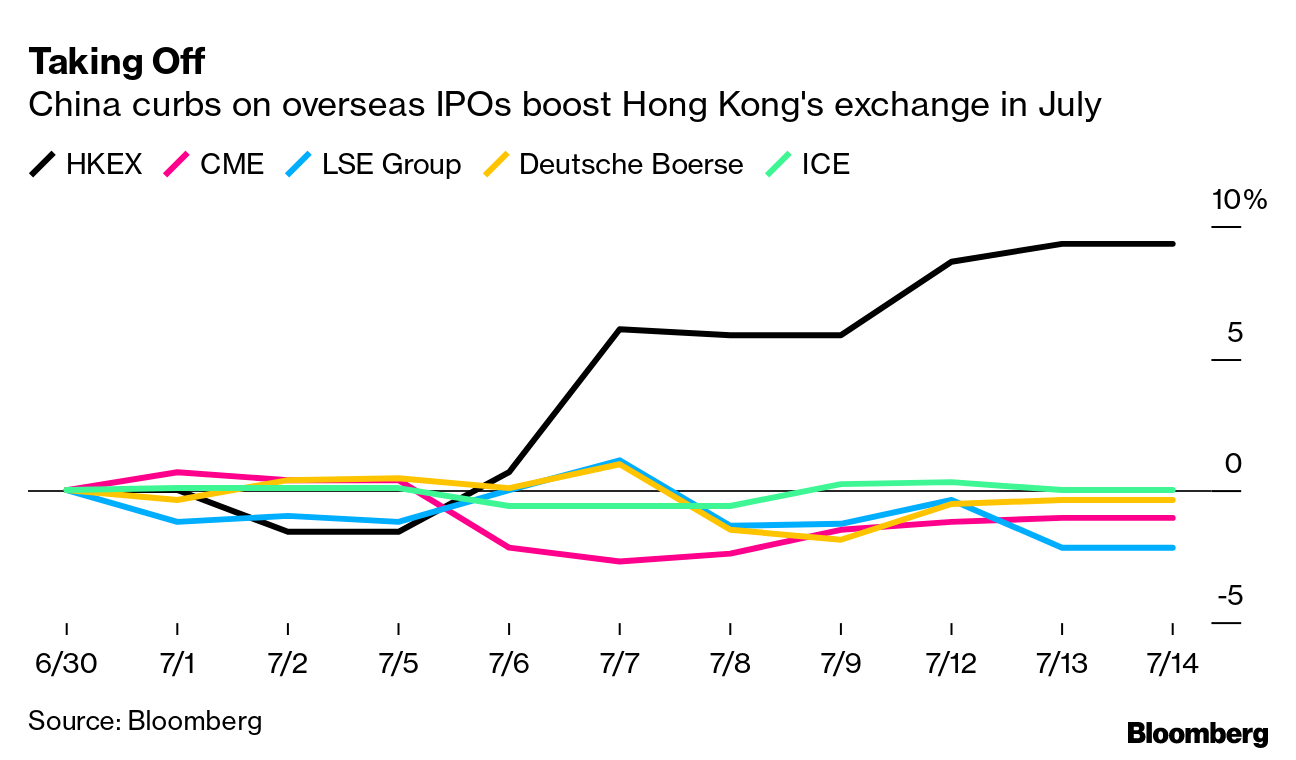 Digital Trade DealPresident Joe Biden's administration is considering proposals for a digital trade deal covering the Indo-Pacific region. Such a pact, which could include Canada, Australia, Japan, Singapore and New Zealand, would potentially set rules for the use of data, trade facilitation and electronic customs arrangements. It would, of course, also further underline just how important data has become for both commerce and national security. Beijing appears to agree. In response to the news, two state-owned Chinese newspapers blasted the possibility of a Washington-led digital trade deal as another bid to protect U.S. hegemony and the profits of American tech firms. Even if that's true, the prospects of being excluded from such an agreement would be an unwelcome development for China. China GDPHeading into Thursday's release of second-quarter GDP, there had been a fair amount of concern the data would show China's economy was weaker than previously thought. That worry was fueled by Beijing's decision late last week to lower the amount of money the country's banks are required to keep as reserves, an action most often taken to bolster growth during a downturn. But those fears proved to have been misplaced. The figures showed the recovery has become ever more steady. The pace of GDP growth, for example, picked up in the second quarter from the first three months of the year. Retail sales also came in stronger than expected, helping assuage worries about weakness in consumer spending. 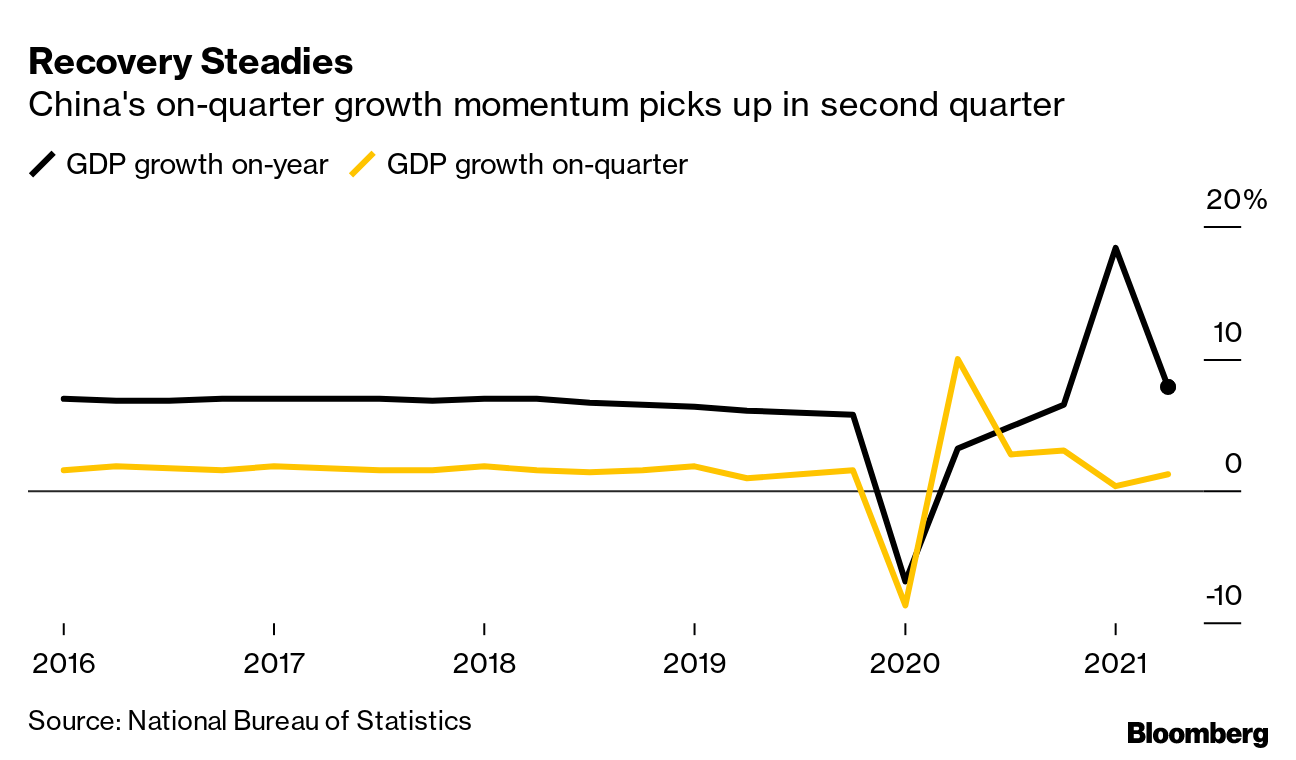 And the decision to cut bank reserve requirements last Friday? That now looks like it was more of a preemptive measure, with policy makers eyeing the risk of a more difficult environment in the second half. Flying CoachThe perks of working in China's finance industry aren't what they used to be. It emerged this week that the country's two largest investment banks, CSC Financial and Citic Securities, are making cuts to their travel budgets that will affect everyone from junior bankers to senior directors. They're doing so as Beijing presses state-owned financial groups to reduce salaries and costs so that more money can be allocated toward helping the economy recover from the effects of the pandemic. That means managing directors at both firms are being asked to fly economy when traveling domestically. Citic Securities is also reducing its hotel allowance for non-executive bankers by as much as $108 a day in major cities such as Beijing and Shanghai. At CSC Financial, bankers are even being encouraged to share hotel rooms. Despite the discontent these steps will likely fuel among China's road warriors, any complaints will likely only fall on deaf ears in Beijing. What We're ReadingAnd finally, a few other things that caught our attention: | 


Post a Comment