| Hello. Today we look at America's push to fund upcoming spending, and preview the week to come. Getting RealAs American lawmakers get closer to forging legislative texts for two major medium-term spending packages, a key shift in thinking on fiscal policy has become visible: the demise of interest in MMT and its embrace of financing through debt. Republicans were never fans of Modern Monetary Theory, and have insisted that the $579 billion, five-year infrastructure program be paid for through new funding mechanisms. With Senate Majority Leader Chuck Schumer seeking an initial vote on that package on Wednesday, the negotiators have been struggling to agree on the "pay-fors." The nonpartisan arbiter of fiscal proposals, the Congressional Budget Office, rejected the idea that $40 billion of new funding for the IRS could produce a net $100 billion of new revenue — a significant setback for the bipartisan group working on the infrastructure bill. Hard negotiations loom in coming days, potentially with President Joe Biden needing to get involved. The second big package, a $3.5 trillion social-spending initiative designed to shrink child poverty and ramp up federal assistance to lower- and middle-income families, is envisioned as winning support only from Democrats. This one, too, may be fully funded. That's a bar that's been set by key moderate Senator Joe Manchin of West Virginia. "We are going to have to pay for all this," Manchin said last week. Funding these spending proposals would be an enormous difference from the multiple pandemic-relief bills enacted since spring 2020 — which are estimated to have enlarged the deficit by more than $5 trillion, cumulatively, so far. 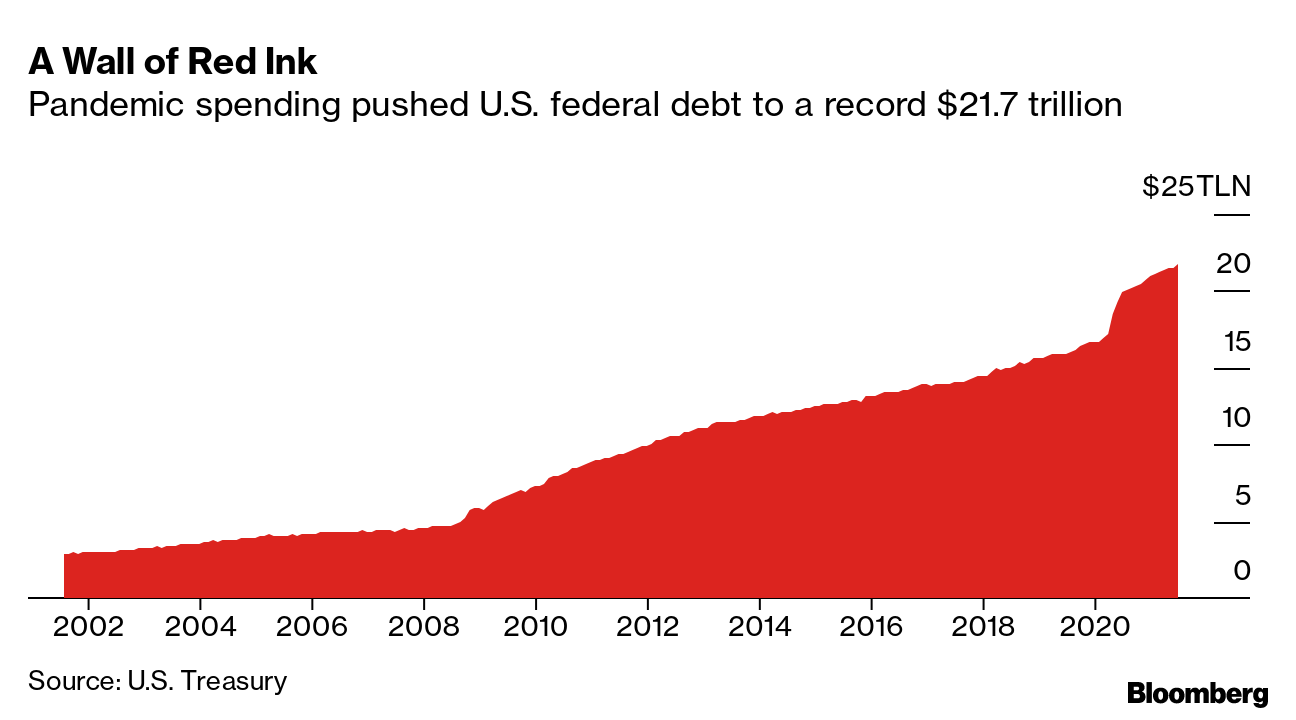 It's not like the bond market is putting any pressure on Washington, either. Ten-year Treasury yields have come down almost half a percentage point since their highs in March, to 1.29% — historically extraordinarily low. Even progressive Democrats have been relatively restrained as the social package comes together. Bernie Sanders of Vermont, a self-defined democratic socialist, initially called for $6 trillion, but — as chair of the Senate Budget Committee — said he's "delighted" to be a part of the current plan. True, we're nowhere near the fiscal austerity policies adopted in the U.S. and Europe not long after the global financial crisis. But the latest developments in Washington suggest that enthusiasm about MMT and debt-financed spending has faded. —Chris Anstey The Week Ahead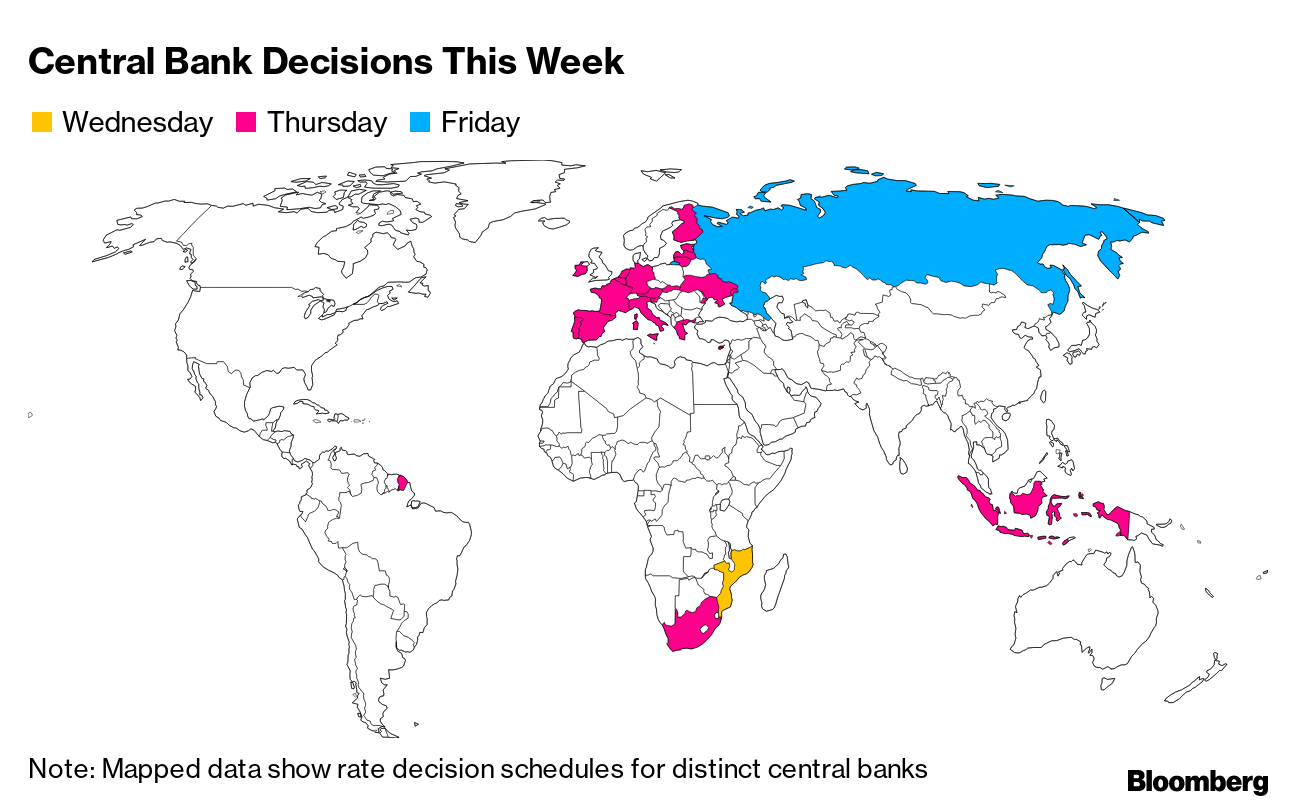 Half a dozen central banks set rates in the coming days, with the European Central Bank, Bank of Russia and the South African Reserve Bank all likely to make more eventful policy announcements than usual. The ECB will decide how to adapt its language on interest rates, bond-buying and other tools to a new inflation strategy. Policy makers are split over changes to their wording on monetary stimulus in draft documents being circulated before Thursday's meeting, officials familiar with the matter told us late last week. Russia's central bank looks set to continue its tightening cycle with another big hike. And while the SARB is likely to keep rates on hold, it will probably deliver a more hawkish statement. Elsewhere, flash purchasing manager indexes will give a glimpse of the economic recovery and South Korean trade figures will provide clues on the health of global demand. For a full rundown of the week ahead, click here. Today's Must Reads - Oil deal | OPEC and its allies struck a deal to inject more oil into the recovering global economy, overcoming an internal split that threatened the cartel's control of the crude market.
- Deal doubts | U.S. Treasury Secretary Janet Yellen expressed doubts about last year's trade deal with China, the first clear statement from the Biden administration detailing its thinking about the future of the agreement.
- England reopening | Pandemic restrictions are ending in England on Monday, yet Covid-19 cases are rising the most in the world. London diners are set to face increased restaurant prices and dog walkers are at the ready as office workers return to their desk. Data show that a year of pandemic restrictions that closed offices and gutted the hospitality industry has motivated the capital's young people to move to the suburbs.
- Growth risks | China's regulatory crackdown on its technology sector and U.S. consumers possibly saving more than they spend are twin risks facing the world's economic recovery, according to Ruchir Sharma, head of emerging markets and chief global strategist at Morgan Stanley Investment Management.
- Inflation views | The Fed may be downplaying the risk of lingering inflation, but those with arguably the best vantage point — the companies themselves — are taking a less optimistic view.
- Green future | Singapore is setting out a path for the city-state to become a leading regional hub for carbon trading, green finance, consulting and risk management and other services.
- Getting along | ECB President Christine Lagarde is trying to keep German central bank officials on board to avoid past acrimonies.
Need-to-Know Research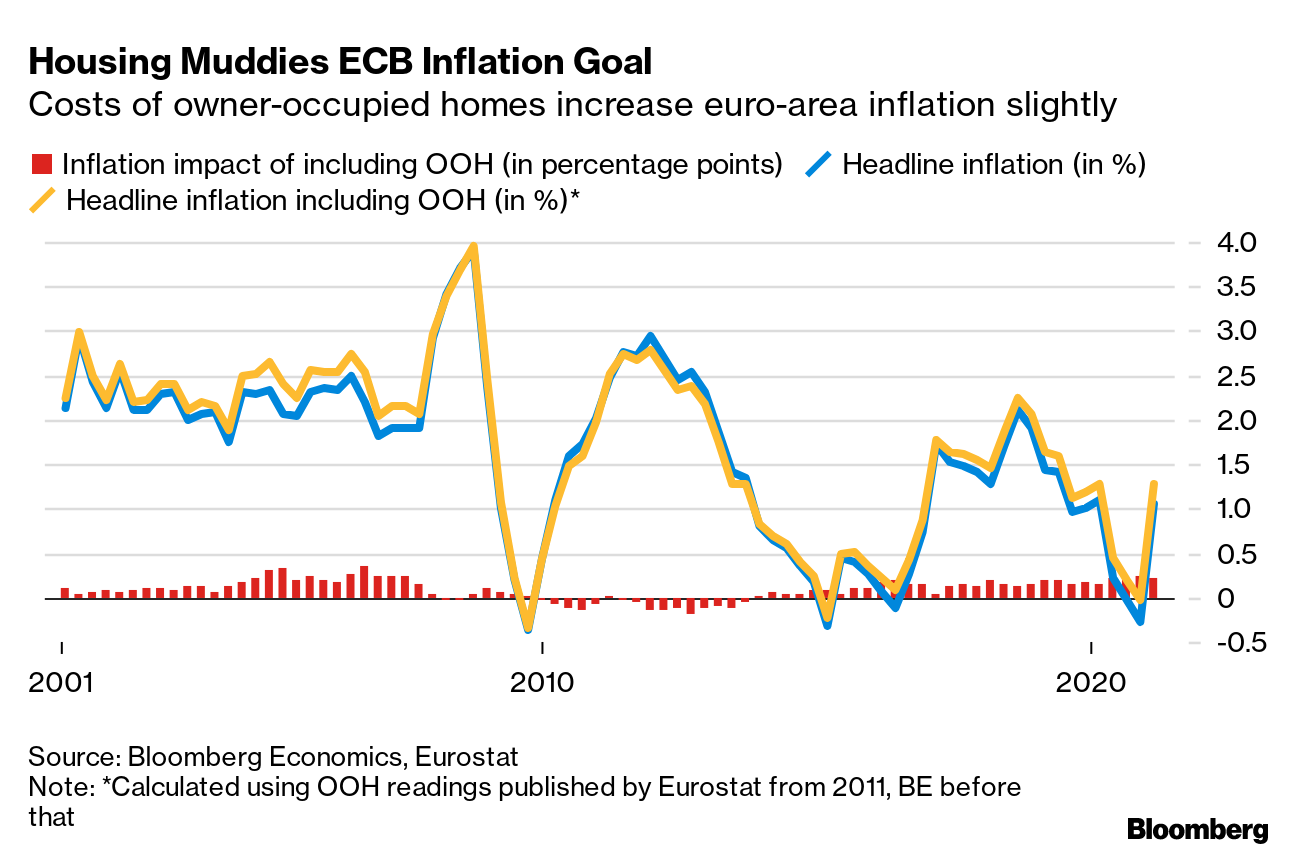 The ECB helped remove some of the ambiguity around its policy objectives by adopting a simple 2% inflation target in its strategy review, but plans to include the cost of owner-occupied housing in the measure add a new layer of uncertainty that could complicate the task of achieving the goal in the years ahead. Bloomberg Economics' Maeva Cousin and David Powell estimates suggest including OOH may raise headline inflation by 0.1 percentage point on average and perhaps more in the coming years. Expectations of a future shift to a new, higher reference rate could create a fresh messaging challenge as the ECB seeks to hit its 2% target. Read the full research on the Bloomberg Terminal On #EconTwitterDecoupling from global value chains.  Read more reactions on Twitter Enjoy reading the New Economy Daily? -
Click here for more economic stories -
Tune into the Stephanomics podcast -
Subscribe here for our daily Supply Lines newsletter, here for our weekly Beyond Brexit newsletter - Follow us @economics
The fourth annual Bloomberg New Economy Forum will convene the world's most influential leaders in Singapore on Nov. 16-19 to mobilize behind the effort to build a sustainable and inclusive global economy. Learn more here. | 


Post a Comment