| Good morning. England unlocking hangs in balance, shipping rates hit record and China cracks-down in Hong Kong again. Here's what's moving markets. In The BalanceThe plan to end England's pandemic restrictions on June 21 is in doubt, U.K. Health Secretary Matt Hancock indicated, amid the continued spread of the Covid variant first found in India. A formal assessment of data will be published before June 14, but a top epidemiologist warned that the unlocking is now "in the balance," and Prime Minister Boris Johnson said "we may need to wait." Elsewhere, Germany plans to expand inoculations to children aged 12 and older, while a Spanish music concert showed strong evidence that testing, masks and ventilation can prevent the spread of the illness indoors. Shipping SpikeThe cost of moving stuff across the sea to Europe from Asia rose above $10,000 for the first time. The Drewry World Container benchmark, which tracks the rate for a 40-foot container from Shanghai to Rotterdam, is up about 485% from a year ago. Rates have been driven up during the pandemic by a surge in demand for goods instead of services, as well as staffing disruptions due to the spread of the virus. The unforgettable Suez Canal blockage in March only added to the drama. China Cracks-Down AgainChina's Hong Kong crackdown is simmering again, with legislature in the city approving a sweeping, Beijing-drafted overhaul of the its elections. The changes dramatically curtail the opposition's ability to participate in government, and came on the same day that authorities banned a large pro-democracy vigil. It effectively ends China's only experiment with open elections. The developments will be of note for investors in European stocks exposed to Hong Kong, such as luxury goods and some banks. Easy Does ItThe European Central Bank is increasingly expected to extend the elevated pace of its emergency bond-buying at its next meeting, despite a likely economic rebound. HSBC, UBS and ABN Amro are among firms who expect the ECB to prolong current stimulus on June 10. Economists surveyed before the previous meeting said purchases would probably be scaled back. German 10-year yields have subsequently fallen 10 basis points since climbing to a two-year high last week. The purchases were ramped up in March when a U.S. economic rebound was spurring a global rise in borrowing costs while the euro zone was in a recession. Coming Up…European stock futures are pointing higher after a bumper end to the week in Asia following solid economic data from the U.S. Today, President Joe Biden is set to unveil a budget that is reported to take federal spending to $6 trillion. Other voices to keep an eye out for are U.K. Chancellor Rishi Sunak, who hosts a virtual meeting of G-7 finance ministers and central bank governors, while German Chancellor Angela Merkel and Italian Prime Minister Mario Draghi will appear at the Global Solutions Summit. It's a quieter day for earnings, but energy firm Gazprom and Rocket Internet are among the reports from Europe. Finally, it's a holiday -- but only for Citigroup workers, for whom today is "Citi Reset Day," a day off launched by its chief executive to reduce stress. People in the U.K. get a real day off on Monday for the Late May Bank Holiday. What We've Been ReadingThis is what's caught our eye over the past 24 hours. And finally, here's what Cormac Mullen is interested in this morningCurrency traders have been captivated this week by the relentless rise in China's yuan. A basket measuring the currency's strength against 24 global trading partners' exchange rates hit a five-year high on Thursday. Rising capital inflows and a weaker dollar have helped drive the rally, underpinned by a brightening outlook for the Asian economy. The offshore yuan has risen more than 2% this year against the dollar and the euro, and a whopping 9% against the Japanese yen. A stronger exchange rate will make imports cheaper for China, cushioning some of the recent strength in commodity prices and helping boost domestic consumption -- a key goal of President Xi Jinping. But it also risks worsening inflation fears in other countries, by making exports from what is still the world's factory more expensive. A closely-watched measure of inflation expectations in the U.S. -- breakeven rates -- have come off their 2021 highs in recent weeks, a sign price concerns are easing. Continued yuan strength is a threat to that cooling trend. 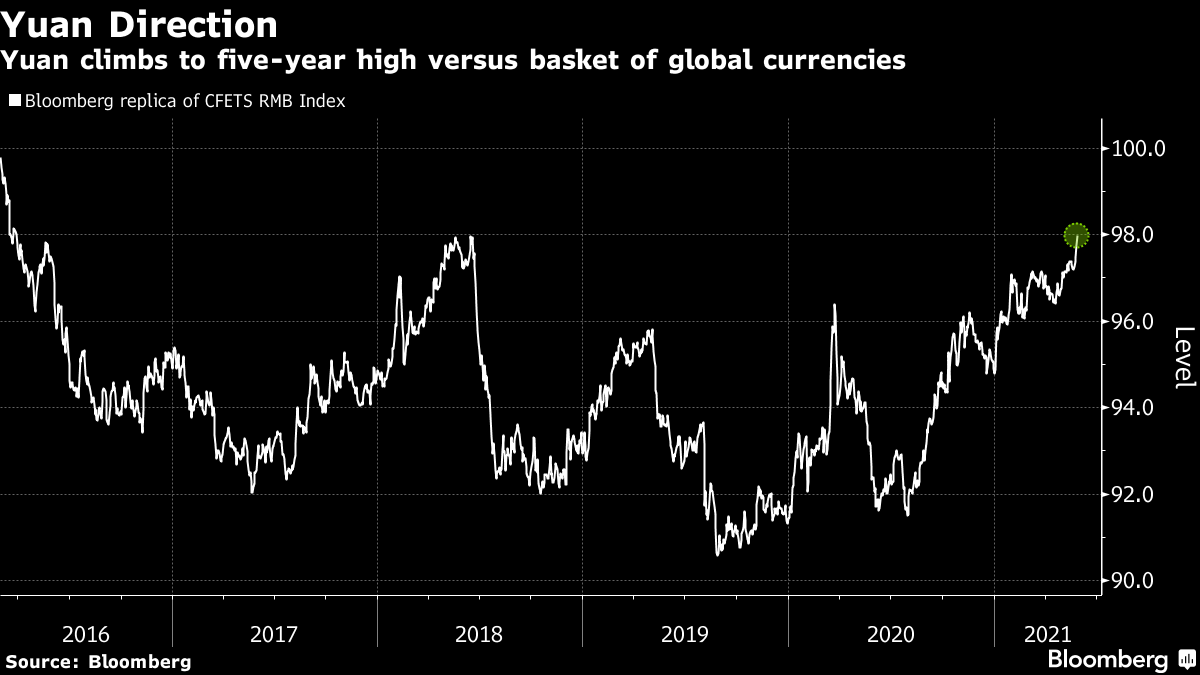 Cormac Mullen is a cross-asset reporter and editor for Bloomberg News in Tokyo. Like Bloomberg's Five Things? Subscribe for unlimited access to trusted, data-based journalism in 120 countries around the world and gain expert analysis from exclusive daily newsletters, The Bloomberg Open and The Bloomberg Close. | 


Post a Comment