| Policy drive | U.S. President Joe Biden made clear his commitment to bipartisanship won't trump his determination to press ahead with reforms on voting rights, immigration and climate change. In his first formal press conference since taking office, Biden indicated he could favor abolishing the Senate filibuster that Republicans have threatened to use to thwart his priorities and that he believes he has a political mandate to expand the mission of the federal government. He also said he'll run again in 2024. - Biden pledged to outspend China on innovation and infrastructure and prevent it from becoming the world's most powerful nation.
- As Biden readies his $3 trillion economic package, the Congressional Budget Office, which normally flags potential fiscal crises because of too much spending, finds itself in a tough spot.
Virus tactics | European Union leaders gave guarded support to a plan to restrict vaccine exports after it emerged that producers in the bloc had sent more shots to the rest of the world than it gave to its own people. The head of the European Commission argued for a tougher mechanism to secure supplies, a tactic that could jeopardize the flow of ingredients to vaccine plants in Europe and set back the global effort to contain the virus. Weak link | South Korea enjoys close economic ties to China, its largest trading partner by some way and the main destination for its biggest export: advanced semiconductors. At the same time, it relies on the U.S. for security, particularly along the border with North Korea. As Jeong-Ho Lee and Sohee Kim report, those competing loyalties put Seoul in a tight spot as the Biden administration squares off with Beijing in a high-tech conflict that is increasingly focused on chips. Brexit bill | Half a decade after Britons voted to leave the EU, billions of dollars in assets and thousands of jobs have moved to the continent after the U.K. negotiated a bare-bones trade deal with the bloc that largely sidelined finance. Silla Brush explains that, while the two sides may be just about to ink an agreement to cooperate on financial regulation, neither expects the return of business as usual. 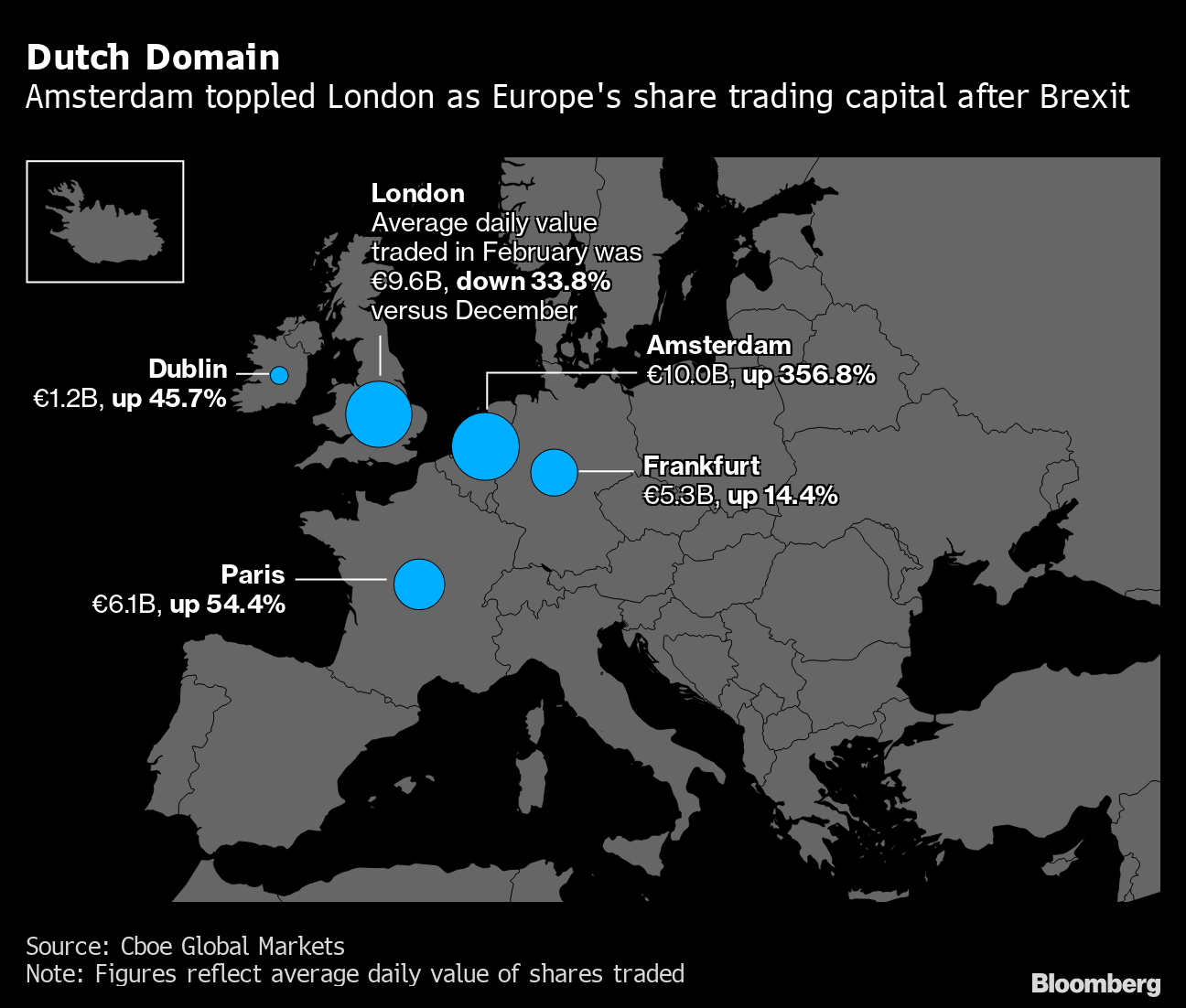 Fierce fighter | For Prime Minister Narendra Modi, the West Bengal election starting tomorrow isn't just another test of strength in one of India's biggest states. Victory would knock out one of his key opponents, Mamata Banerjee, a firebrand who has held power for a decade as an outspoken critic of his Hindu nationalist agenda and a supporter of farmer protests outside Delhi against the government's new agriculture laws. What to Watch - Chancellor Angela Merkel signaled that her government will declare France a high-incidence virus area, which would trigger a negative Covid-19 test requirement for anyone entering Germany.
- China announced retaliatory sanctions on nine British individuals and four entities for "maliciously spreading lies and disinformation" about its Xinjiang region.
- Israeli voters once again left neither Prime Minister Benjamin Netanyahu nor the main opposition with enough support to ensure a parliamentary majority, raising the prospect of further political paralysis and yet another election.
- Eritrea will withdraw its forces from an Ethiopian border area, following talks between the two nations' leaders.
Pop quiz, readers (no cheating!). Which European clothing chain was the target of a Chinese boycott campaign after saying it wouldn't use cotton from Xinjiang province? Send your answers to balancepower@bloomberg.net. And finally ... That giant ship blocking the Suez Canal may soon stir up trouble for your cup of instant coffee. Containers of robusta coffee — the type used in Nescafe — are held up in the disruption to maritime traffic caused by the lodged vessel, the Ever Given. While all of the beans Europe imports from East Africa and Asia flow through the Suez, including from Vietnam, the world's largest robusta producer, the impact will be felt globally as the delays exacerbate a shortage of containers. With warnings that it may take a week to dislodge the ship, analysts say that a lot of damage has already been done. 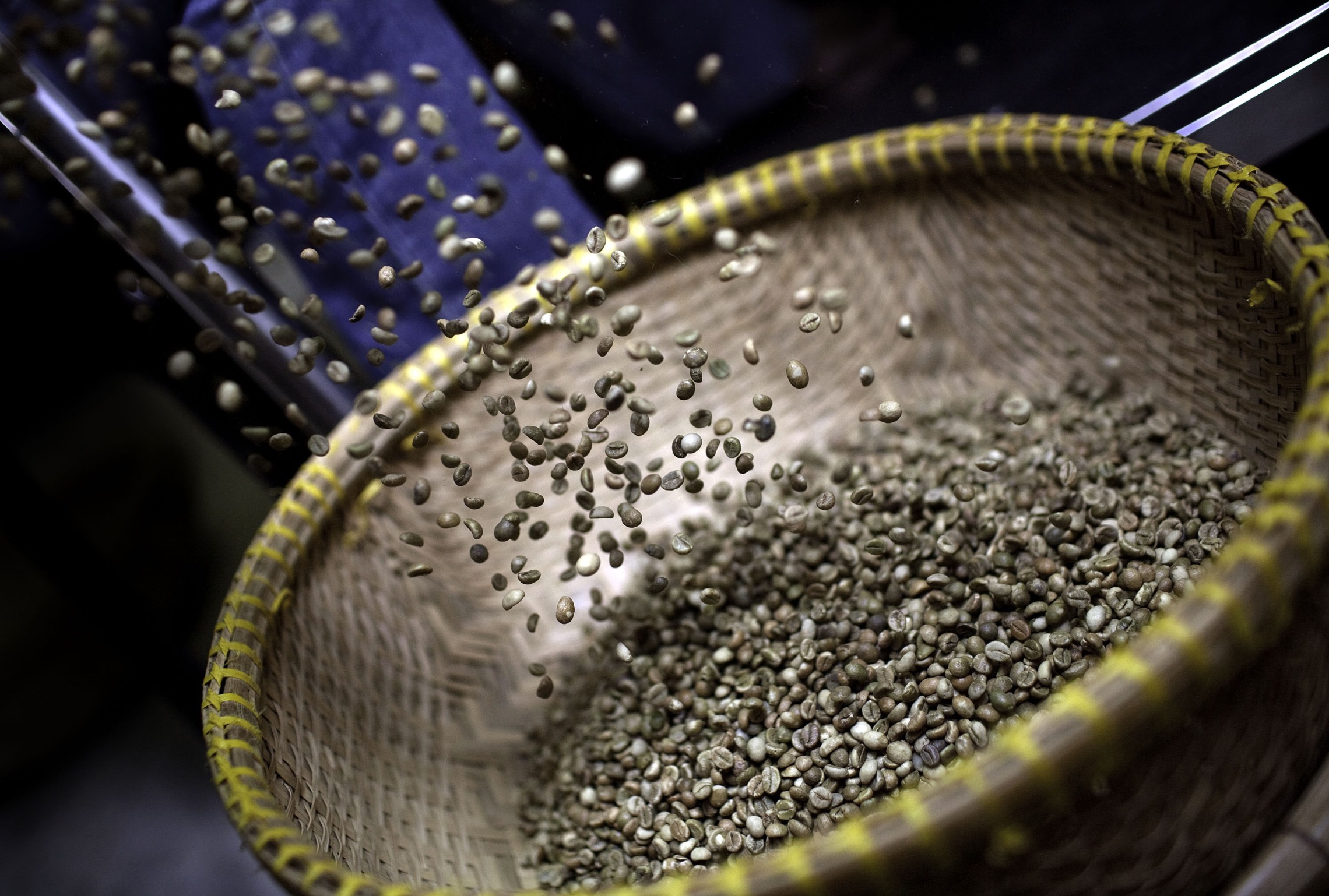 Green robusta coffee beans are sorted for defects at the Highlands Coffee processing plant in Ho Chi Minh City, Vietnam, on Friday. Photographer: Jeff Holt/Bloomberg | 




Post a Comment