| This is Bloomberg Opinion Today, a video-sharing app of Bloomberg Opinion's opinions. Sign up here. Today's Agenda This Is No Way to Win a Cold War Much of the new Cold War with China has been fought over trade and territory, battlegrounds even the ancients would recognize. But this year the conflict entered a new front that is extremely 2020: an app teens use to share goofy dance videos. Chinese-owned TikTok is that app, which is wildly popular among the kids these days. President Donald Trump calls it a security threat and plans to ban it in the U.S. unless an American company, possibly that famously hip fellow kid Microsoft, buys it. Niall Ferguson argues TikTok is a weapon of cultural warfare, filling our teens' heads with Chinese propaganda. Kids: One day they're complaining about cleaning their rooms, the next they're trying to seize the means of production. But Elaine Ou notes TikTok has offered to assuage such concerns by throwing open the doors to the sausage factory so we can all see how it moderates and promotes content. In fact, we'd all be better off if certain American social-media giants, whose names may or may not rhyme with Casenook and Switter, did the same thing. That seems a more reasonable approach than an outright ban or state-sponsored takeover. The arguments Trump is using to cast out TikTok and another ubiquitous Chinese app, WeChat, could well apply to American tech giants overseas, warns Tae Kim. Just as Trump's trade war mainly punished American consumers, his tech war could hit American companies. Banning WeChat, which millions use to communicate and make payments, could backfire on the U.S. in other ways. The app makes it much easier for Chinese tourists to visit the U.S., writes Adam Minter. As you may have heard, the tourism industry needs all the customers it can get these days. Cutting off WeChat will also weaken the social bonds between the two countries, making open hostility more likely. Michael Schuman suggests China's bad behavior could lead to more such bans around the world, leaving it an isolated technological backwater. Telecom giant Huawei is already frozen out of 5G wireless network build-outs in several big countries. But China is also building an industrial 5G network that could futurize its factory sector, writes Anjani Trivedi, forcing the rest of the world to keep doing business with it. Like much of what you'll see on TikTok, it's a complicated dance. Bonus TikTok Reading: Twitter, not Microsoft, should buy TikTok, despite having ruined Vine already. — Tim Culpan This Is Not What the Economy Ordered Over the weekend, with congressional talks on new economic stimulus stalled, Trump signed executive orders he said would ease some of the pain. They won't amount to much, though, beyond emergency relief, writes Mohamed El-Erian. Worse, they add to the smell of dysfunction hanging over the government response to the pandemic and economic crisis. One order could do more harm than good: Trump is cutting extra unemployment benefits from $600 a week to $400 and forcing states to pony up $100 of that. State governments, barely stable before the pandemic, have been wrecked ever since, writes Brian Chappatta. The federal government should be shoveling more money at them, not demanding it from them, which is "basically the opposite of economic stimulus," Brian writes. All of this supposes the orders will survive challenges in court accusing Trump of overstepping his bounds by doing stuff the Constitution says is Congress's job. When all of this is over, Cass Sunstein writes, we'll have to have a serious conversation about curbing presidential power. Meanwhile, stimulus talks are still stalled. Amazon Will Be Your Anchor Now For a long time in the shopping mall business, the word "anchor" was used in a good way, as in a stalwart fixture, like Ernie Anastos on the news desk. But those anchors were always big department stores such as J.C. Penney or Sears. They started dying out a while back, and the pandemic is finishing them off. Now they're "anchors" in the bad sense, of sinking something into the mud. One of the things that helped kill the department store is Amazon.com, which has been thriving so much in the pandemic that it needs more space to store and sort all the junk we're buying online. Sarah Halzack writes some mall owners can see the potential solution staring them in the face here: Make Amazon the new shopping-mall anchor. A depressing, empty Macy's has the square footage Amazon needs, and malls are conveniently located near customers who can pop over for curbside pickup or to return those designer sweatpants. Telltale Charts Cities might never recover from the population losses they're suffering now, writes Noah Smith, and pre-existing conditions are partly to blame. 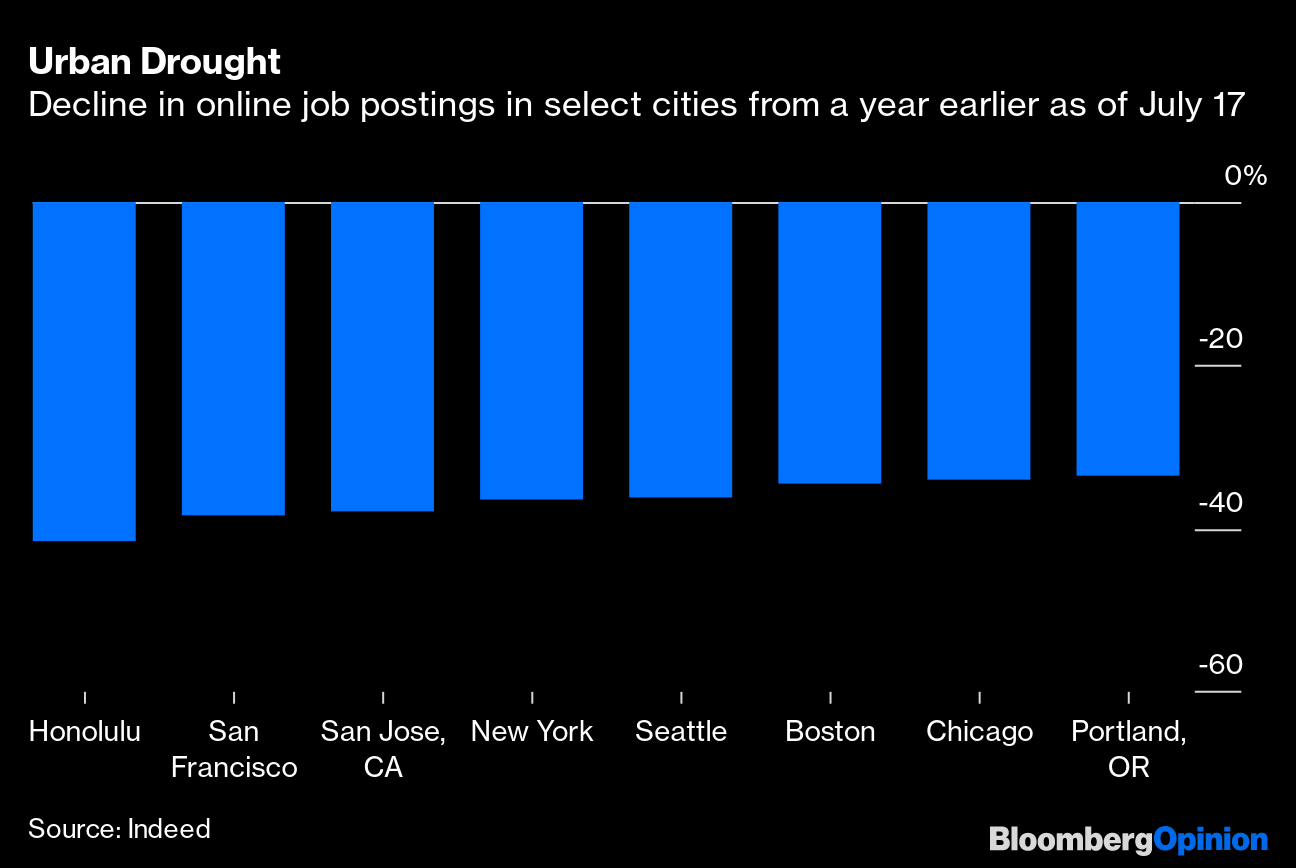 Saudi Arabia is squeezing supply to the U.S. again to try to drive prices higher, and the U.S. is probably OK with that, writes Julian Lee. 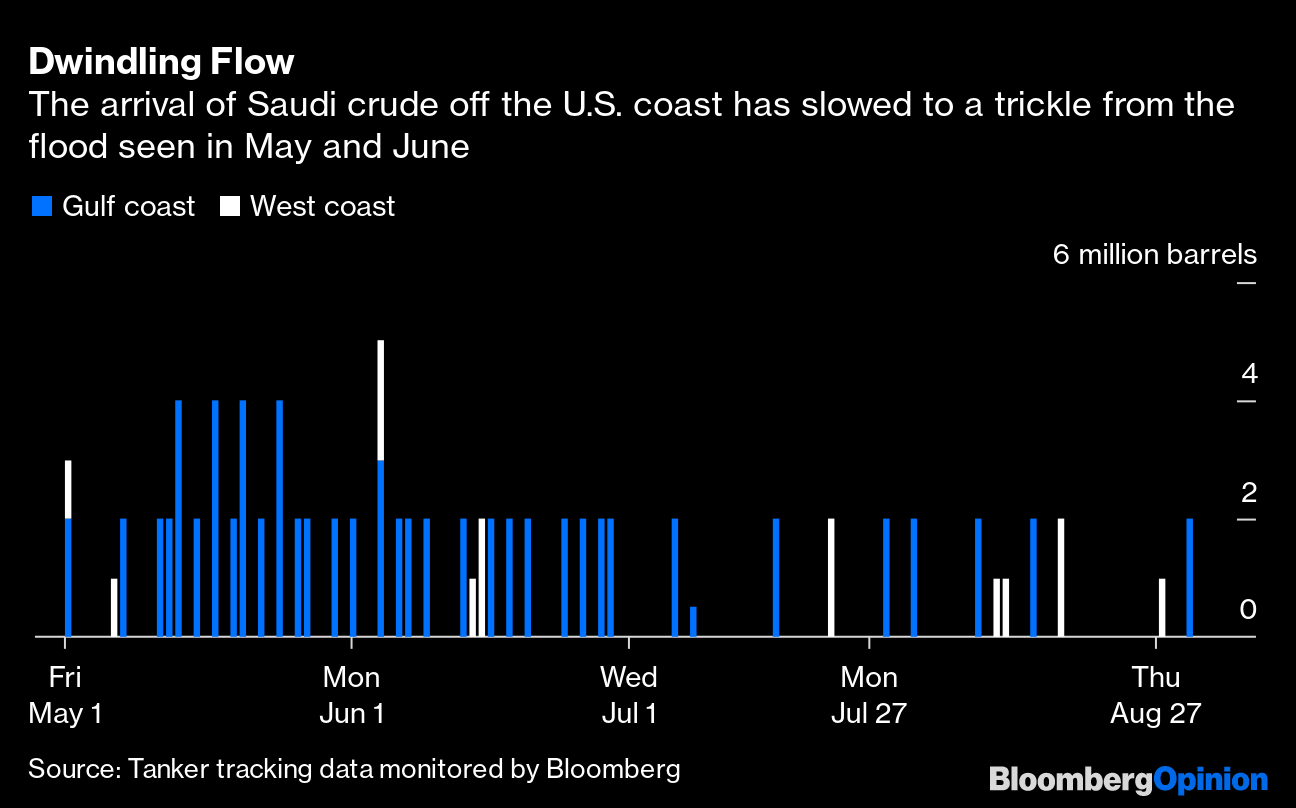 Further Reading It can't be the Fed's job to fight racial discrimination with monetary policy. It has other tools, as does Congress. — Bloomberg's editorial board The Trump donor running the post office sure seems to be getting it ready to stifle mail-in voting. — Tim O'Brien The pandemic's effects on travel may be permanent. — Danielle DiMartino Booth Emails offer enough evidence to take Big Tech to court over anti-competitive practices. — Joe Nocera This is a great time to say goodbye to traditional earnings calls, which are time wasters for everybody. — Tara Lachapelle Robinhood will stop telling people what stocks are popular on Robinhood. — Matt Levine ICYMI Lebanon's government resigned. A short, sharp recession is giving way to longer-term scarring. The Big Ten is canceling football. Kickers "Real Genius" turns 35. (h/t Scott Kominers) How long does a freezer stay frozen when the power's out? How to overcome phone addiction. If the universe is a simulation, can we crash it? Note: Please send frozen food and complaints to Mark Gongloff at mgongloff1@bloomberg.net. Sign up here and follow us on Twitter and Facebook. | 




Post a Comment