| Humanity has a long history of engaging—both knowingly and unknowingly—in self-destructive behavior. The history of trying to undo said behavior is decidedly shorter. And while we're pretty good at inventing new ways to simultaneously advance and endanger our society and ourselves (chemicals, the combustion engine, nuclear fission), we're not particularly good at reversing the downsides of technology. On the small end of this sliding scale, we find our modern food system. It is, of course, an unalloyed good that most on the planet have enough to eat thanks to the wonders of modern agriculture and food processing. The unintended consequence, however, has been a soaring level of environmentally devastating food waste. A full 10% of developed nations' greenhouse gas emissions are derived from its disposal, according to the United Nations. A new analysis this week found the problem may be more than twice as bad as previously thought. And you may find it shocking that the wealthy are the worst offenders. On the big end of our aforementioned scale, we come to BP, which first began drilling for oil in Persia in 1901. Today, it is Europe's second-biggest oil company. The energy giant admitted this week that it's expanding the team working on carbon capture and storage projects as part of its goal to zero out net greenhouse-gas emissions by 2050. 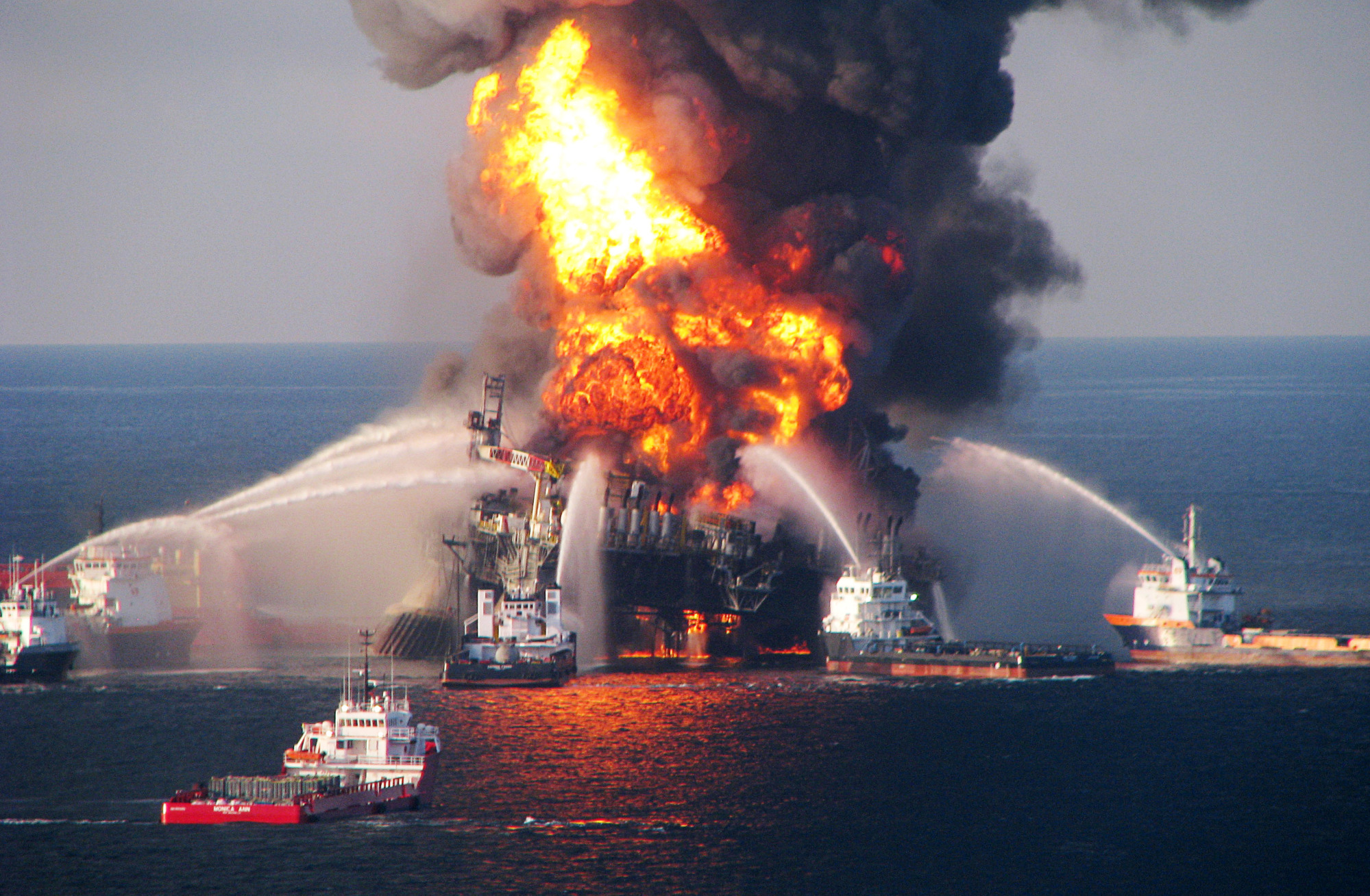 Crews battle a fire on the Deepwater Horizon rig on April 21, 2010. Photographer: U.S. Coast Guard/Getty Images North America Now, this isn't the first time that the oil company largely responsible for the Deepwater Horizon disaster a decade ago (which was 30% bigger than advertised) has made a splashy announcement about green technology aimed at washing away its carbon sins. In the early 2000s, BP lost as much as $50 million studying the feasibility of the world's first natural-gas power plant with carbon capture technology. Moreover, critics point out the London-based company has no intention of shutting down its oil and gas business, and has been vague about the scale and timeline of its investment in renewables. The U.K. government, meanwhile, keeps advancing its deadline for banning the sale of new fossil-fueled vehicles. Prime Minister Boris Johnson's government this week announced a new goal of 2032, three years earlier than the target he announced last week, and eight years earlier than the goal set two-and-a-half years ago. No such exuberance exists in the U.S. Ambitious climate plans there remain firmly in unicorns-and-rainbows territory. House Republican Leader Kevin McCarthy barely finished presenting his party's plan (one trillion trees!) to stave off the worst of climate change before coming under withering fire from the Big Oil lobby and others on the right. The blowback illustrates the challenges facing those trying to slowly shed the Republican Party's central role in promoting climate science denial. And finally, a longtime employee of Yales endowment fund, Dean Takahashi, moved into a new role at the university, heading its Carbon Containment Lab. The long-term goal is to offset at least 1 billion tons of carbon dioxide emissions by the end of the century. For now, it aims to create solutions capable of balancing out more than 10 million tons of emissions by 2030. | 








Post a Comment