It's been nearly a month since a Berlin meeting failed to make much progress in resolving the long-running conflict in Libya. This weekend some key players meet again, grappling for a way forward.
The annual Munich Security Conference sees defense officials, ministers and a few heads of state gather to discuss the hotspots de jour. Likely to come up this year are signs of a tentative thaw between Ukraine and Russia, efforts to draw the Balkans further into the European security fold and … Libya.
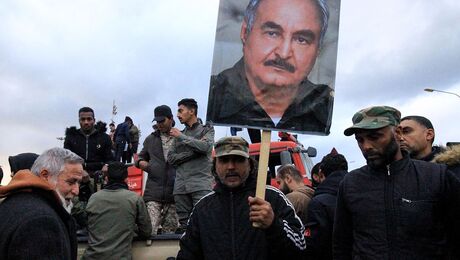
The oil-rich state has become the battle ground for a much bigger proxy war. Increasingly the fate of Libya is in the hands of Turkey — which backs the UN-recognized government of Fayez al-Sarraj — and Russia, which alongside Egypt and the U.A.E. backs his rival General Khalifa Haftar.
Pretty much out of the picture is the U.S. and, as our story today explains, the French, despite the country's long history in North Africa and President Emmanuel Macron's efforts to paint himself as a deal maker on Iran and Libya and leader on European security policy.
Attempts to forge a rapprochement between Sarraj and Haftar have proven unsuccessful, and as time goes on even more is at stake. Turkey's Recep Tayyip Erdogan is flexing his muscles in the Eastern Mediterranean over access to energy, while Russia's Vladimir Putin is taking advantage of the U.S. absence to make mischief.
Getting Ankara and Moscow to behave could soon be an even bigger headache. It'll certainly be on show in Munich this weekend.
— Rosalind Mathieson



Post a Comment