Even as the U.S. and China prepare to sign an initial trade deal next week, an election in Taiwan shows the broader competition for influence between the two big powers will persist.
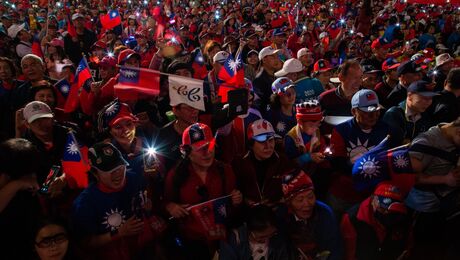
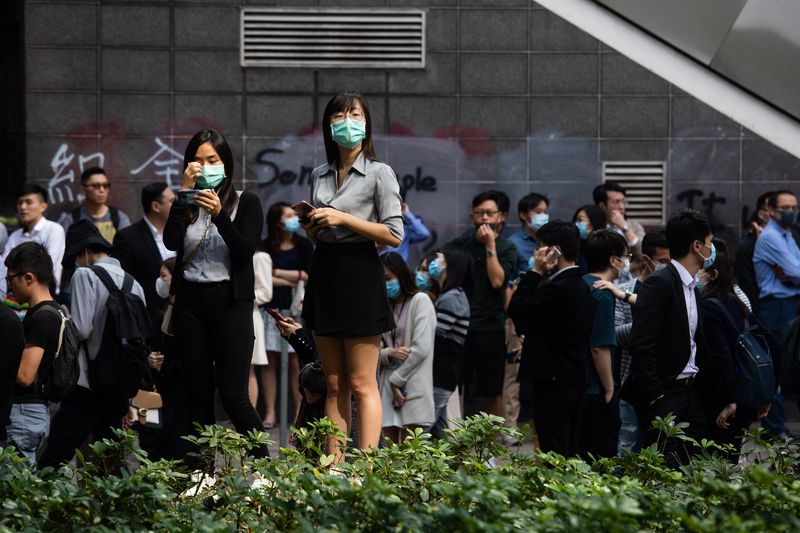
President Tsai Ing-wen is widely expected to win a second term tomorrow, buoyed by both an economy that saw business directed to Taiwan amid the U.S.-China trade war and her outspoken support for pro-democracy protests in Hong Kong. Even her China-friendly challenger, Han Kuo-yu, has said Hong Kong's model of limited autonomy wouldn't work in Taiwan, and President Xi Jinping should just allow fair elections in the territory.
For Taiwan, which China considers a province, the question is existential. Last year, Xi said Taiwan's separation from the mainland could not be allowed to continue from generation to generation. "China must and will be united," he said, using force if necessary.
Still, the election results are likely to show that Taiwan's people — similar to Hong Kong's — are growing more wary of Chinese control. While Tsai is extremely unlikely to actually declare independence, a move that could trigger a war, she will continue moving Taiwan and its people closer to the west.
As long as the U.S. guarantees Taiwan's security, Washington and Beijing will remain on a collision course.
— Daniel Ten Kate




Post a Comment