| Voters in Taiwan will cast their ballots for president tomorrow and again be confronted by this question: do they want closer ties with China? While as important as ever, the issue does seem less urgent at the moment. Partly it's because things are good. The Taiwan dollar began 2020 at an 18-month high, government bond yields are near all-time lows and stocks just had their best year in a decade. Economic growth has also been stronger than expected, with the government in November raising its 2020 forecast to 2.72% from an earlier 2.58%. 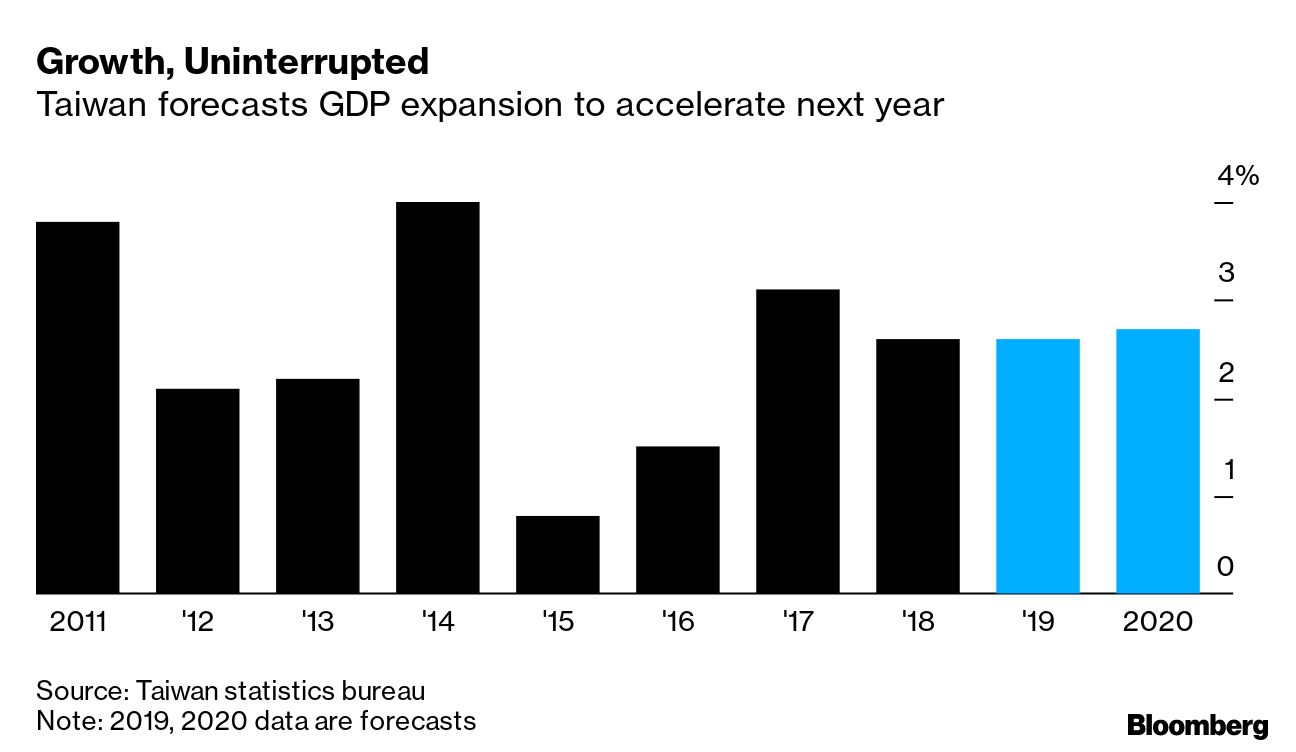 It's also partly because things are bad. Beijing has long proffered the idea of a closer political union based on the idea of "one country, two systems," the same principle by which it's governed Hong Kong. The protests that have wracked the city for the past half year, however, have made that idea distinctly less appealing for Taiwan. (Read an excellent explanation of Taiwan's relationship with China here.) That's not to say Beijing is giving up. Chinese sovereignty over Taiwan is a pillar of Communist Party doctrine and President Xi Jinping has made it clear he want to move towards unification. But Beijing's plate does look plenty full at the moment, with those protests in Hong Kong, slowing economic growth and ongoing tensions with the U.S. over everything from trade to Huawei to Xinjiang. Given all that, it's not hard to imagine why the appeal of the status quo could be quite substantial. Signing the Deal Two years into their trade spat, the U.S. and China look like they'll finally get a deal, albeit a limited one. Beijing announced this week that Vice Premier Liu He will be visiting Washington to ink the phase-one agreement on January 15, the first public Chinese confirmation of a tweet President Donald Trump sent on New Year's Eve. A number of American and Chinese executives will also be invited to the event with the hope that a series of corporate deals can also be unveiled, helping add to the aura of success and warming ties. Those fuzzy feelings may not last especially long, however. Trump is already pushing for talks on a phase-two pact to start "right away." It's possible those negotiations progress rapidly and smoothly, but that's not what recent history would suggest Outlook for Defaults The number of defaults in China's debt market hit a record high last year, which may well be surpassed this year given that nearly half the country's outstanding stressed bonds are coming due in 2020. That's not necessarily a bad thing. The threat of defaults motivates risk management and helps markets become better at pricing. Moreover, the $3.6 billion of defaults in 2019 represented a fairly small slice of China's $815 billion-plus onshore-debt market. That's not to say things are perfect. One issue that notably needs improvement is protection of investors when things go wrong. Stories of borrowers trying to pay their creditors with ham instead of money is not the sort of thing that inspires confidence. 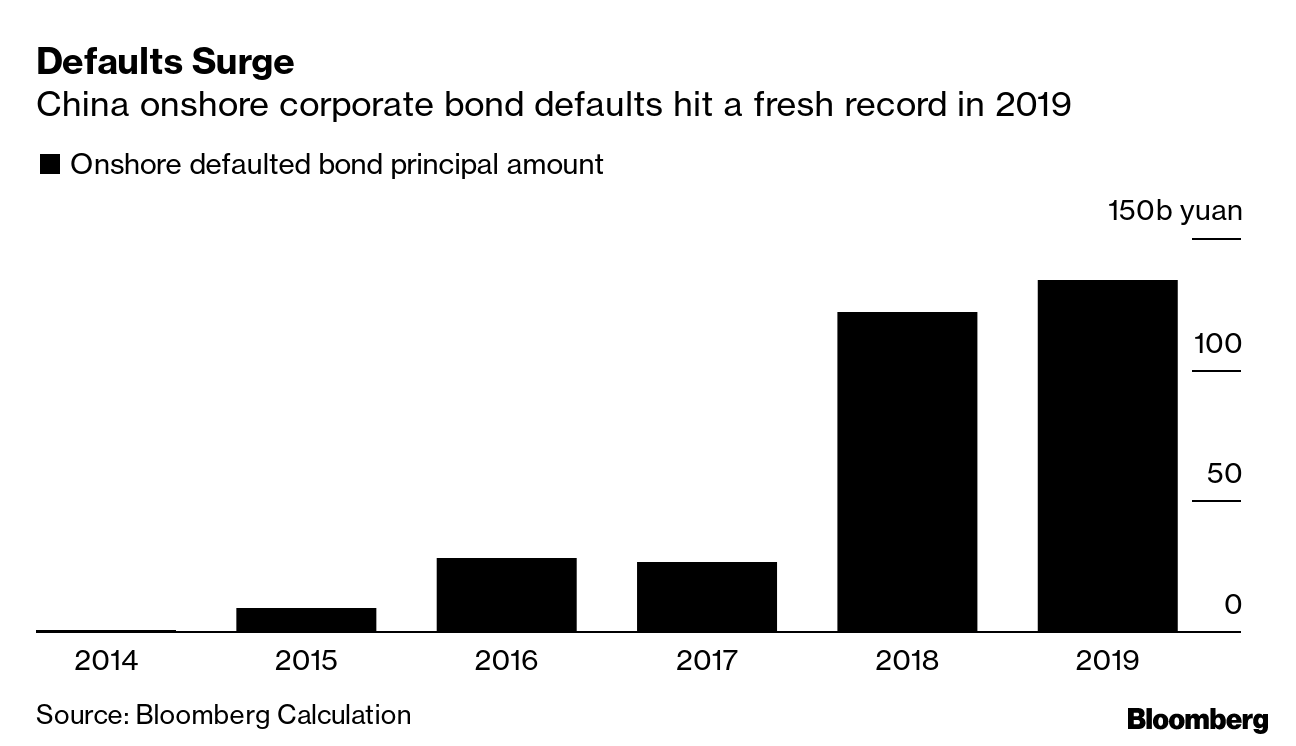 Mystery Illness The alarm was understandable. Dozens of people in the Chinese city of Wuhan had been diagnosed with severe pneumonia and doctors didn't know what was making them sick. There were fears - quickly dismissed by authorities - that it was Severe Acute Respiratory Syndrome, or SARS, which had killed hundreds in the early 2000s. Finally this week authorities linked the illnesses to a previously unidentified coronavirus. That, plus the apparent lack of human-to-human transmission and the release of eight patients from hospital, have helped to calm the situation. Dancing Elon Musk The future of China's car market as expressed through dance could look something like this: a smiling Elon Musk waltzing across a stage, silhouetted by flash bulbs. Here was Musk celebrating the start of deliveries from Tesla's first factory in China. That exuberance of course is no guarantee of success. The Chinese car market has seen two consecutive years of declining sales and General Motors, once China's top foreign automaker, warned this week that more headwinds are ahead. But the optimist would argue that the future of China's car market is electric and Tesla is best positioned to benefit. Stock markets for one appear to be embracing that logic, with shares of Tesla and its suppliers surging on the prospects for booming Chinese demand. 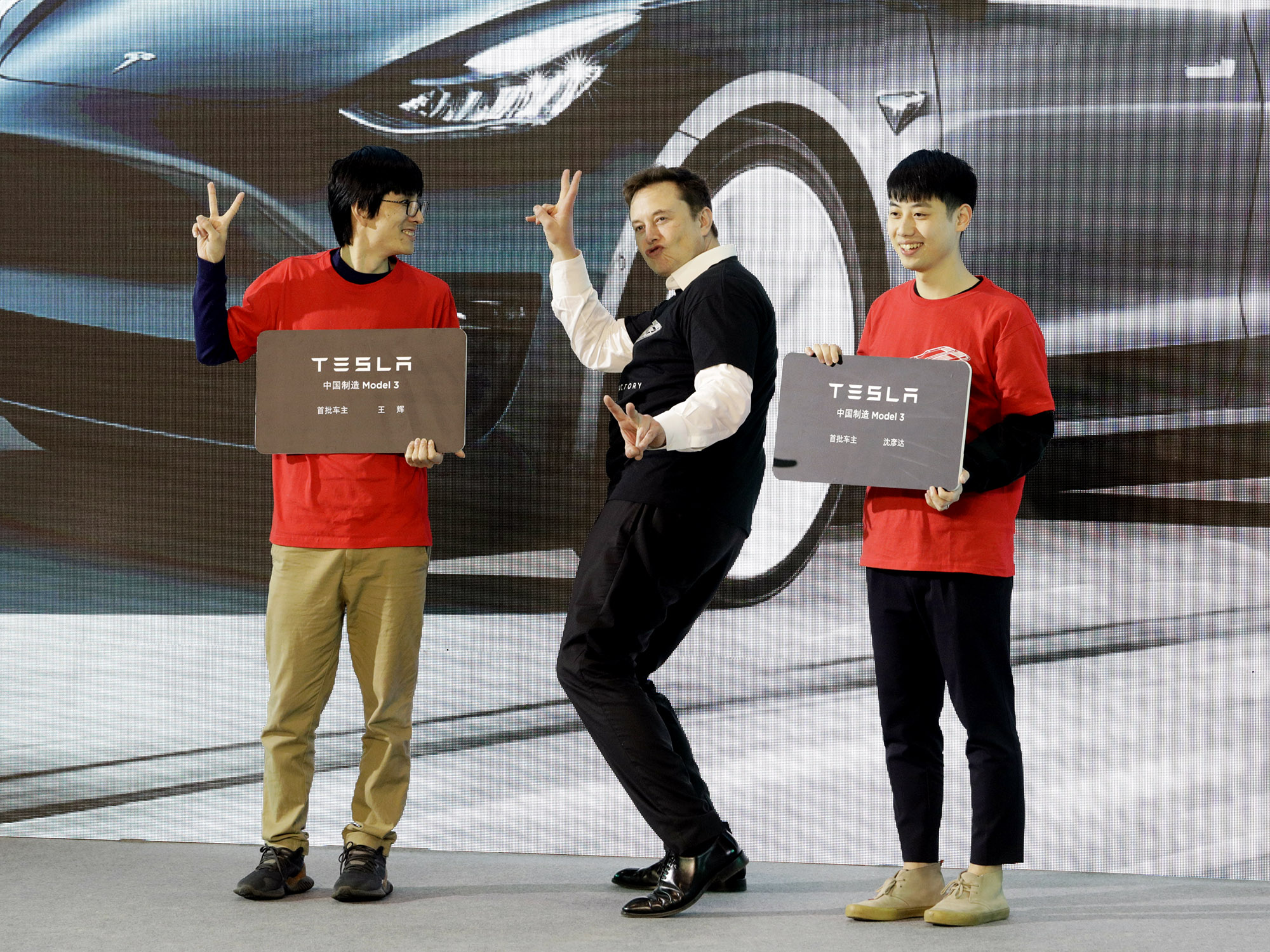 Photographer: Qilai Shen/Bloomberg What We're Reading: And finally, a few other things that caught our attention: | 


Post a Comment