| In July 1967, President Lyndon B. Johnson established a commission to figure out what led to the 159 instances of civil unrest in communities of color across the U.S. during that long, hot summer. The findings were damning, and they still stand today. "The abrasive relationship between the police and the minority communities has been a major — and explosive — source of grievance, tension and disorder," the 1968 Kerner Commission report reads. "The blame must be shared by the total society." That report went on to prescribe economic opportunities, social programs, better education and housing in addition to police reform as the cure for the strife. Yet, the conditions in 1967 held true after Rodney King in 1992, Timothy Thomas in 2001, Michael Brown in 2014 and George Floyd in 2020. So little has changed. Has anyone gotten it right? This week, I took a look at Cincinnati, Ohio, one of the sites of unrest in 1967, and its attempts to change. The city underwent an ambitious police reform effort after police shot and killed Timothy Thomas, an unarmed Black teenager, in 2001. Specifically, the city police department was asked to eschew arrests as the primary way to respond to problems and instead try to address the underlying issues that lead to crime. 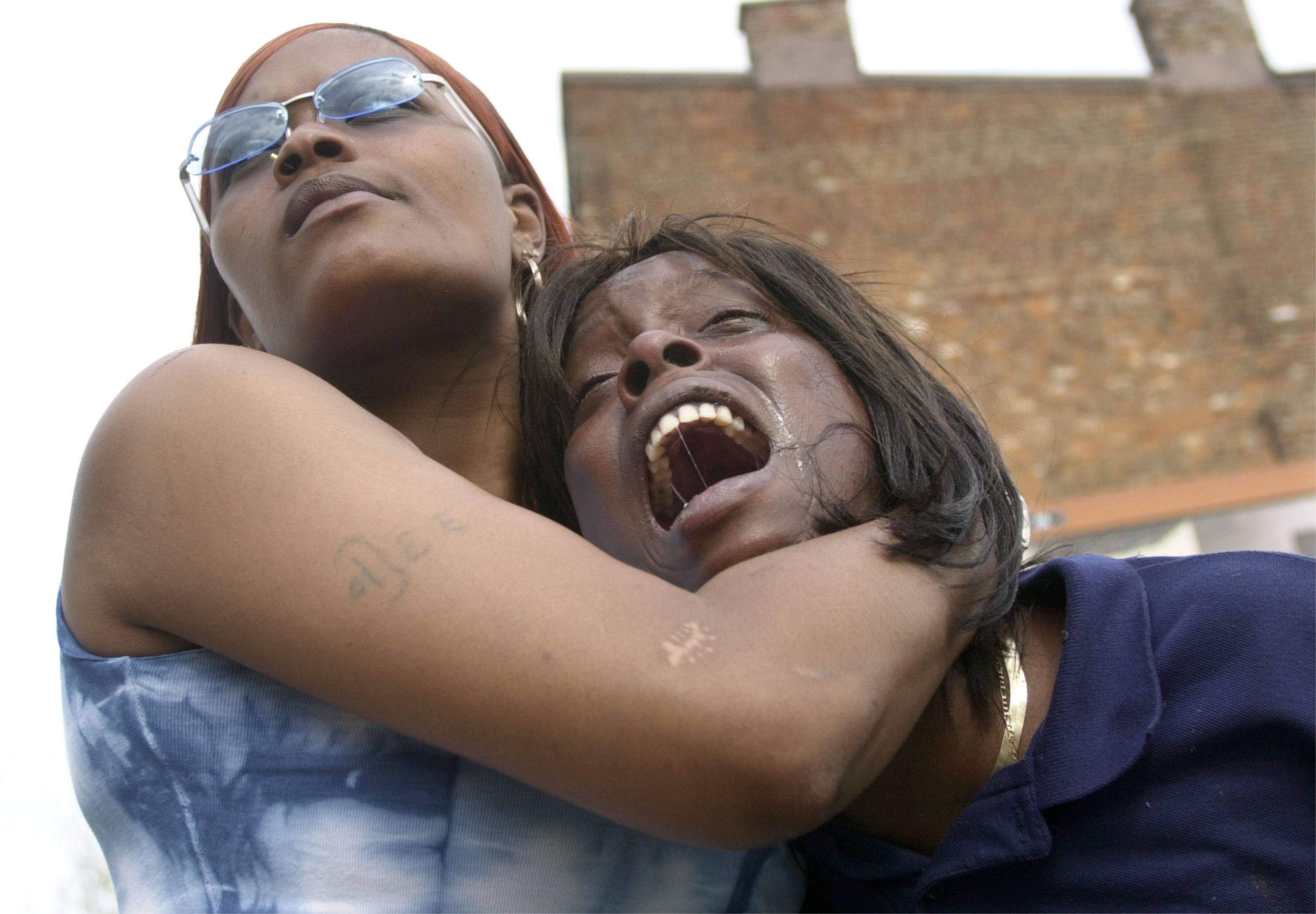 Mary Price, left, consoles Loria Artis after police officers opened fire with non-lethal ammunition following Timothy Thomas's funeral in April 2001. Photographer: Mike Simons/Newsmakers/Hulton Archive/Getty Images For a fleeting moment — thanks to pressure from a federal judge, community activists like Iris Roley and oversight from the U.S. Department of Justice — the reforms stuck. They worked, too. But as soon as the federal scrutiny was lifted and the reforms deemed a success, the city stopped holding up its end of the bargain. Frankly, it's just easier to police the old way. Now, only community activists like Roley are left to hold the pieces together. Cincinnati again looks like cities across America, perched on the precipice of unrest. Roley doesn't need a presidential commission or a research project to understand the source of the problems. "When you see communities that have been left out of development for 20 and 30 years you get what comes with that," she told me. "That is crime, that is blight, that is disorder, that is chaos, that is murder, that is violence." At the time Timothy Thomas was shot, and for years after, Cincinnati's Over the Rhine neighborhood was one of its most dangerous. Since then, the neighborhood has seen hundreds of millions of dollars in redevelopment and has rapidly gentrified. It was 60% Black in 2010 and by 2014 it had flipped to 65% white, according to a University of Cincinnati study. Stability has come with the influx of capital. A recent study in Philadelphia found that giving $20,000 to low-income homeowners for repairs in the 1990s led to less crime on those blocks in the years after. We know what works, and it just so happens that states and local governments are sitting on $350 billion in federal aid that they are struggling to spend. Yet, there's no political will to infuse these neglected communities with the resources they need, or to fund programs like the one in Philadelphia. Instead, we lean on the police, reap the consequences of using that force and repeat the cycle of wondering how we got here. We seem poised to keep sharing that blame as a society. — Fola Akinnibi | 





Post a Comment