| Tightening grip | Police in Hong Kong arrested four members of a group that organized an annual Tiananmen Square vigil, part of a broader push against pro-democracy activists. China's top agency in the city said their detention on accusations of failing to comply with national security legislation reflected the "fairness and justice of the law." - Read how the removal of the legislature's remaining directly elected opposition member completes the purge of the election system.
- Chinese artist and dissident Ai Weiwei said Credit Suisse is closing his foundation's account because of an alleged criminal record.
Imminent threat | U.S. President Joe Biden described the flooding in New York and New Jersey caused by Hurricane Ida as signs of worsening climate change and renewed his push for a $550 billion public works bill that he said would make communities more resilient. Speaking in New York yesterday, he said "these disasters aren't going to stop." - As the president prepares to address labor unions today, the administration plans to distribute one-time $600 pandemic relief payments to meatpacking and farm workers.
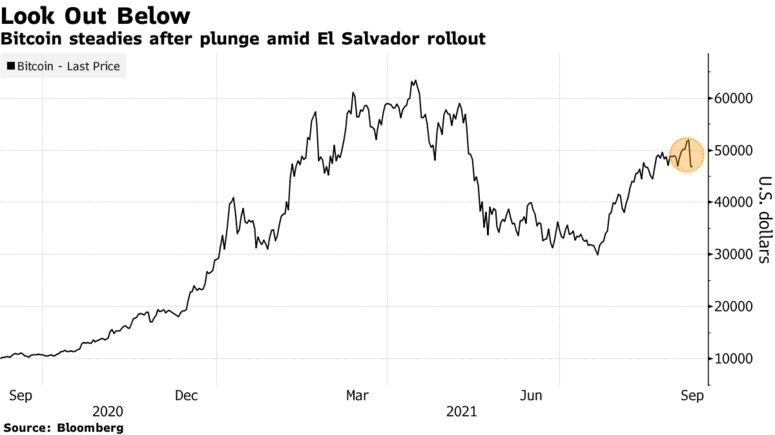 Bitcoin steadied somewhat today after plunging on El Salvador's troubled rollout of the largest cryptocurrency as legal tender. The experiment with Bitcoin — the biggest test of the token's real-world usefulness — had a rocky start due to technical glitches to the official digital wallet that later appeared resolved. President Nayib Bukele said on Twitter the country now holds 550 Bitcoins after buying when the price fell. Merkel's despair | With her once-mighty Christian Democrats staring into the electoral abyss, Angela Merkel faces a bitter end to an illustrious career as German chancellor, Patrick Donahue reports. The question that will dog her is whether an earlier intervention in the campaign would have salvaged the party's lackluster leader, Armin Laschet, as Social Democratic candidate Olaf Scholz gains momentum into the Sept. 26 vote. - Voters have heard little from Merkel's potential successors about how they'll reconcile their spending ambitions for Europe's biggest economy with the budget prudence that defined her chancellorship.
Thorny lineup | The Taliban included the leader of a U.S.-designated terrorist organization in a new Afghanistan government, as the West grapples with whether to recognize the administration. Sirajuddin Haqqani, who heads the Haqqani Network and is on the FBI's most wanted list, will serve as acting interior minister, potentially complicating any moves by Washington to cooperate with the group. - We explain why Taliban co-founder Mullah Abdul Ghani Baradar, the main public face of the group, is likely to find his job even harder.
- MTN is in talks with potential international buyers for its wireless business in Afghanistan as it seeks to exit the country, sources say.
Royal gains | Morocco's king is on the cusp of securing even greater power over policy, as a parliamentary vote today may see a long-dominant Islamist party join regional peers on the sidelines. The Justice and Development Party has been criticized for failing to revive an economy that shrank 6% last year or tackle corruption, while King Mohammed VI received praise for his role in handling the pandemic. Bloomberg TV and Radio air Balance of Power with David Westin weekdays from 12 to 1pm ET, with a second hour on Bloomberg Radio from 1 to 2pm ET. You can watch and listen on Bloomberg channels and online here or check out prior episodes and guest clips here. -
A mysterious blast that shook a centrifuge workshop in Iran is still reverberating among international nuclear monitors who now say some of their surveillance equipment went missing after the June incident. -
Brazilian President Jair Bolsonaro rallied thousands of supporters in yesterday's marches but showed little sign of winning back moderates who propelled him to the top job. -
The U.K. is set to take the lead among developed economies by raising taxes to trim pandemic budget deficits, an issue that's likely to dominate policy debate across the world in the coming years. -
U.S. lawmakers are barreling ahead with legislation to change the way Apple runs its App Store, unconvinced by its recent moves to address antitrust complaints from developers and regulators around the world. -
Former U.S. President Donald Trump frequently hints at but hasn't announced another presidential bid, a strategy that leaves him with an unrivaled $102 million war chest that could dissuade Republican challengers. -
A Colombian businessman close to Venezuelan President Nicolas Maduro can be extradited to the U.S., where he faces money laundering charges, the top court in the Atlantic Ocean island nation of Cape Verde ruled. And finally ... Turkey's decision to pull out of the Istanbul Convention, a European treaty to combat violence against women, has raised concern about safety and female participation in the economy and is seen as another sign of a shift to a brand of conservatism out of sync with Western neighbors. As Burhan Yuksekkas and Donna Abu-Nasr report, the withdrawal sparked protests across Turkey, where stories of violence including honor killings of women have for years been front-page news. 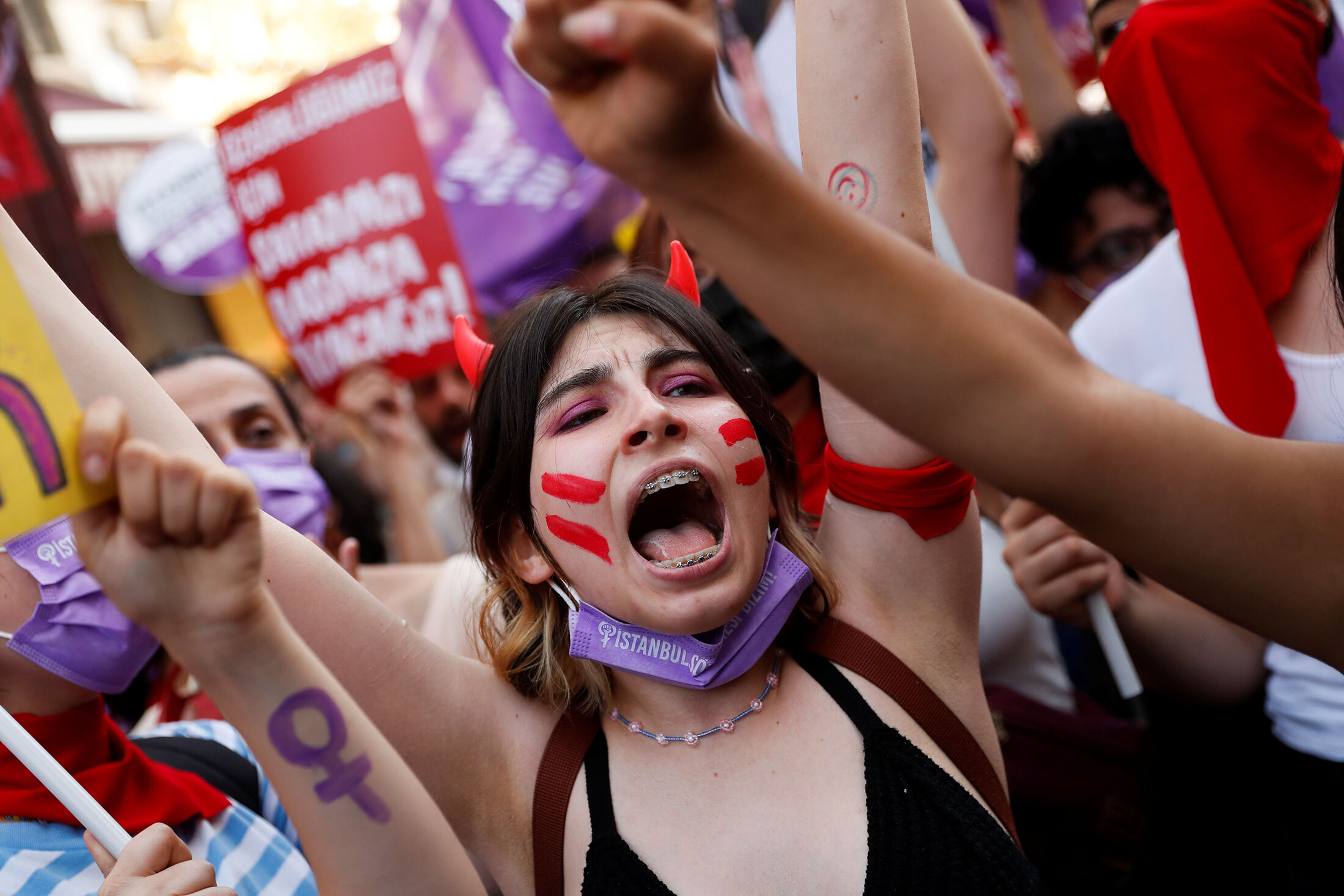 A protest in Istanbul on July 1 against Turkey's withdrawal from the Istanbul Convention. Photgrapher: Murad Sezer/Reuters
| 




Post a Comment