| Even the crisis in Afghanistan hasn't been able to diminish world concern over Iran's nuclear program. When Israel's new prime minister, Naftali Bennett, and U.S. President Joe Biden hold their first meeting at the White House today, they're likely to reveal how much they disagree on the best way to halt the Islamic Republic's atomic ambitions. While Bennett rejects reviving the 2015 nuclear deal with Tehran and his government has warned of possibly carrying out attacks against installations, Biden favors a diplomatic accord. 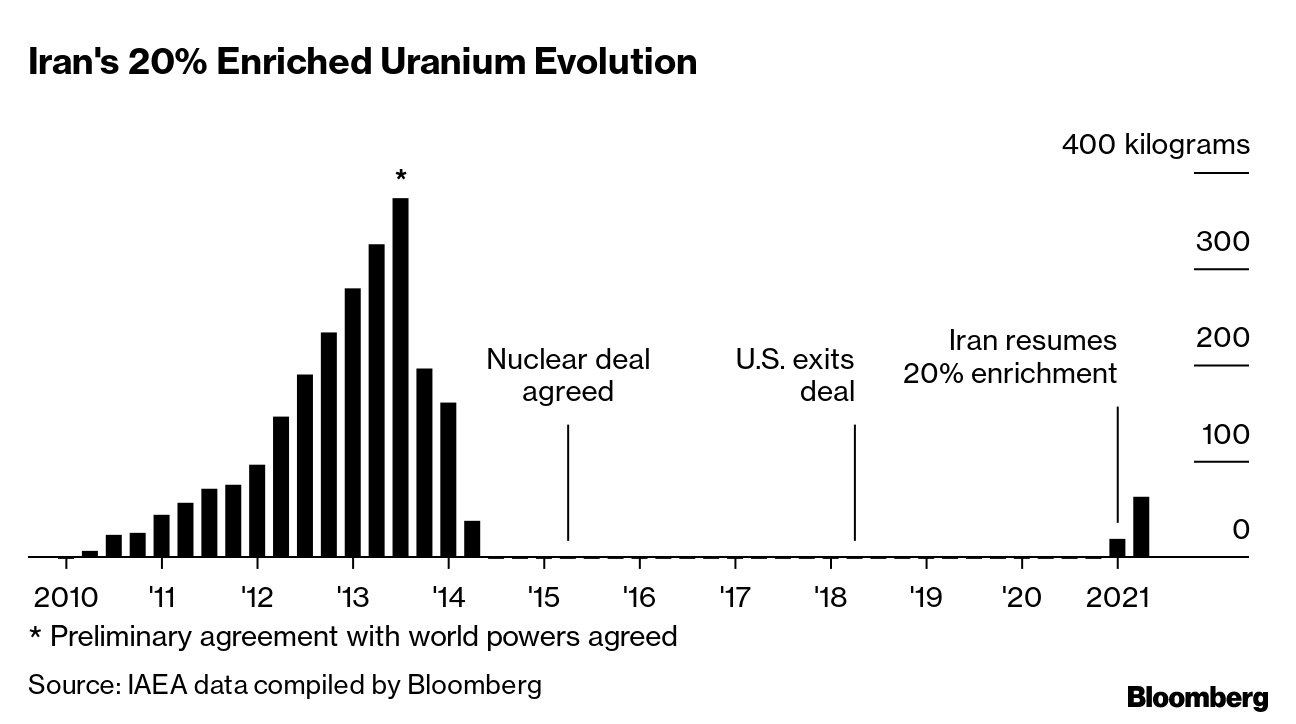 Israel's position is especially sensitive since Bennett's predecessor, Benjamin Netanyahu, helped convince Donald Trump to renounce the deal in mid-2018 with no apparent fallback plan if Iran pursued a bomb. Negotiations between Tehran and world powers on restarting the accord in return for U.S. sanctions relief, including on oil exports, have stalled since hardline cleric Ebrahim Raisi was elected Iran's president in June. The return to talks isn't expected to get any easier now that an anti-western conservative has been installed as foreign minister. The top American negotiator repeated yesterday Washington is prepared to make compromises "on difficult issues" if Iran does the same. Yet, as Jonathan Tirone reports, Tehran's restrictions on access to its nuclear sites in retaliation for sanctions has prompted international inspectors to develop contingency plans, such as updating an agreement on frequency of visits, that they hope will plug knowledge gaps should statesmanship fail. In the meantime, Bennett's strategic vision for confronting Iran is taking a parallel tack: strengthening Israel's ties with other countries in the region, such as the United Arab Emirates, that are hostile to Tehran. Iran's leaders, in turn, are courting allies in Beijing and Moscow. Israel and Iran both have new governments, but the intractable nature of their conflict is hardening. Biden's next crisis may be just around the corner. — Gwen Ackerman
| 






Post a Comment