| Losing $1 trillion puts people on edge. And this week — not a fortnight after Beijing's crackdown on after-school tutoring sparked a shocking sell-off — a commentary in a newspaper little read outside China jolted the world of global finance again. To be fair, it was a strongly worded article that appeared on page four of the Economic Information Daily on Tuesday, likening video games to "spiritual opium" and "electronic drugs." But to investors already wondering what other industries might be targeted in Beijing's push to increase national security and reduce inequality, it seemed to clearly say that gaming was next. 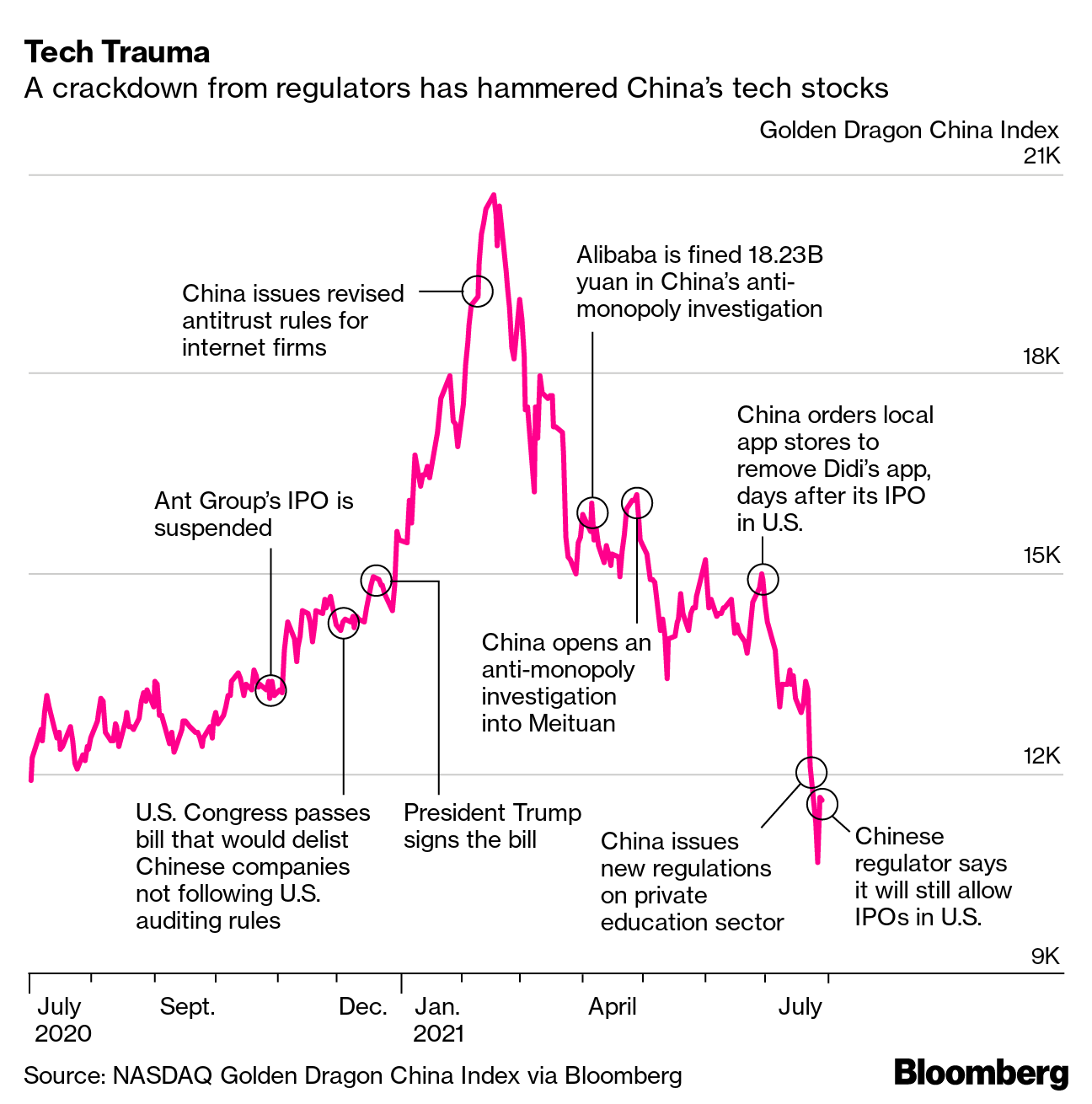 Was the ensuing rout in shares of Tencent and NetEase an overreaction? Hu Xijin, the outspoken editor of China's Global Times newspaper, argued it was. In a social media post, Hu called the Economic Information Daily article a "normal" news story that led to "over-interpretation." Markets, without a doubt, were thinking sell first and ask questions later. Having been taken by surprise twice in a month — first by Didi Global and then for-profit education firms — the hair trigger seems quite justified. Fears of being caught off guard are more pervasive than ever. It's why speeches by President Xi Jinping, once dismissed by analysts and investors as impenetrable party-speak, are now being scoured by market participants for policy direction. The danger, of course, is that with so many searching for hidden signals, it becomes increasingly likely that events, words or newspaper articles will appear more meaningful than they really are. That may well make overreaction and tumult the order of the day. The recent reshaping of Chinese regulation has created many losers. But there are also winners, with Chinese sports apparel makers some of the clearest beneficiaries. The State Council, China's cabinet, published a circular Tuesday that outlined how Beijing aims to promote participation in sports and get more of the population to exercise. Those steps include renovating more than 2,000 sports parks, fitness centers and stadiums, as well as supporting small- and medium-sized companies that facilitate exercise, organize sporting events and produce fitness equipment. Shares of Anta, Li Ning and other firms in the sector rallied in response. China this week began imposing travel restrictions as the delta variant fueled the nation's broadest outbreak, spanning 15 provinces and municipalities, in more than a year. While the number of confirmed cases – about 500 in the past two weeks — isn't large compared with some other countries, it has jolted a population that's been living largely virus-free for many months. 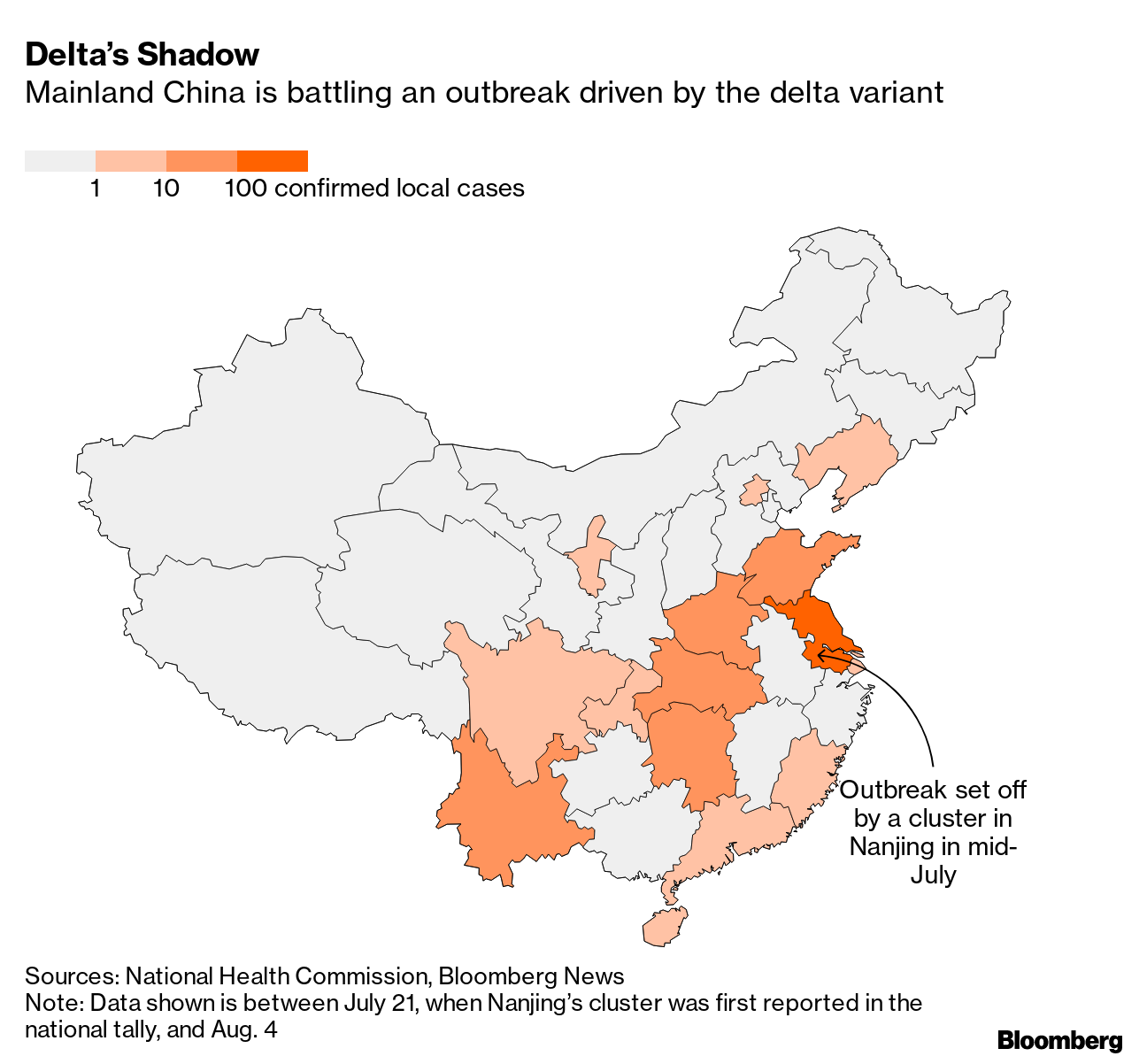 Authorities have responded by limiting rail and air links between cities, with some regions also curbing local public transportation. Beijing began controlling the number of people able to ride the capital's subway system. While there have been no deaths, the economic impact is already starting to show. Hotel occupancy in the city of Nanjing, where one cluster of infections emanated, has plunged since late July. Authorities have also closed tourist sites and canceled large-scale events. Economists at Nomura cut their estimate for economic growth this quarter to 5.1% from 6.4%. Goldman Sachs said the impact could be 0.7 percentage points, though it didn't lower its forecast for 6.2% growth in the third quarter. Any notion that Donald Trump's trade war might erode China's position as a powerhouse of global commerce looks increasingly misplaced. Not only is China exporting more than ever, a new study has found that the sophistication of those shipments has increased as well. That determination comes from Harvard University's Growth Lab, which examined the complexity of different countries' exports in 2019 and ranked China 16th globally, three places higher than when the trade war started in 2018. The gap between China and the U.S., which was ranked 11th, has more than halved over the past decade. China now has the technical prowess to make just about anything any other country can, according to Tim Cheston, a senior research manager at the Growth Lab. Looking forward, though, it means increasing the sophistication of its exports will also be much harder. That's because China will no longer be able to absorb know-how from other parts of the world, but will need to become truly innovative to move up the rankings. 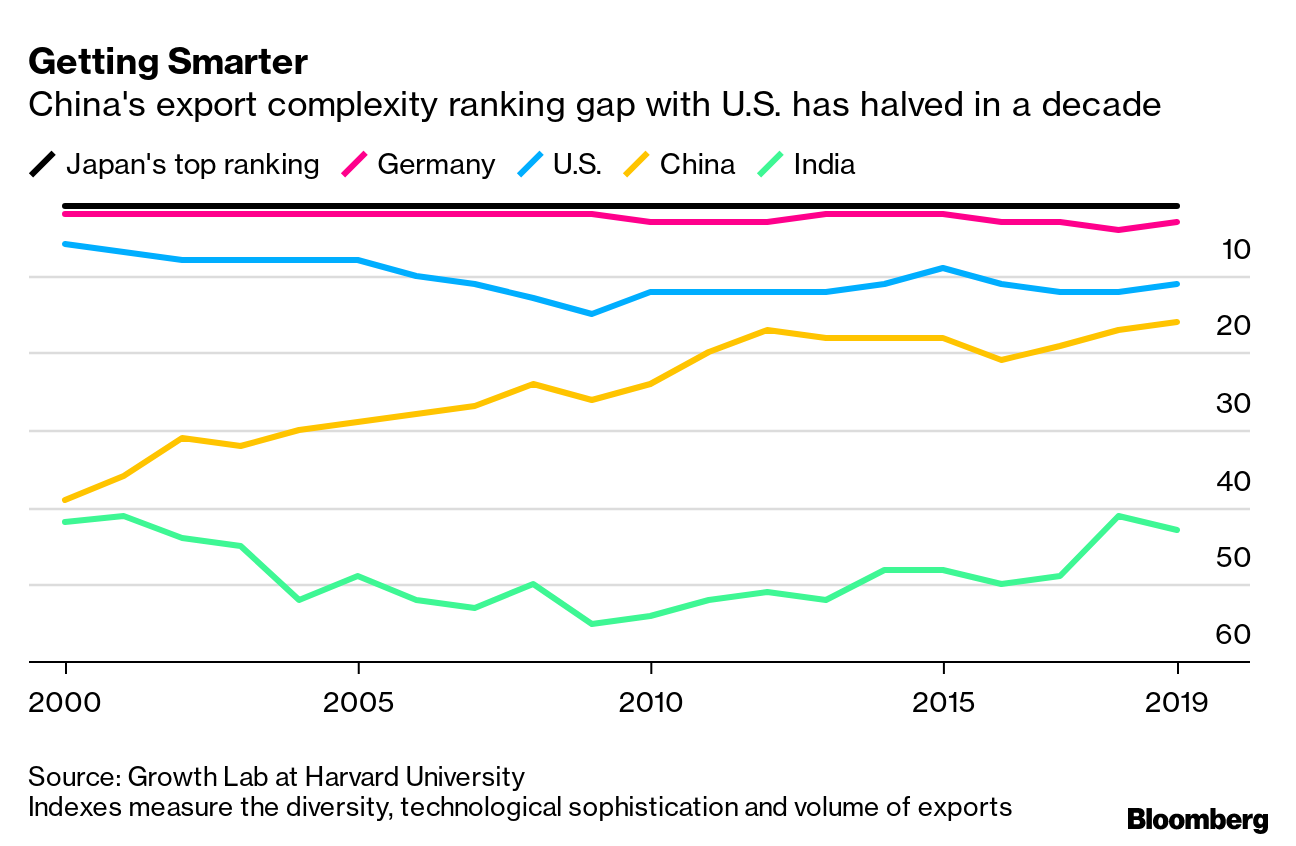 And finally, a few other things that caught our attention:  Track which countries win the most gold. Keep tabs on the latest results and medals won by each country or delegation through the end of the Tokyo Olympics on Aug. 8. We've removed this one from behind the paywall so you can revisit it whenever you'd like. | 





Post a Comment