| The evacuation operation in Afghanistan took on new urgency after Thursday's blast killed 13 U.S. service members and at least 75 Afghan citizens. As the deadline nears, there seems to be little chance of an extending the deployment of U.S. forces. "We are currently on a pace to finish by August 31. I am determined to complete our mission," President Biden said last week. So far, more than 100,000 people have been evacuated by U.S. military and coalition planes. The White House seems confident that it will extract "every American who wants to leave" by the deadline, estimating that about 1,000 American citizens remain in a country now controlled by the Taliban. Yet, as Michael R. Bloomberg writes, there is another group of individuals that cannot escape by then: the thousands of Afghans who put themselves at risk by supporting the U.S. war effort: "The administration should make clear that it intends to fly out not just holders of U.S. passports and green cards, but also Afghans and their families who've applied for Special Immigrant Visas," he wrote. 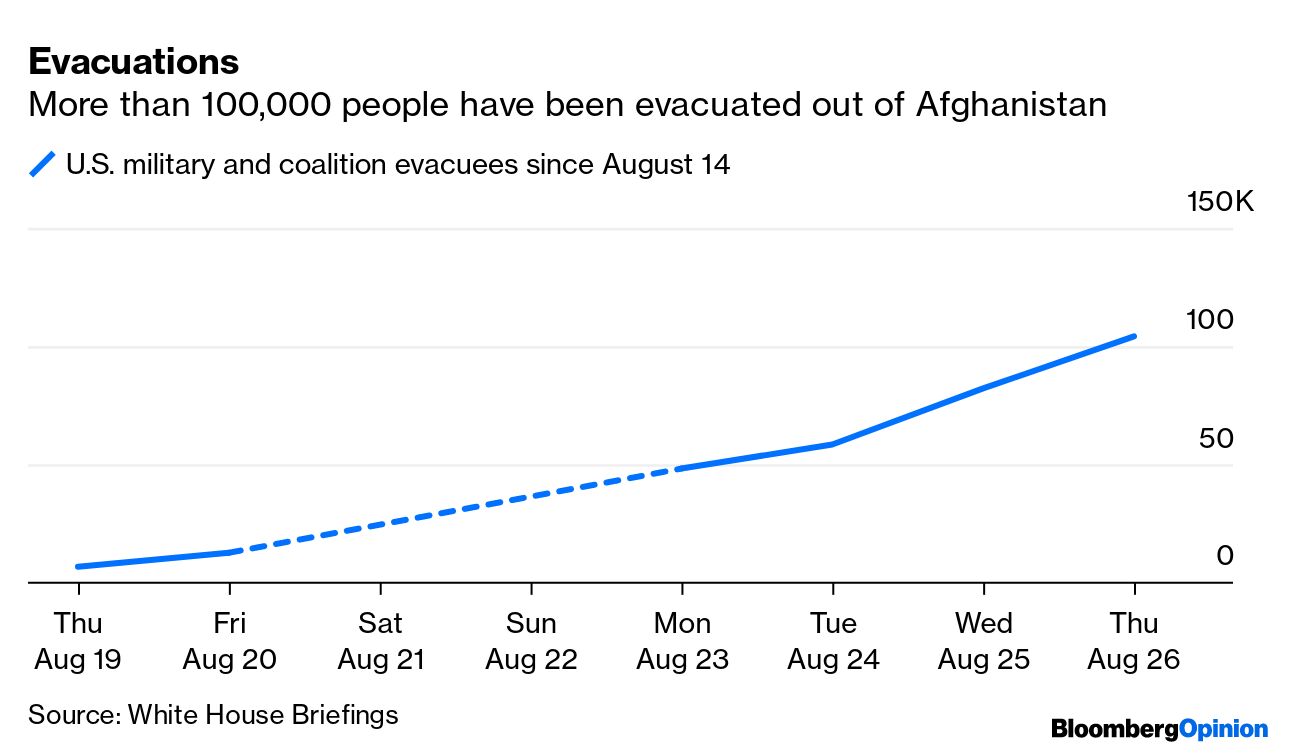 As many Americans remain understandably gripped by this searing human tragedy, others are pointing to one that is burning at a slower pace across the world: the Covid-19 pandemic. While wealthy nations have vaccinated tens of millions of their own people, they've fallen short on rescuing those in need. Biden, in particular, was sharply criticized last week by public health experts and Democrats in Congress for not spending billions marked for manufacturing vaccines that could be sent to other nations. Parts of the West have begun planning the distribution of booster shots for their populations, a move that could intensify vaccine inequality. Out of more than 5 billion doses distributed globally, only 0.3% were in low-income nations. 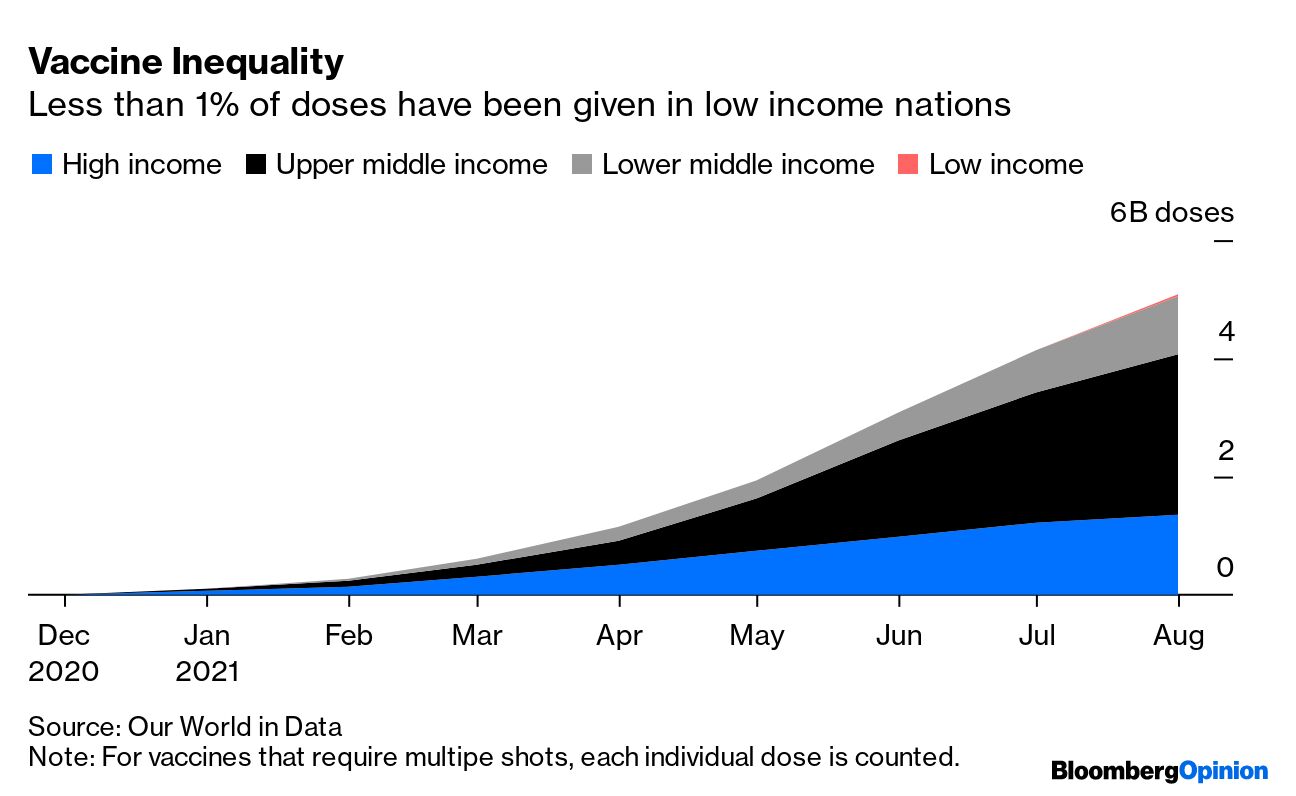 The U.S. and others have pledged to donate millions of vaccines, but progress is painfully slow. The U.S. and China are the closest to meeting their targets, having already delivered about 40% of their promised totals this year. With just four months left in 2021, it's clear that pledges will not be fulfilled by the end-of-year deadline without a rapid acceleration in donations. 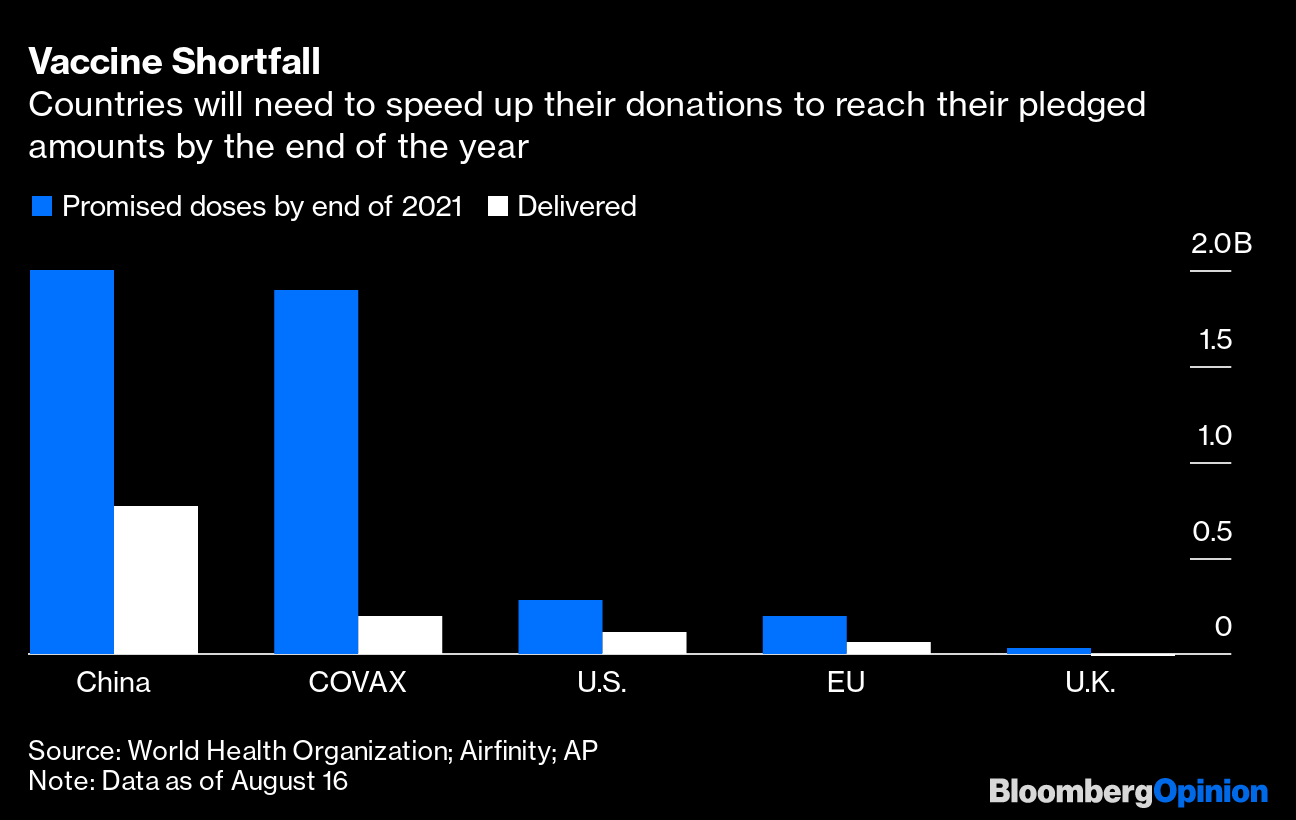 The beneficiaries of American vaccines range from desperately poor Afghanistan and Senegal to wealthy Canada, whose decision to dip into the COVAX supply was criticised earlier this year. Australia and New Zealand also received COVAX shipments. 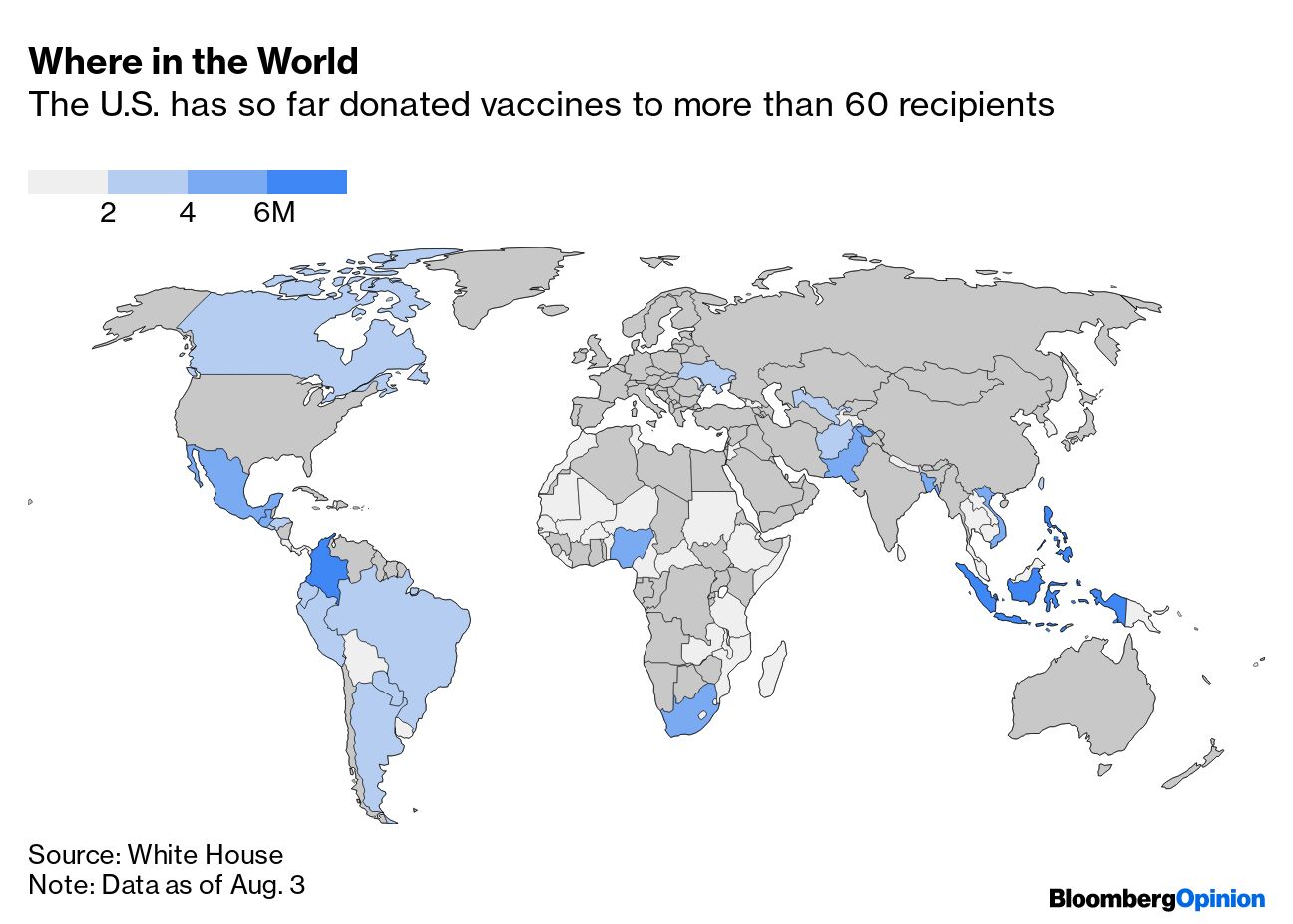 What's worse is that developed nations — including the U.S. — have been accused of hoarding surplus doses. In late July, U.S. states were reportedly sitting on around 26 million unused doses, enough to protect 13.1 million people, a significant amount of which was due to expire in August. Airfinity analysis of the U.K. suggests the nation will have 219 million surplus doses in 2021. That's more than seven times the amount it's pledged to other countries. Of course, that's not to say the situation in the West doesn't continue to look concerning. The delta variant has sent cases soaring again and health workers are braced for a potential deadly twindemic as fall draws nearer. But the simple fact is that rich nations are in a privileged position, with large proportions of their populations protected against severe disease and death. The rest of the world can't say the same, and they need help. Read more on this topic: More Shots Alone Won't Win the Global War on Variants: Editorial Board How the G-7 Can Really End the Global Pandemic: Gordon Brown Biden Falls Short on Pledge for U.S. to Be the World's Vaccine 'Arsenal,' Experts Say: New York Times Bloomberg's best data: Women Are Helping Keep The Pandemic Boat Boom Afloat: Justin Fox Florida is America's Future: Old, Southern and Retired: Allison Schrager Delta Won't Send Us Back to Baking in Sweatpants: Andrea Felsted Instagram: A post shared by Bloomberg Opinion (@... Instagram: A post shared by Bloomberg Opinion (@... Instagram: A post shared by Bloomberg Opinion (@... This is the Theme of the Week edition of Bloomberg Opinion Today, a digest of our top commentary published every Sunday. New subscribers to the newsletter can sign up here. | 


Post a Comment