| Chief Justice of India N.V. Ramana, in what may be an unprecedented judicial criticism of the way the sedition law is used by the government to crush liberties, asked why a colonial law used against Mahatma Gandhi and Bal Gangadhar Tilak continued to survive in the law book after 75 years of Indepenence. "Sedition is a colonial law. It suppresses freedoms. It was used against Mahatma Gandhi, Tilak... Is this law necessary after 75 years of Independence?" Chief Justice Ramana, heading a three-judge Bench, orally addressed Attorney General K.K. Venugopal and Solicitor General Tushar Mehta, appearing for the Centre. The CJI said sedition or Section 124A of the Indian Penal Code was prone to misuse by the government. "The use of sedition is like giving a saw to the carpenter to cut a piece of wood and he uses it to cut the entire forest itself," Chief Justice Ramana lashed out. 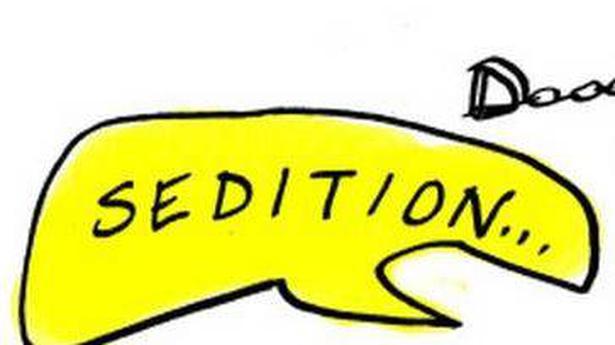 The CJI's oral statement in open court strikes a significant note amidst rising public denouncement of Central and State law enforcement agencies using the sedition law to silence dissent, muffle free expression, and deny bail to incarcerated activists, journalists, students and civil society members. A number of petitions have been filed highlighting the "chilling effect" sedition has on the fundamental right of free speech. The CJI's remarks have also opened the floor for debate and introspection on the court's own judgment in 1962, in the Kedar Nath case, which upheld Section 124A. The CJI drew the attention of the Attorney General to the conviction rates under sedition. "If you look at the history of use of this Section 124A of IPC, you will find that the conviction rate is very low. There is misuse of power by executive agencies," the Chief Justice said. The CJI asked the government why it did not throw out the sedition law along with the hundreds of "stale laws" it had expunged from the statute books. "Your government is taking out a lot of stale laws from the law books, why have they not looked into this," Chief Justice Ramana asked Venugopal. People had suffered and were scared of the misuse of the sedition law, Chief Justice Ramana said. "We are not blaming any particular government or State. But do look at how Section 66A of the Information Technology Act is continuing to be used... How many unfortunate people have suffered? And there is no accountability for all this..." he noted. The CJI said the sweeping powers of Section 124A gives even a village police officer carte blanche to trample on the right to liberty and free speech of ordinary citizens. "If a police officer wants to fix anybody in a village for something, he can use Section 124A... People are scared. Our concern is misuse of the law and the lack of accountability. Why has it continued in the statute book even after 75 years of our Independence," Chief Justice Ramana asked the government's law officers repeatedly. The Chief Justice said the Supreme Court would "definitely look into this Section 124A". "The situation on the ground is grave... If one party does not like what the other is saying, Section 124A is used... It is a serious threat to the functioning of individuals and parties," Chief Justice Ramana noted. Venugopal submitted that the court need not strike down Section 124A. "It is enough to see if there were any excesses in its use and limit the Section to its real purpose… That would be enough," Venugopal said. The Bench issued notice to the Centre on a petition filed by retired Army General S.G. Vombatkere, represented by advocates P.B. Suresh and Prasanna S., to quash Section 124A.  Maharashtra govt says pleas by Bhima Koregaon accused are 'fallacious' The Maharashtra government on Thursday told the Bombay High Court that the plea challenging the order of extending the period of filing a chargesheet in the Bhima Koregaon violence case by the Sessions Court is "fallacious". Advocate General (A-G) Ashutosh Kumbhakoni was arguing before a Division Bench of Justice S.S. Shinde and N.J. Jamadar. The court was hearing a petition filed by Sudha Bharadwaj along with other accused in the case alleging that the Pune Sessions Court Judge K.D. Wadane was not authorised to take cognisance of the supplementary chargesheet and to grant an extension to Pune Police for filing the chargesheet. Kumbhakoni pointed out that on May 17, 2018, provisions of the Unlawful Activities Prevention Act (UAPA) were added to the case, and on January 24, 2020, the Centre passed an order to transfer the probe to the National Investigation Agency (NIA). He said the petitioners' contention is that the special NIA court comes into the picture after the UAPA is added. But just because a Special Court has been constituted does not mean the NIA court will come into the picture in the case, he added. The Bench asked: Special Courts have been constituted, then why not take the case before the Special Courts? The A-G replied that the Special Courts come into the picture only after the NIA comes into the picture. He also said the special NIA court had no jurisdiction to try and decide any pre-trial proceedings, and under the UAPA, the prosecution has no option but to go to the Sessions Court. The arguments will continue on July 23. In the last hearing, advocate Yug Chaudhry representing Ms. Bharadwaj, who is lodged at the Byculla jail, had pointed out that Wadane passed two significant orders, the first of which was on November 26, 2018, when he granted an extension of 180 days' time period to the Pune police for filing the chargesheet in the case, as opposed to the mandated 90 days according to the Code of Criminal Procedure. He said that on December 21, 2019, Wadane had received the chargesheet, taken cognisance of it, and issued processes. Chaudhry also said that Wadane had acted outside of his jurisdiction and was not authorised to do so. Hold bypolls to seven vacant Assembly seats in Bengal, Trinamool urges EC A delegation of six Trinamool Congress MPs met the Election Commission on Thursday urging it to hold byelections to seven vacant Assembly seats in West Bengal, arguing that the number of Covid-19 cases at present were 17 times lower than the numbers in April-May when the Assembly polls were held. The delegation included Lok Sabha MPs Sudip Bandhopadhyay, Saugata Roy, Kalyan Banerjee, Kakoli Ghosh Dastidar and Rajya Sabha MPs Derek O' Brien and Sukhendu Sekhar Ray. It is crucial for the TMC that these bypolls are held before November for Mamata Banerjee to continue in the Chief Minister's chair. Article 164(4) of the Constitution states: "A Minister who for any period of six consecutive months is not a member of the Legislature of the State shall at the expiration of that period cease to be a Minister." Having lost the Nandigram seat in the Assembly polls by a margin of 1,956 votes, currently she is not a member of the Assembly. Banerjee took oath on May 5 and has time till November 5 as per the law. She was hoping to get elected from the Bhabanipur Assembly seat, her home constituency. To facilitate the by-poll, MLA and Minister Sobhandeb Chattopadhyay resigned from the seat on May 21. Byelections to seven Assembly seats — Shamsherganj and Jangipur in Murshidabad, where the candidates died before the polls could be held; Santipur and Dinhata where the elected BJP MPs (Jagannath Sarkar and Nisith Pramanik) did not take oath as MLAs; and Khardah and Gosaba, where the successful candidates died after the polls were held, and Bhabanipur — are due in the State. The TMC delegation, in a memorandum submitted to the EC, said the law required that the vacancies must be filled within six months. In April 2021, when the eight-phase elections were held in the State, the number of Covid-19 cases rose from 6,000 cases per day to 17,000 per day, the memorandum pointed out. "Despite the rise in Covid-19 cases and our repeated requests, the remaining phases of the polls were not clubbed together, as the EC concluded that it was safe to conduct elections," the memorandum says. The number of cases now was 17 times lower with fewer than 831 cases reported in July as per the data till Wednesday, the memorandum said, arguing that this was a conducive time to hold the polls. NHRC panel recommends CBI probe into complaints of heinous crimes after Bengal polls The National Human Rights Commission committee formed to probe complaints of post-poll violence in West Bengal has recommended that cases of heinous crimes be transferred to the CBI. In its report to the Calcutta High Court on Monday, the panel said it received 1,979 complaints covering over 15,000 victims during its enquiry, which included visiting the State from June 24 to July 10. "A large number of cases related to murders, rapes, molestation and vandalism were received from local sources in West Bengal while the teams were camping there," the report said. The Calcutta High Court-ordered panel, which was headed by NHRC member Rajiv Jain, concluded that the State government had exhibited apathy towards the victims and that there was "retributive violence" by Trinamool Congress supporters. "There is need to provide justice to victims and restore their confidence in the criminal justice system, which can be best rendered by a neutral agency. Hence, it is recommended that all heinous cases, including murder, unnatural deaths, rape and grievous hurt, and complaints carrying these allegations, should be transferred to the CBI for investigation," the report said, adding that the trial of the CBI cases should be conducted outside West Bengal. Rishabh Pant among two members of Indian squad diagnosed with Covid-19 in U.K. At least two members of India's touring contigent in the United Kingdom have been diagnosed with Covid-19. Wicketkeeper-batsman Rishabh Pant and throwdown specialist Dayanand Garani are understood to have contracted the virus during the Indian squad's break after last month's World Test Championship final loss to New Zealand. Consequently, India's squad, which reassembled in London over the last couple of days, has travelled to Durham without five individuals due to Covid-19-related issues. Besides Pant and Garani, reserve opener Abhimanyu Easwaran, wicketkeeper Wriddhiman Saha and bowling coach Bharat Arun are understood to have been isolated for having come in close contact with Garani. 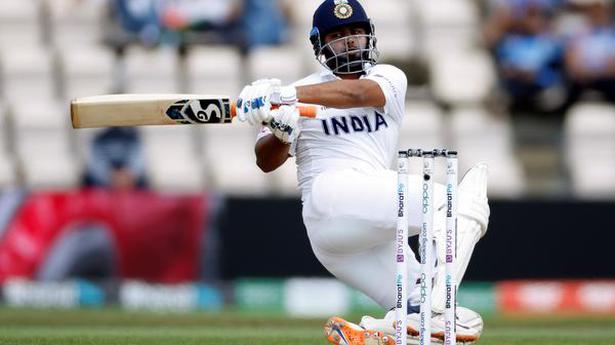 It is understood that the three suspects who came in close contact with Garani have so far tested negative and have been asked to remain in isolation till Sunday. If their test on Sunday returns negative, they can join the rest of the group in Durham on Monday. The spurt of Covid-19 cases has cast a shadow on India's preparation for the five-Test series against England, starting in Nottingham on August 4. India is scheduled to face SelectCounty XI in a warm-up game at Durham from July 20.
It is understood that once Pant, who attended a Euro game at Wembley, was confirmed to have contracted the virus last week, three other players -- a spinner, a pacer and a reserve pacer -- served an isolation period before being cleared to enter the biosecure bubble and board the bus to Durham. Covid Watch: Numbers and Developments The number of reported coronavirus cases from India stood at 3,10,20,392 at the time of publishing this newsletter, with the death toll at 4,12,460. Evening Wrap will return tomorrow. | 
 Open in browser
 More newsletters


Post a Comment