| Hello. Today we look at the Fed's watching brief on inflation, how the Delta variant is surging across Southeast Asia, and imbalances in the euro zone. No Fate"No fate but what we make." That's the catch-phrase in the Terminator movies. It may also be the takeaway from Federal Reserve Chair Jerome Powell's two days of congressional hearings on the economic and policy outlook this week. In Powell's case, it's FAIT that's under scrutiny — the new flexible average inflation targeting strategy that was adopted last year and commits the Fed to overshooting its 2% inflation target and to a broader definition of full employment. Earlier this year, the Fed's forecasts for no interest-rate hikes until 2024, despite ample evidence of a strong economic recovery, fueled criticism about a return of 1970s-style, debilitating inflation. Powell consistently telegraphed this week that the Fed's eyes are on the ball, and that it won't be patient beyond year-end if price pressures remain elevated. "Inflation is not moderately above 2%. It's well above 2%," he said Wednesday. "The question will be, where does this leave us in six months or so." 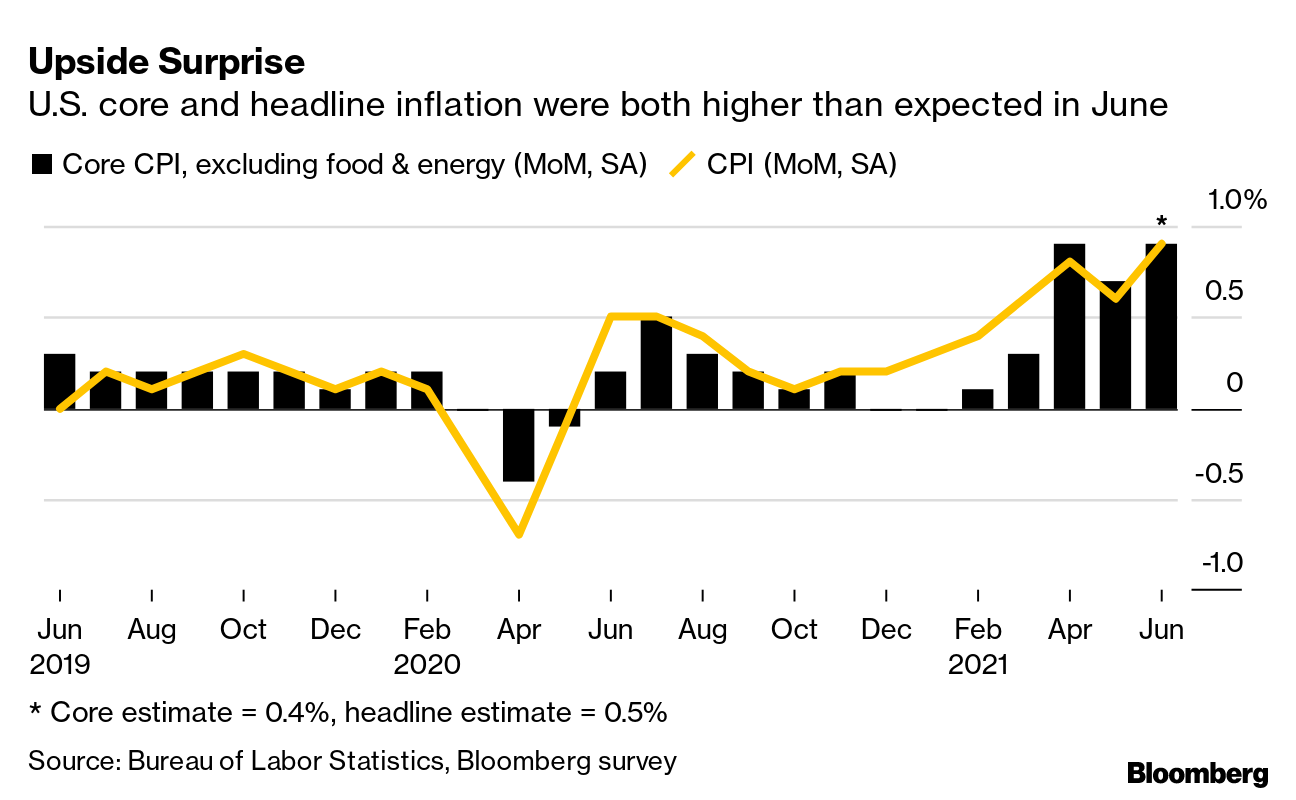 The Fed chief alluded to how the pandemic could have long-term effects on the job market, potentially stoking wage growth in some sectors. "This particular inflation is just unique in history," he said Thursday. "We're humble about what we understand." "We won't have to wait, you know, a tremendously long time, I don't think, to know whether our basic understanding of this is right."
Over the two days, he repeatedly pledged that the Fed would act if indeed broad-based inflation takes hold. Weeks ago, one narrative in the bond market was that the retreat in longer-term Treasury yields reflected fears about a Fed policy mistake, where it allowed inflation to get out of hand, and then needed to tighten quickly in response — tanking the economy. The retreat in yields over the two days of Powell's testimony instead suggests that's not the fated outcome. As Treasury Secretary Janet Yellen put it Thursday, the drop reflects the view that "inflation does remain under control."
—Chris Anstey The Economic Scene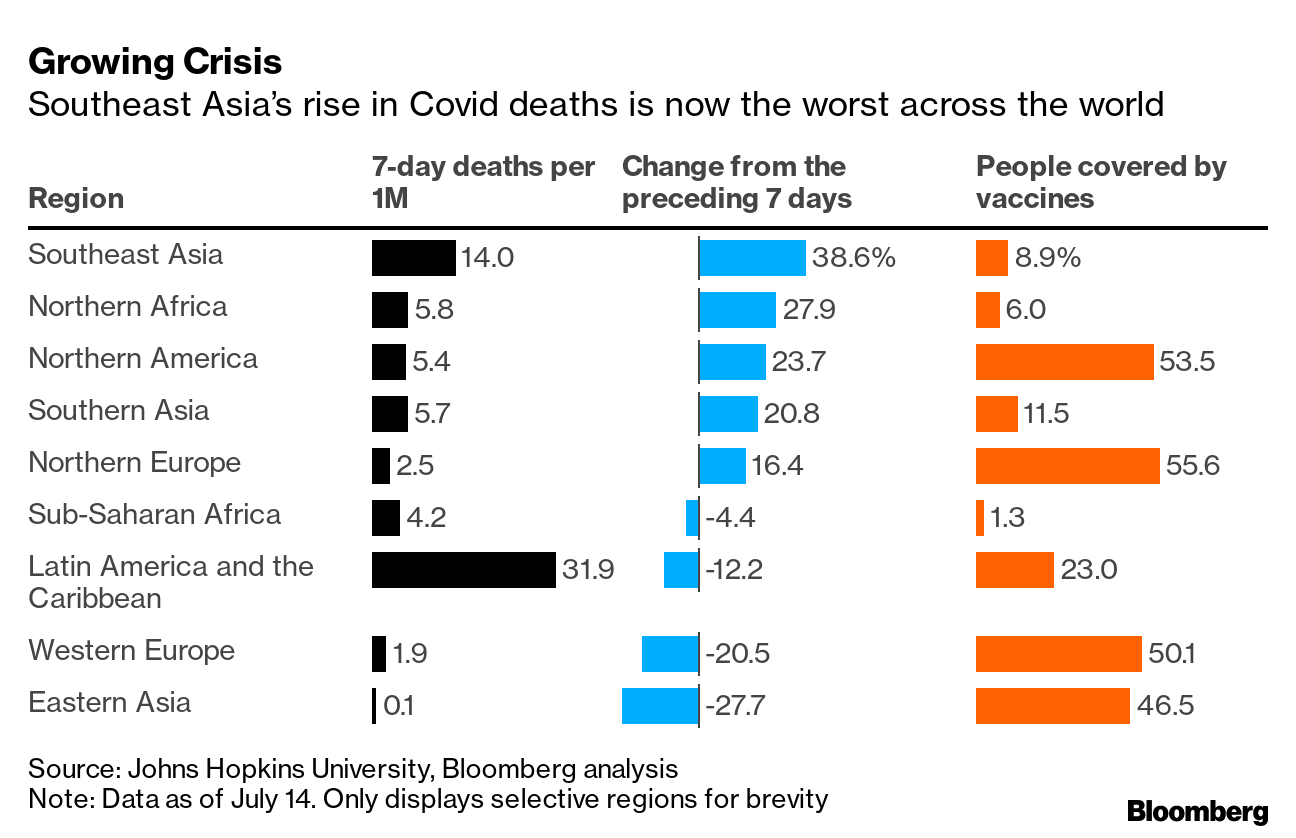 Southeast Asia is emerging as a battlefield for one of the world's worst Covid-19 outbreaks, due to the fast-spreading delta variant and the slow rollout of vaccines. As large parts of the developed world reopen for business, the worsening situation across most of Southeast Asia means they're re-imposing growth-sapping movement curbs. Singapore is the exception, where sealed borders and high vaccination rates are keeping the virus contained in the region's sole developed economy. Today's Must Reads - Second chance | Yellen said the question of whether to nominate Fed Chair Powell for a second term is a conversation for her and President Joe Biden, declining to give her opinion in a televised interview.
- Workplace discrimination | A shift to allow Chinese women to have three children risks worsening discrimination in the workplace unless authorities do more to ensure a level playing field.
- Green push | The Bank of Japan will give banks more exemptions from its negative interest rate when they make loans or investments toward a greener economy. It kept its main policy settings steady.
- New strategy | The European Central Bank is likely to limit changes to its monetary policy to words at next week's meeting, leaving decisions on future bond-buying until the economic outlook clears, according to a Bloomberg survey of economists.
- Empty offices | On Monday, England's white-collar workers will be free from government guidance telling them to work from home. Few executives are planning for a stampede of staff back to long-neglected desks.
- Kiwi bets | New Zealand inflation surged in the second quarter, breaching the central bank's target range for the first time in 10 years and reinforcing bets it'll soon start raising interest rates.
Need-to-Know Research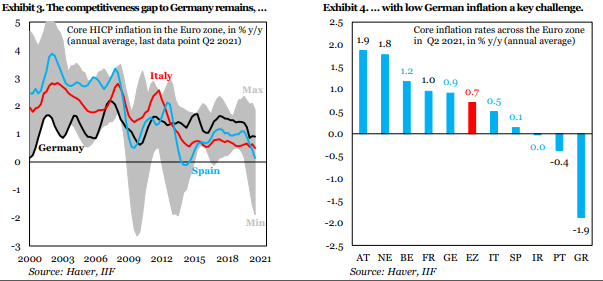 A principal driver of the euro zone crisis — weak competitiveness on the periphery — remains an issue to this day, according to a paper by Robin Brooks, Jonathan Fortun and Jack Pingle of the Institute of International Finance. With little scope for German overheating to close the competitiveness gap, the burden on fixing it comes down to the periphery, where structural reforms are needed to bring down price and wage levels, they write. On #EconTwitterExamining the expanded U.S. Child Tax Credit:  Read more reactions on Twitter Enjoy reading the New Economy Daily?The fourth annual Bloomberg New Economy Forum will convene the world's most influential leaders in Singapore on Nov. 16-19 to mobilize behind the effort to build a sustainable and inclusive global economy. Learn more here. -
Click here for more economic stories -
Tune into the Stephanomics podcast -
Subscribe here for our daily Supply Lines newsletter, here for our weekly Beyond Brexit newsletter - Follow us @economics
| 


Post a Comment