| This is Bloomberg Opinion Today, a birthday feast of Bloomberg Opinion's opinions. Sign up here. Today's AgendaWhat If Jerome Powell Is Wrong on Inflation?The head of the Federal Reserve continues to insist that the rise in prices is "transitory" and doesn't require any rethink of the central bank's ultra-stimulative policies. But as the data keep pointing the other way, Mohamed A. El-Erian worries about the increasing probability of a monetary policy mistake that could derail a potentially strong and transformational U.S. economic recovery. There's also an increased likelihood of a market accident. Powell's other conviction is that the Fed has the policy tools to react quickly and effectively if need be, without causing economic and financial disruptions. But a growing number of economists question this. If the central bank doesn't start taking its foot off the stimulus accelerator now, it may have to abruptly slam on the policy brakes down the road. The risk is that the Fed could inadvertently engineer a recession. The bond market, on the other hand, seems confident that the central bank, for all of Powell's demurrals, will tighten monetary policy soon. As John Authers points out, long-term yields are falling instead of rising with the inflation data. Traders are betting that Powell will chicken out. Meanwhile, Lisa Abramowicz examines Powell's dilemma on real estate prices, and she concludes that the Fed has no easy options. If it scales back on mortgage-bond purchases, that could threaten market stability; if it doesn't, home prices could keep rocketing skyward. More Fed Reading: It's time for Powell to recognize the recovery. — Bloomberg's editorial board And Still More: Hong Kong's real estate investors should fear the Fed. — Matthew Brooker New York Needs the Subway, and the Subway Needs More New YorkersAs they emerge from long lockdowns, urbanites everywhere are reassessing their previous commuting habits. Some are coming to the conclusion that they can WFH forever. Others, gradually returning to their offices, are trying out new options like e-bikes. What does this mean for traditional mass-transit systems? In New York, despite the lifting of most Covid-related restrictions, ridership on the subway is still at half the norm — even though car traffic is close to pre-pandemic levels. This bodes ill for a network that usually relies on fare revenue to cover 70% of its operating costs. But as Justin Fox points out, the mobility revolution has its limits: There are never going to be enough bikes to serve the population of a large city. As a result, there is no scenario in which New York fully recovers if its subway system doesn't. Bonus Urban Crisis Reading: Giving the homeless a home is not a novel idea. It's been tried and proven to work. — Noah Smith Telltale ChartsBrits are buying homes at an astonishing rate. There were almost 450,000 residential property transactions in the first three months of the year, which is 50% higher than the quarterly average in the previous decade. The reasons include a property tax holiday, lockdown savings and the need for bigger homes to accommodate WFH trends. 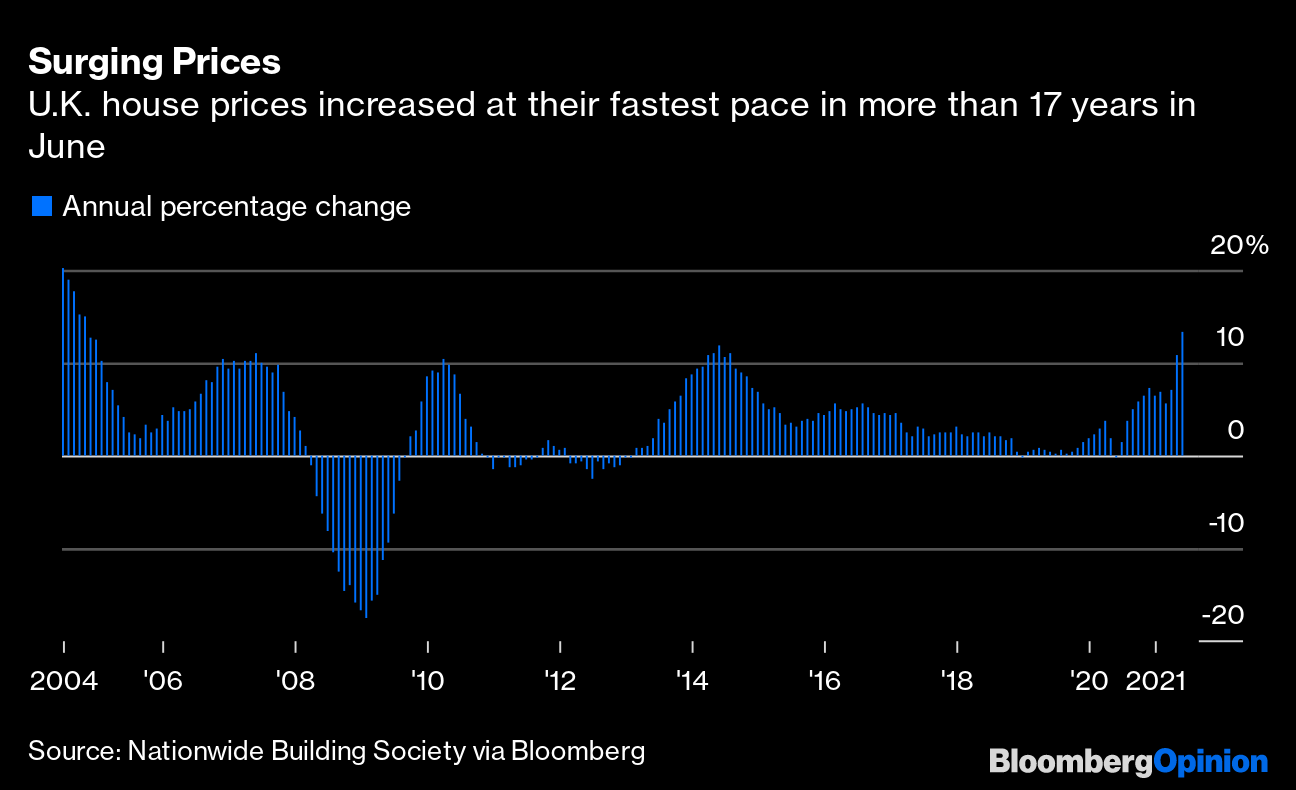 But, as Mark Gilbert notes, there's also another reason: Ferocious competition among mortgage lenders has pushed down rates. 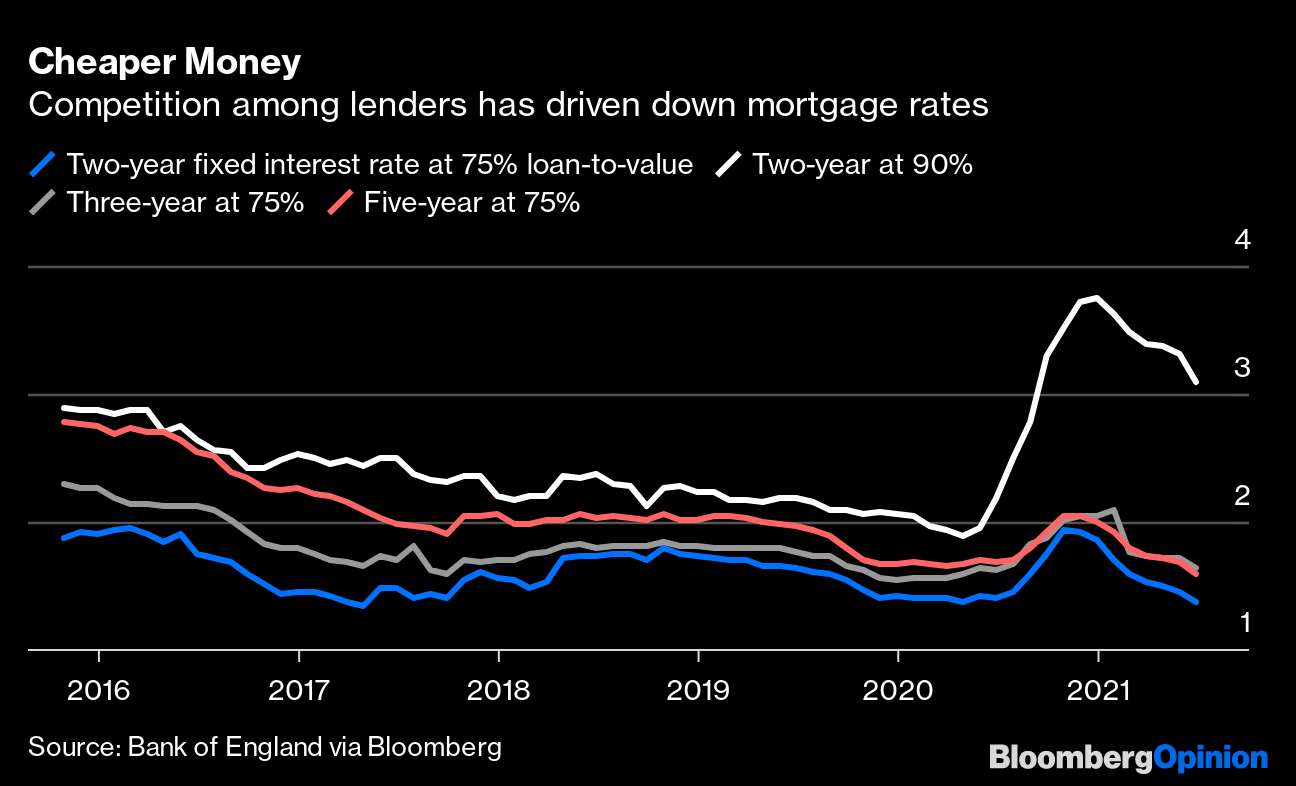 This is welcome news for British banks. As demand for corporate loans has dipped and credit-card debt has fallen off the side of a cliff, residential property lending is the one banking business that hasn't been dented by the pandemic. 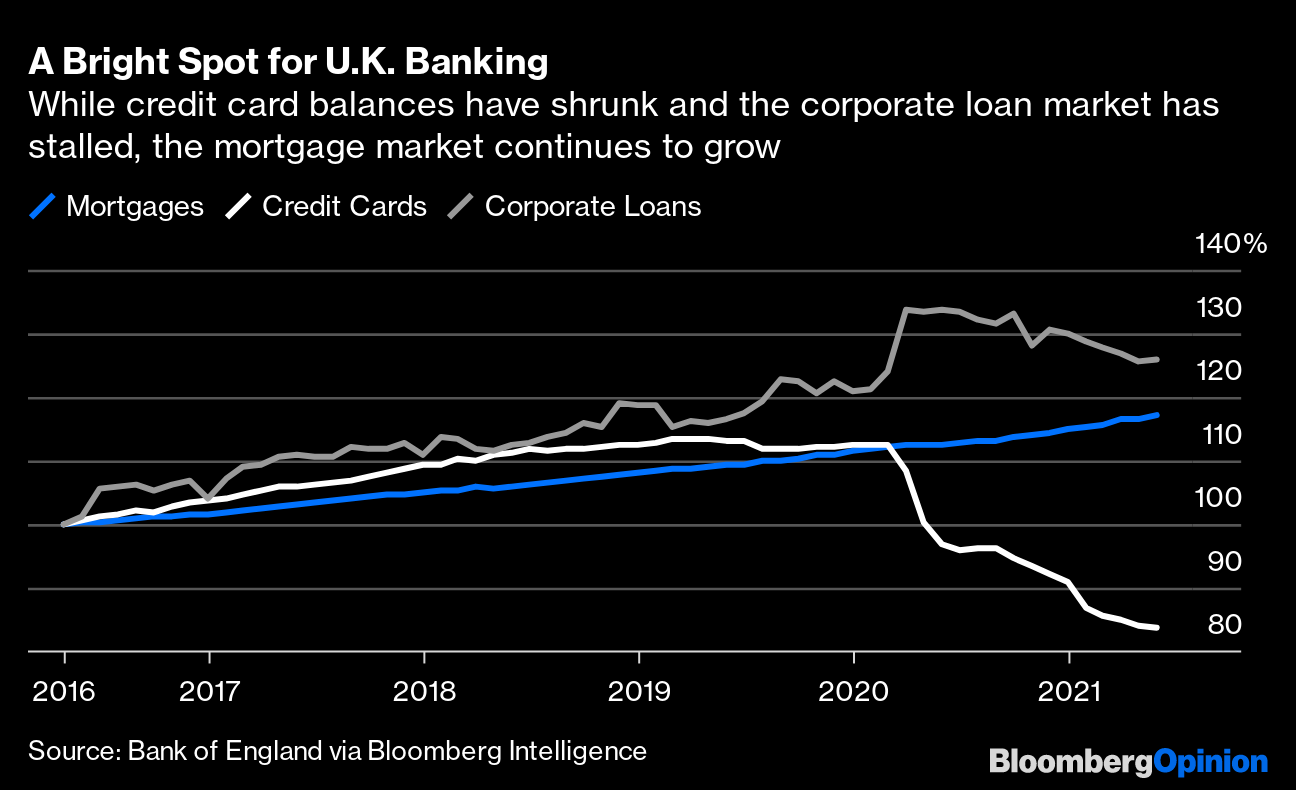 Further ReadingUsing volatile cryptocurrencies as retirement savings is risky, and not only for the most obvious reasons. — Alexis Leondis Joe Biden's swinging for the fences with his ambitious legislative agenda, but he could still strike out. — Jonathan Bernstein Netflix's new games plan is designed to keep it ahead of Disney+ and HBO Max. — Tara Lachapelle Meme-stock investors are messing with the business model of distressed-focused hedge funds. — Matt Levine Dental, hearing and vision care have grown too expensive for seniors to afford. Medicare must cover them. — Max Nisen Judging the success of the Child Tax Credit will depend on why you support or oppose it in the first place. — Karl W. Smith Britain's Boris Johnson is reluctant to tax people into better eating habits. But it could actually work. — Therese Raphael Alibaba and Tencent are proposing to break down the walls between them. Regulators may like that, but not stockholders. — Tim Culpan Australia's failure to heed Covid warnings bodes poorly for its ability to deal with other looming global crises. — David Fickling ICYMIThe Biden administration is refusing to lift travel rules preventing most Europeans from traveling to the U.S. The next pandemic could be averted with artificial intelligence, big data and cellphone apps. Facebook Inc. escaped an EU ban on its use of WhatsApp customer data but faces a new investigation. KickersJames Bond's next car is a plug-in … (h/t Scott Kominers) … but his next gun probably won't look like it's made from Lego. Clippy, Microsoft's annoying "Office assistant," is back as an app. Mac-and-cheese ice cream sounds disgusting. I'll have two scoops, please. Notes: Please send presents and party favors to Bobby Ghosh at aghosh73@bloomberg.net. Sign up here and follow us on Twitter and Facebook. | 


Post a Comment