| At odds | Senate Republicans are set to thwart Majority Leader Chuck Schumer's attempt to speed President Joe Biden's agenda through the chamber by blocking his bid to start debate on an as-yet unfinished infrastructure plan. His decision to force an early test vote today has sped up protracted talks for the $579 billion package, but not the completed deal GOP senators are demanding as a prerequisite to begin debate. Chasing mutations | Scientists and public-health officials have sounded the alarm over the U.S.'s failure to develop a rapid national surveillance system to keep track of Covid-19 variants, which would allow experts to work out how fast a mutation might travel, how severe it may be and how effective vaccines are against it. Instead, Cynthia Koons explains, sequencing is still spread between state health departments, academic labs, hospitals, nonprofits, and commercial unicorns. Carbon crush | Days after the European Union announced ambitious plans to tackle climate change, France started lobbying to water them down. As Samy Adghirni, Ania Nussbaum and Ewa Krukowska report, Paris is pushing back against the EU proposal to launch a new carbon market for heating and road transport. The measure is expected to cause a spike in prices, and President Emmanuel Macron can't afford to rile voters ahead of elections next year. - Meet the Frenchman who fancies his chances against Macron and Marine Le Pen in the presidential election.
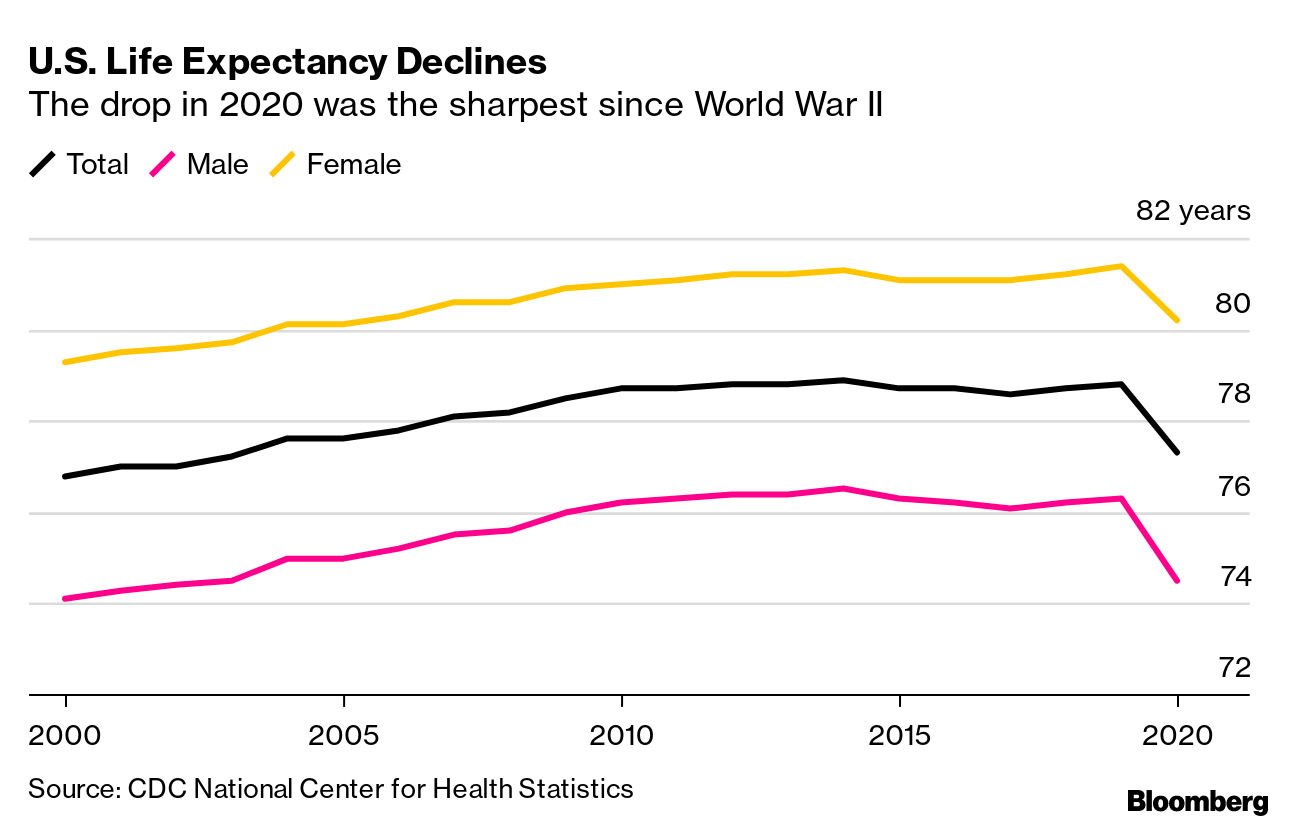 Life expectancy in the U.S. dropped the most in more than seven decades last year as Covid-19 sent hundreds of thousands of Americans to early deaths and the pandemic's disproportionate toll on communities of color widened existing gaps between White and Black citizens. Best of Bloomberg OpinionFlood fallout | A Forsa poll done after last week's flooding in Germany shows a dip in support for the ruling CDU/CSU bloc, whose lead over the Greens narrowed to 9 percentage points. While CDU chancellor-candidate Armin Laschet was seen to blunder in his response to the devastation, the Greens were unable to capitalize and were unchanged in the poll. But that's still enough to shake up the race, with three possible post-election alliances now in play. - Germany and the U.S. are close to a deal on the Nord Stream 2 pipeline that would threaten sanctions if Russia tried to use energy as a weapon against Ukraine.
New leader | Haiti swore in a new prime minister as the troubled Caribbean country tries to emerge from the chaos created by the murder of President Jovenel Moise two weeks ago. Ariel Henry, a 71-year-old neurosurgeon and public-health expert, took the reins of the nation of 11 million, vowing to continue to pursue those behind Moise's murder while organizing general elections scheduled for Sept. 26. - Boris Johnson's government will set out its preferred approach to post-Brexit trade in Northern Ireland today, with the fallout from the U.K.'s split from the EU still causing tensions in the province.
- Huawei ramped up spending on Washington lobbyists last quarter as a U.S. ban on the company's equipment cuts it out of projects associated with the billions Congress plans to spend on infrastructure.
- A fourth Covid emergency in Tokyo and a decision to bar spectators from the main athletics events have triggered a wave of hotel room cancellations, further pressuring an industry that bet big on the Olympics.
- Viktor Orban proposed a referendum to push back against EU pressure over Hungary's anti-LGBTQ law.
And finally ... Around 100,000 people have been evacuated from the central Chinese city of Zhengzhou, as record rainfall caused widespread flooding and economic disruptions to Henan province, home to the world's biggest production base for iPhones and a hub for food production and heavy industry. The deluge follows unprecedented heatwaves in the U.S. and Canada and major floods in Europe and India, while wildfires have spread across Siberia and drought has gripped parts of Africa and Brazil. 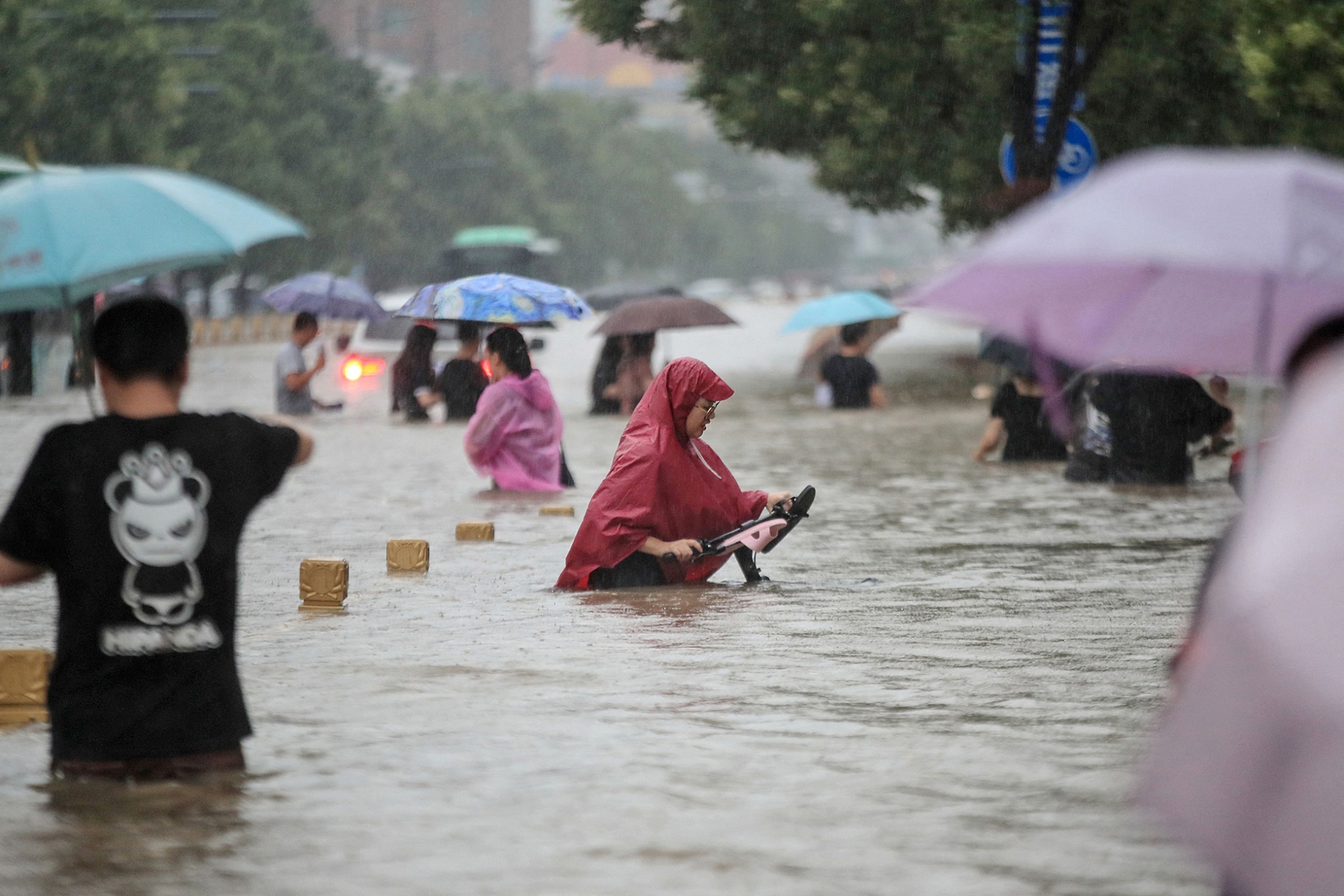 People wading through flood waters in Zhengzhou. Source: AFP/Getty Images | 




Post a Comment