| The delta variant is engulfing Southeast Asia. Biden thinks investors aren't taking warnings over Hong Kong business seriously enough. And Bitcoin's on the slide again. Here's what you need to know. Southeast Asia is emerging as a battlefield for one of the world's worst Covid-19 outbreaks. With a population about twice that of the U.S., the momentum of the region's outbreak has now eclipsed previously hard-hit places like Latin America and India, with cases jumping 41% over the past week to more than a half-million. Meanwhile, in Tokyo new covid cases hit a six-month high just over a week before the city hosts the Olympics; Australia's Melbourne has just kicked off yet another lockdown, joining Sydney in imposing stay-at-home restrictions; Singapore is pressing ahead with reopening despite its karaoke cluster; and scientists say most vaccinated Americans are unlikely to need booster shots. And here's how access to mRNA vaccines is carving up the world into haves and have-nots. Asian stocks look set to follow U.S. shares lower after concerns about the economic growth outlook came to the fore. Treasury yields retreated and the dollar climbed. Equity futures fell in Japan and Hong Kong and were steady in Australia. Energy and technology sectors led Wall Street lower, including a decline in growth favorites like Amazon.com Inc. and Google parent Alphabet Inc. U.S. contracts slipped in early trading. Federal Reserve Chair Jerome Powell overnight defended the central bank's accommodative stance in the face of uncomfortably high inflation. The 10-year Treasury yield slid, set for a third weekly retreat, and crude oil dropped. President Joe Biden said his administration will issue an advisory cautioning U.S. companies about the risks of doing business in Hong Kong because of "what may happen" as China continues to tighten its control over the island. While the advisory won't order companies to scale back investments or leave Hong Kong, administration officials fear major banks and multinationals with headquarters in the city haven't yet come to grips with just how much the landscape there has changed and how much risk they now face. Meanwhile, the House Foreign Affairs Committee advanced a bill to counter China along a party line vote of 26-20, as Republicans criticized the measures as too focused on climate change and too soft on Beijing. Bitcoin's slide accelerated Thursday, with the coin drifting toward $31,000 once again while strategists eye a potential break lower. The world's largest digital asset fell as much as 4.1% to $31,472, its lowest level in about three weeks, while other cryptocurrencies also retreated. The moves come as cryptocurrencies and the prospect of digital money backed by central banks become a topic of interest once again, with Federal Reserve Chair Jerome Powell in a hearing this week stressing the need to get such a project right. At the same time, the European Central Bank took a major step toward a digital euro by approving an "investigation phase." Here's why Wall Street is afraid of the digital dollar. Nintendo's Switch has some new competition. Closely held video game publisher Valve introduced its own portable gaming device Thursday that resembles the Switch but will have technical capabilities comparable to a gaming PC or console, according to the company. The Steam Deck, which will be available in December starting at $400, will allow users to play sophisticated computer games on the go. The form is almost identical to the Switch, which has sold more than 84 million units since its release in 2017. The new Switch, due out in October, will come with a bigger OLED screen — and a price hike, to $350. What We've Been ReadingThis is what's caught our eye over the past 24 hours:  The Aston Martin Valhalla concept automobile. And finally, here's what Tracy's interested in todayIt feels like we're entering an interesting time frame in terms of divergences in macroeconomic policy, with the Federal Reserve still committed to relatively low rates and asset purchases, while other central banks are beginning to head towards tightening and winding down emergency programs. Just this week, we've had: — The Bank of Korea holding benchmark rates at 0.50% but warning the market to get ready for an August rate hike.
— An increase in short-end rates in the U.K. after Bank of England member Michael Saunders said it "may become appropriate fairly soon to withdraw some of the current monetary stimulus" if economic activity and inflation indicators "remain in line with recent trends."
— New Zealand's central bank announcing that it's ending its quantitative easing and could raise rates as soon as next month.
— The Bank of Canada once again dialing back some of its bond purchases. 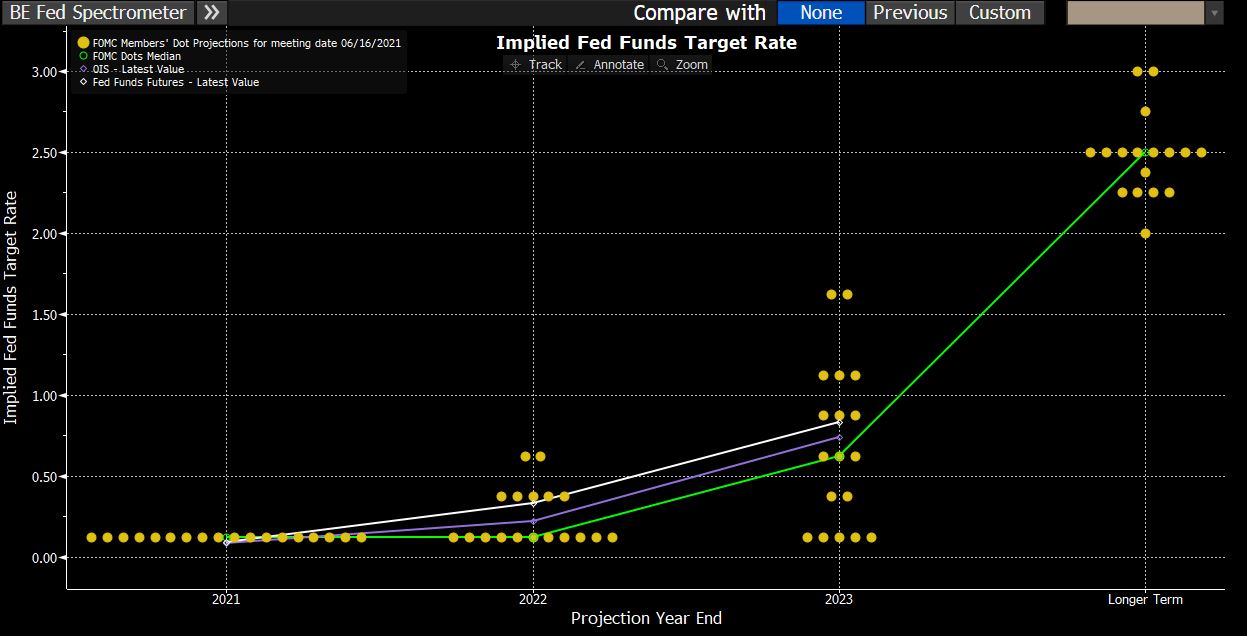 Bloomberg Bloomberg Meanwhile, the Fed has broadly stuck to its message of transitory inflation and the need to keep accommodative policy in place. In some ways you could argue the U.S. exporting its "loose" policy to the rest of the world is helping create the space for some countries to start their tapering in relatively benign conditions. On the other hand, you might argue that loose financial conditions in the U.S. are contributing to overheating in some other parts of the world. Anyway, the point is that we have central banks heading in different directions now, and we're not entirely sure how these different policy directions will end up interacting with each other. You can follow Tracy Alloway on Twitter at @tracyalloway. | 


Post a Comment