| Hello. Today we look at the upcoming U.S. jobs report for May, why factory price inflation isn't passing through to China's consumers and Covid's implications for poverty. Fool Me OnceAfter the April U.S. jobs report blindsided every economic forecaster with a disappointingly low gain in payrolls, this time around analysts are prepared for any potential surprise. "I have a range of models that spit out zero and others that spit out a million," said Aneta Markowska, chief U.S. financial economist at Jefferies who, like many Wall Street economists, missed last month's figure. "That's the world we live in right now. Honestly, anything's possible."
Estimates for employment in May range from a payroll increase of 335,000 — still better than the 266,000 in April — to as many as 1 million, according to a Bloomberg survey. 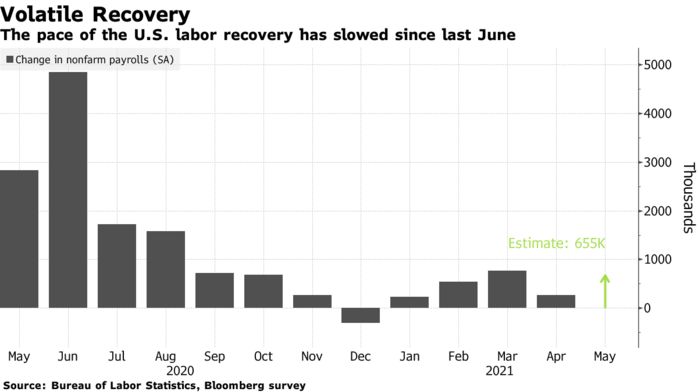 The lesson from April was that employers were having difficulty finding enough workers to fill positions, for at least three reasons, Olivia Rockeman reports. - Continuing child-care demands keeping parents, especially moms, at home
- Extended, enhanced unemployment benefits encouraging some to put off return to work
- Lingering health concerns at a time when vaccination rates were lower than today
All of those dynamics should have weakened in May, with federal help for child care kicking in, vaccinations ramping up and some Republican governors cutting short the extra jobless benefits. "The April miss was a one-off, in our view, and ongoing reopening across the country will pull a significantly higher number of Americans into employment in May," said Yelena Shulyatyeva, Andrew Husby and Eliza Winger at Bloomberg Economics.
But complicating factors remain as consumer behavior evolves. - The April drop in transportation and warehouse jobs suggest demand for online shopping is subsiding
- Grocery store employment also fell, which could reflect fewer people are cooking at home
- Honeywell International said last month would lay off nearly 500 workers as it stops production of N95 face masks
The only clear conclusion, regardless of the numbers: with payrolls down by millions from last year's peak, there's still a ways to go for the rebound. —Chris Anstey - Got tips or feedback? Email us at ecodaily@bloomberg.net
- Check out the latest Stephanomics podcast: Host Stephanie Flanders talks with Canada Finance Minister Chrystia Freeland, a rising star seen as a potential successor to Prime Minister Justin Trudeau
The Economic Scene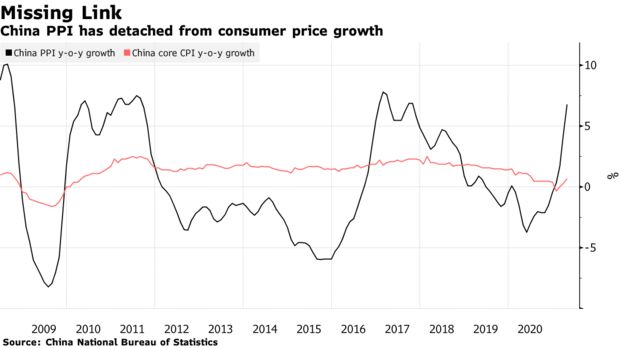 As China battles to contain surging commodity prices, there's a key factor giving the central bank some breathing room: the link between producer and consumer prices has broken down. Intense competition among smaller businesses, spurred by the rise of e-commerce, and soggy domestic demand means China's factories are absorbing rising input costs rather than passing them on to consumers at home. Despite anecdotal reports of price increases, consumer inflation overall has been tame and looks set to remain that way. That's allowing the central bank to maintain the lower interest rates it introduced after the coronavirus struck China last year, while policy makers attempt targeted measures aimed at easing commodity shortages and limiting speculation. Today's Must Reads - Tax tussle. Global negotiators attempting to rewrite tax rules for the digital era are tussling over a threshold for corporate revenue. To allow those broader international negotiations to progress, the U.S. imposed tariffs — but immediately delayed them — in retaliation for duties that six nations placed on internet companies. Meanwhile, the Biden administration has proposed requiring the collection of data on foreign cryptocurrency investors active in the U.S., aiming to bolster international cooperation against tax evasion.
- China ban. President Joe Biden plans to amend a U.S. ban on investments in companies linked to China's military this week. Separately, U.S. lawmakers are proposing to plow $190 billion into R&D to counter China's advances in science and technology.
- Fed shift. The U.S. central bank plans to begin gradually selling a portfolio of corporate debt purchased through an emergency lending facility launched last year.
- Hot housing. Home prices worldwide are rising the most since before the global financial crisis, following a market frenzy seen in places from New Zealand to Canada during the pandemic.
- Someone else's problem. Australia's central bank said the hot property market has "distributional consequences," but monetary policy isn't the tool to address the issue.
- Yemen disaster. Covid-19 is low in the pecking order of catastrophe for Yemen, the poorest Arab state and a strategic conduit for global trade, where almost seven years of war had produced the world's worst humanitarian crisis even before the pandemic.
Need-to-Know Research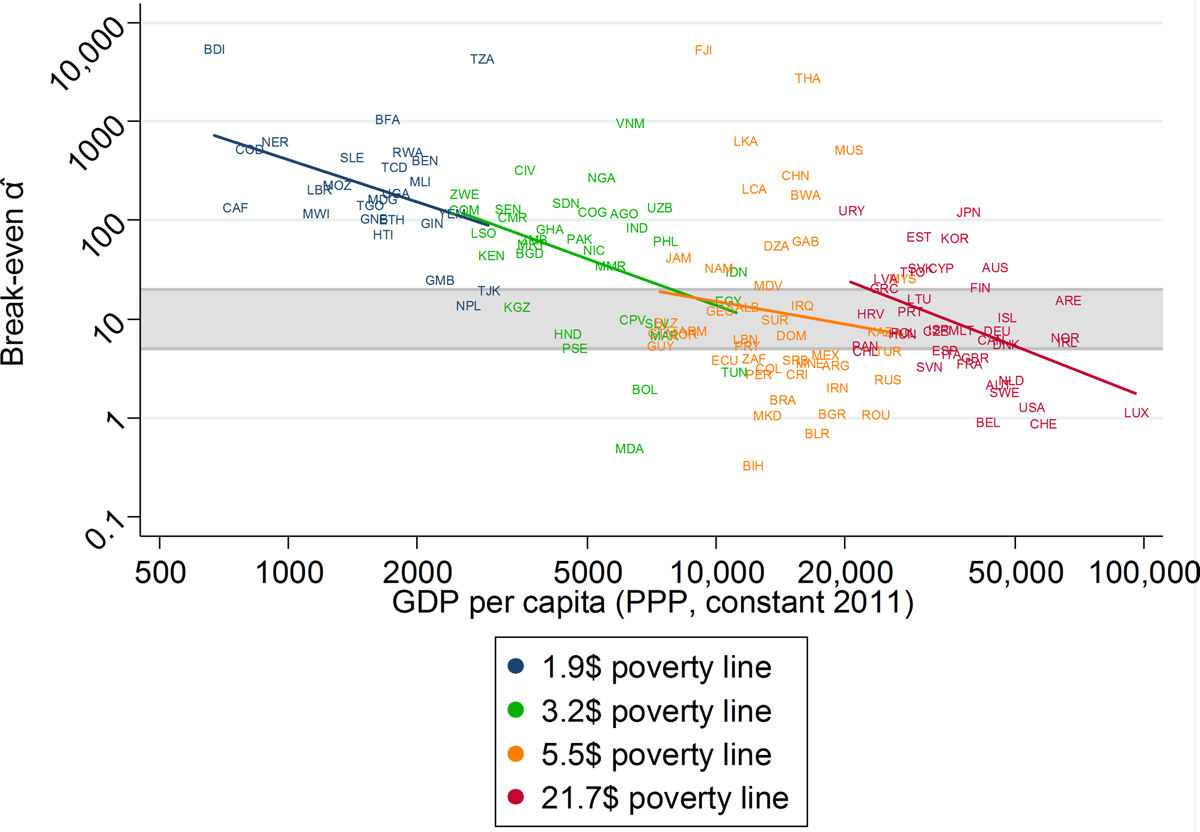 PY/LY ratios and GDP per capita PY/LY ratios and GDP per capita The pandemic's implications for poverty should be given more importance by policy makers, according to new research from the London School of Economics, the University of Oxford and the World Bank. Their researchers estimated that almost 20 million life-years were lost to Covid-19 by December 2020 and that over 120 million additional years were spent in poverty because of the pandemic. In 70 of the countries studied, poverty was a more important source of declining well-being than mortality. "This severe global economic shock has caused the first reversal in the declining trend in global extreme poverty since the Asian Financial Crisis of 1997 – and only the second real increase in world poverty since measurement began in the early 1980s," the report said. On #EconTwitterIs the demand boom over? 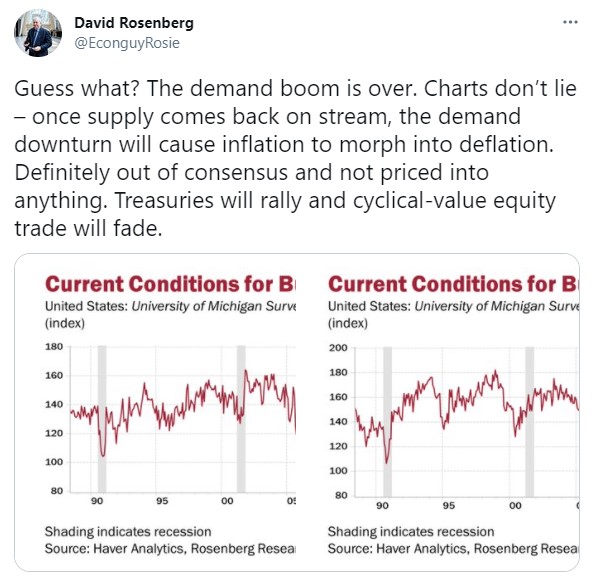 Read more reactions on Twitter Enjoy reading the New Economy Daily? -
Click here for more economic stories -
Tune into the Stephanomics podcast -
Subscribe here for our daily Supply Lines newsletter, here for our weekly Beyond Brexit newsletter - Follow us @economics
The fourth annual Bloomberg New Economy Forum will convene the world's most influential leaders in Singapore on Nov. 16-19 to mobilize behind the effort to build a sustainable and inclusive global economy. Learn more here. | 


Post a Comment