| First the good news. New Covid cases in the U.S. sank to pre-surge levels this past week, and even a hotbed like Michigan, which suffered a youth-heavy coronavirus spike in recent months, is getting the virus under control. But this pathogen has a long tail. The bad news is that we're about eight weeks after the end of the winter surge, roughly the time when an small number of Covid patients begin to show symptoms of long-haul Covid. The syndrome, though rare, can come with debilitating fatigue, a rapid heart rate, memory loss, depression and so-called brain fog. That's what happened to Katie Krol of suburban Detroit and her two kids, Rhys, 14, and Emma, 10. Both caught Covid in March 2020 and still struggle with long-haul problems more than a year later. They're frequently tired to the point that it has disrupted their progress in school. Rhys said he'll likely take summer classes to get enough credits and make it out of ninth grade without have to repeat his freshman year. Emma has a heart rate that can race past 160 beats a minute and trouble tasting food, another travail among some long-haulers. 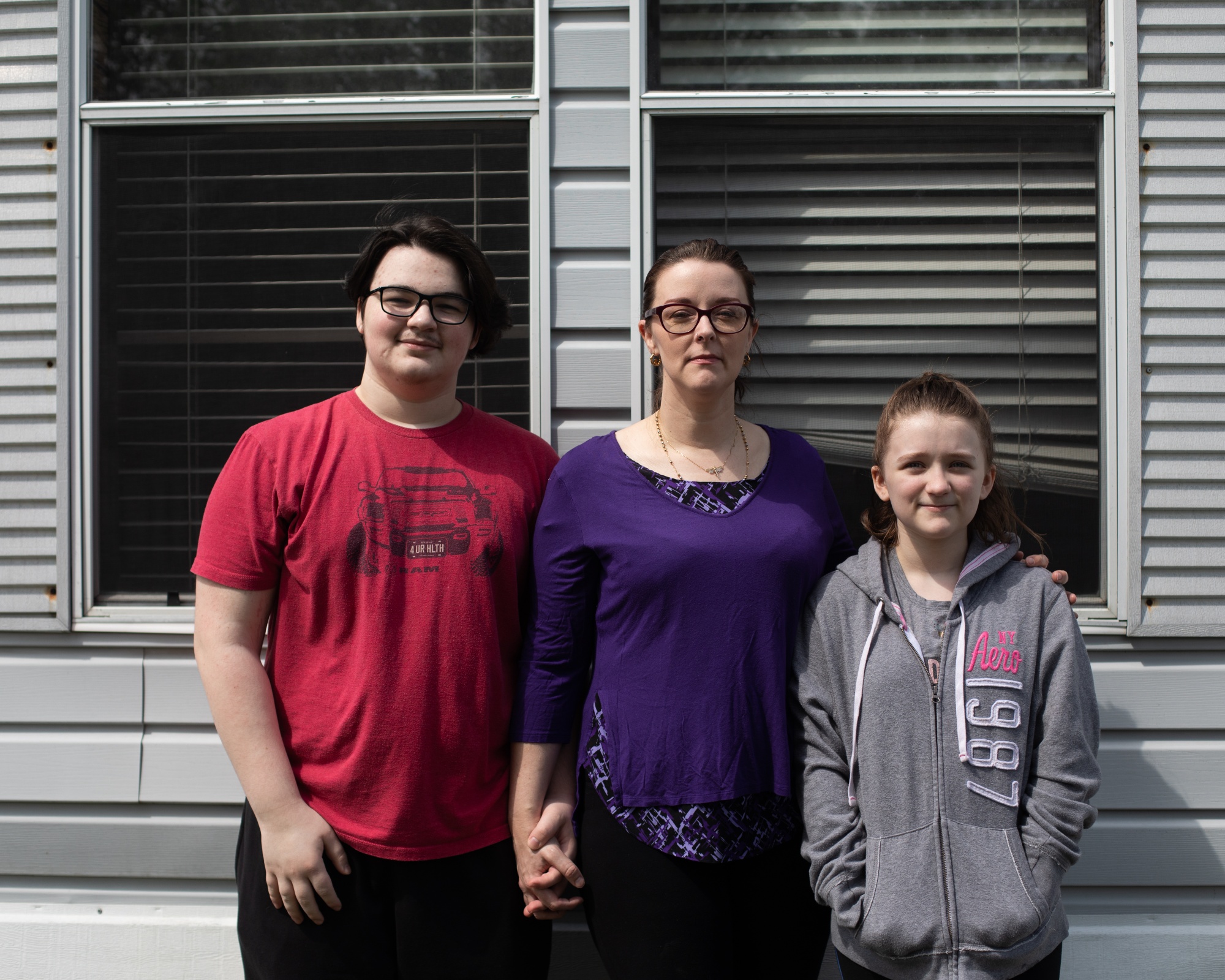 Katie Krol with her two children, Rhys and Emma. Photographer: Emily Elconin/Bloomberg There's growing evidence that while kids and teens may weather the virus better than adults, their long-haul symptoms might be worse. A study published last week by Scientific Reports that looked at data from more than 12,000 child patients found that the majority don't show typical Covid symptoms like fever, cough or shortness of breath. Almost 19% reported fever, malaise, muscle or joint pain, and disturbances of smell or taste. More than 16% had respiratory symptoms, 14% had gastrointestinal problems and a few required critical care. Long-haul Covid has become such a growing concern that the nation's first pediatric clinic devoted to fight it is being opened by University Hospitals Rainbow Babies and Children's Hospital in Cleveland. "The pediatric piece of this is pretty neglected," said Amy Edwards, associate medical director of pediatric infection control at the hospital. "Long-haulers don't go to the hospital. They suffer at home."—David Welch | 



Post a Comment