| Truce pressure | President Joe Biden told Prime Minister Benjamin Netanyahu in a phone call that he'd support a cease-fire between Israel and Hamas after days of calling for calm but not publicly seeking an end to the conflict. Jordan Fabian and Nick Wadhams report it's a shift in the U.S. approach to the crisis amid rising criticism over the fighting that has killed at least 222 people, mostly Palestinians. Securing networks | Biden is proposing to pour billions of dollars into improving the U.S.'s cybersecurity defenses, an area of heightened concern after the ransomware attack on Colonial Pipeline. The cash is included in the roughly $2 trillion infrastructure package and will help state and local governments modernize their energy systems and boost grid resilience in high-risk areas. - The Supreme Court's agreement to take up a Mississippi abortion case has injected an unexpected culture-war issue into a 2022 midterm Congressional election season.
Fresh efforts | China is holding behind-the-scenes talks to join a major trade deal that originally aimed to exclude it and cement U.S. economic power and trade ties in the Asia-Pacific region. Officials from Australia, Malaysia and New Zealand have held technical talks with Chinese counterparts on details of the pact, sources say. - Beijing threw the spotlight on trade tensions with top commodities supplier Australia, saying it's looking to diversify its supply of iron ore.
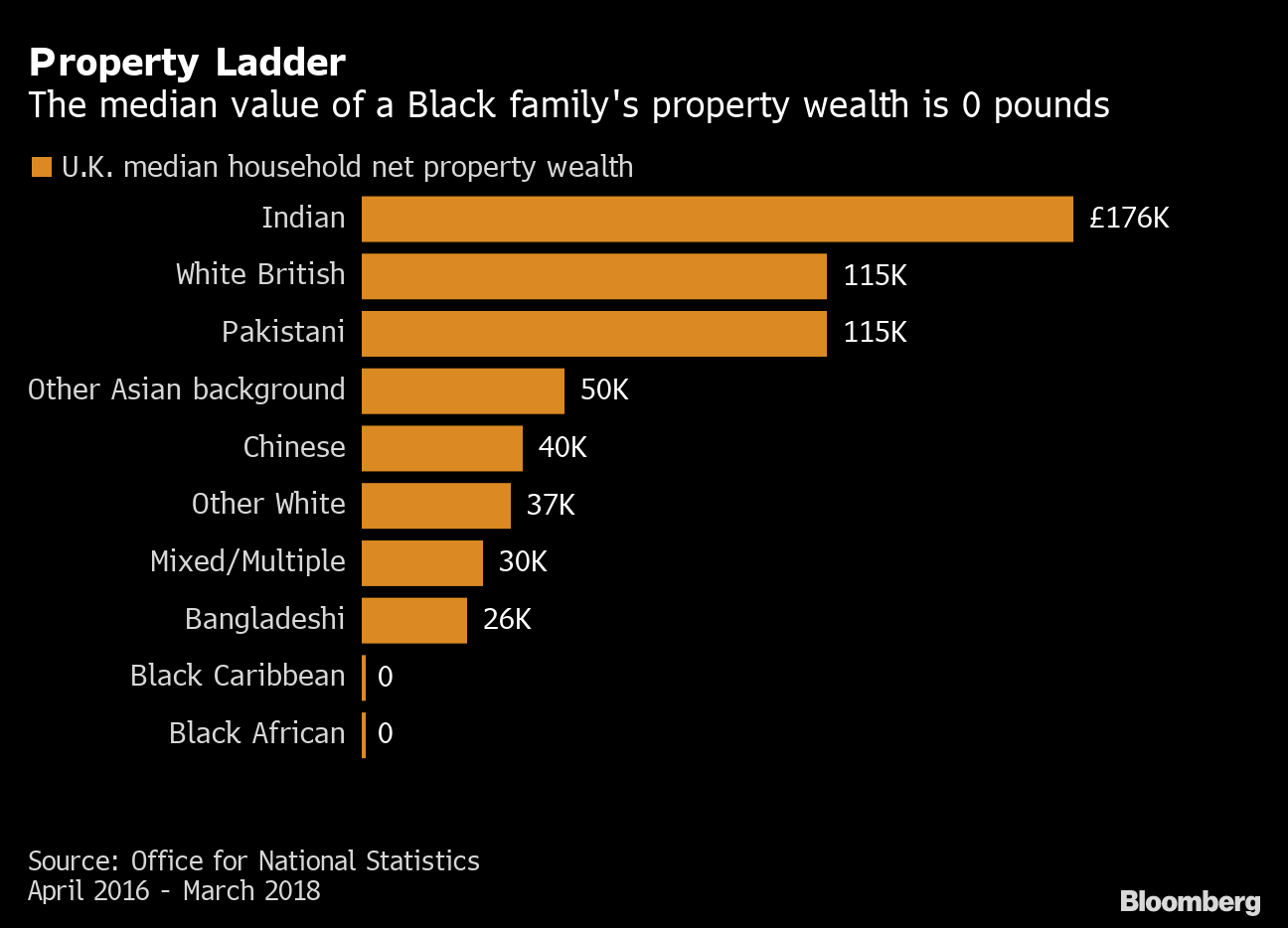 Buying a home is the single most important way of achieving prosperity in the U.K. but, as Olivia Konotey-Ahulu writes, Black people are falling behind. Data compiled for Bloomberg show that over the past decade, the median accumulation of wealth through home ownership by a Black family in Great Britain is zero, while a White British family has amassed about a net $163,000. New avenue | Two bloggers in Singapore have recently turned to crowdfunding to pay damages and costs from defamation suits brought by the city state's leader. "People realize that speaking up for something is something you need to protect," says Roy Ngerng, who raised roughly $108,000 he still owed in just nine days via 2,132 people, Philip Heijmans reports. Change of heart | Group of Seven nations are closing in on an agreement to phase out fossil-fuel subsidies after hosts the U.K. secured the backing of Italy. Alberto Nardelli and John Follain report that Italy had been dragging its feet on financial aspects of the proposed measures (which would put a date on stopping funding for energy sources that produce greenhouse gases), but a minister now says Rome will support the plans. What to Watch - Argentina is limiting exports of beef, a staple in the country, the latest unorthodox bid to try to contain inflation that's approaching 50% annually and appease local consumers before midterm elections.
- Hong Kong has closed its trade office in Taipei, the latest tit-for-tat exchange between the cities as Beijing works to isolate democratically ruled Taiwan.
- The U.S. Navy will request funding for eight new vessels in the next fiscal year budget, down from the 12 originally sought in a Trump administration blueprint.
- Europe's top antitrust enforcer Margrethe Vestager warned a probe of Apple's in-app purchasing system is moving ahead on top of an investigation into how the iPhone maker requires software developers to use Apple Pay.
And finally ... The world has a stark choice — stop developing new oil, gas and coal fields today or face a dangerous rise in global temperatures. As Grant Smith reports, that's the assessment of the International Energy Agency, the organization that has spent four decades working to secure oil supplies for industrialized nations, in its new road map for achieving global net-zero carbon emissions by 2050. The goal is "perhaps the greatest challenge humankind has ever faced," said Executive Director Fatih Birol. 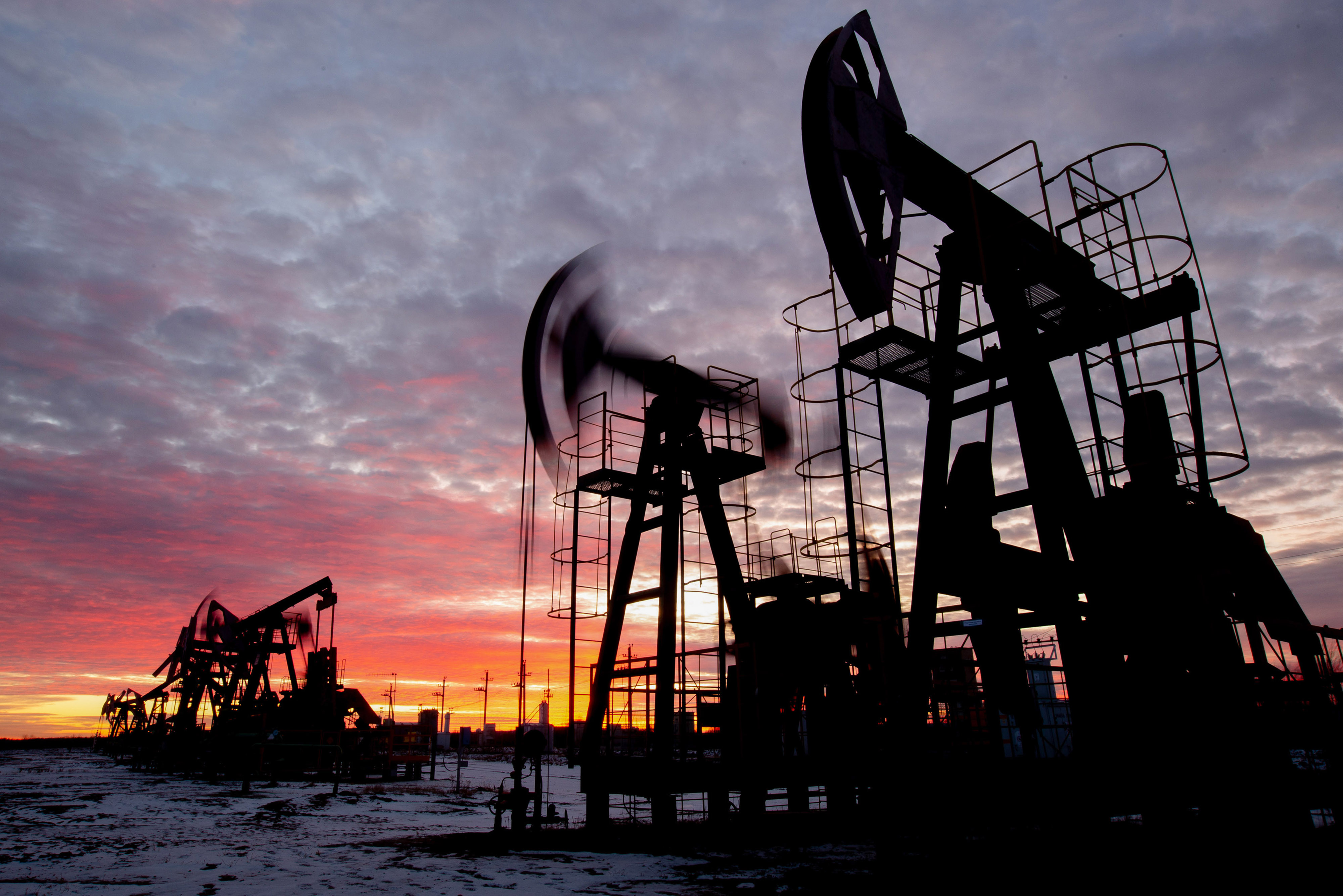 Oil pumping jacks at sunset in Russia. Photographer: Bloomberg Creative Photos/Bloomberg Creative Collection
| 




Post a Comment