| Hello. Today we look at how central banks are limiting the fallout of surging commodities prices, China's efforts to join a regional trade pact first designed to exclude it, and the economic cost of home schooling. Commodities Vs Central Banks The surge in commodities prices is failing to trigger some of the traditional responses in bonds and currencies, suggesting most central banks are winning the communications battle with their pledges to run things hot and look through inflation pressures they view as transitory. Unlike recent commodities rallies in 2008 and 2011, yields on Treasuries and currencies of major exporters like Australia have barely budged despite the runup in prices of everything from gasoline to lumber, Michelle Jamrisko and Ruth Carson write. Likewise, the Federal Reserve's favored measure of inflation expectations has disconnected from moves in raw materials as investors are wary of betting against commitments to keep policy loose for the foreseeable future. "The big change this time around is central bank policy," said Kerry Craig, global market strategist at JPMorgan Asset Management. Ultra-easy monetary policy is now "weighing down currencies that would have naturally risen a lot more during a cycle where commodity prices are rising." 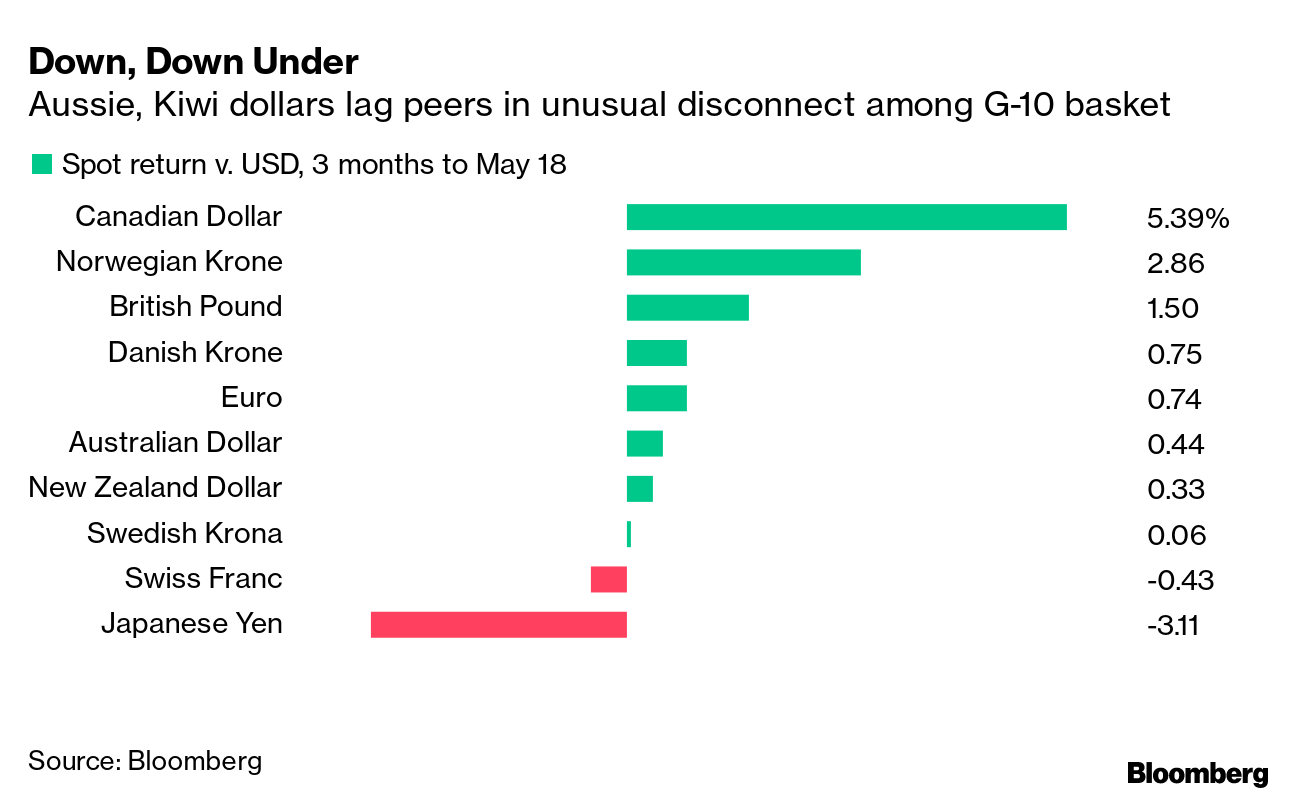 The Aussie and Kiwi dollars — two major currencies whose fates usually rely heavily on trends in commodities consumed by China's booming economy — are indisputable laggards. Each has increased less than 0.5% over the past three months. Still, the Canadian dollar has surged almost 5% as the central bank signaled it may dial back stimulus. While the rally in raw materials that's lifted prices for crops, energy and metals is a bonanza for Canada's economy, it's a challenge for the nation's policy makers who are under pressure to ensure that everybody benefits, writes Theophilos Argitis. The stronger Canadian dollar could hold back other key sectors that may struggle to compete under a rising exchange rate. The Canadian currency's gains since Governor Tiff Macklem said in April he'd scale back purchases of government debt and accelerate the timetable for a possible interest-rate increase highlight the risks for others considering pulling back support ahead of the pack. — Malcolm Scott Save the Date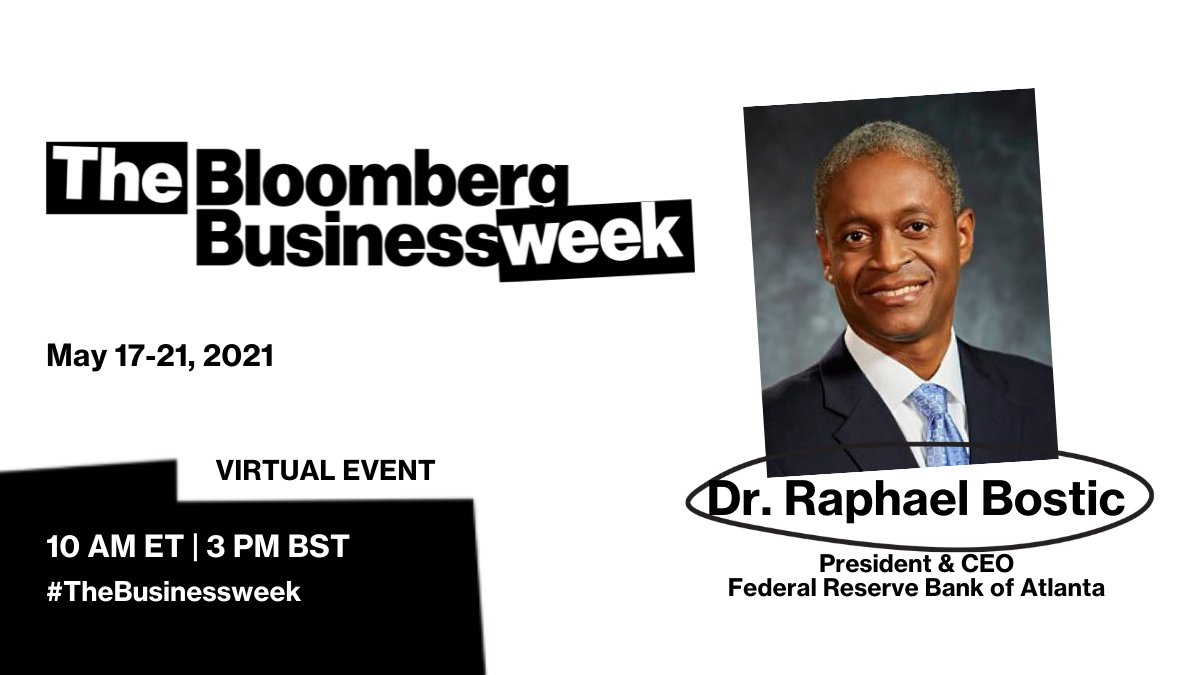 Don't miss our conversation with Atlanta Fed President Raphael Bostic. Live Wednesday, May 19, at 11:35 AM ET. Click here for more. The Economic Scene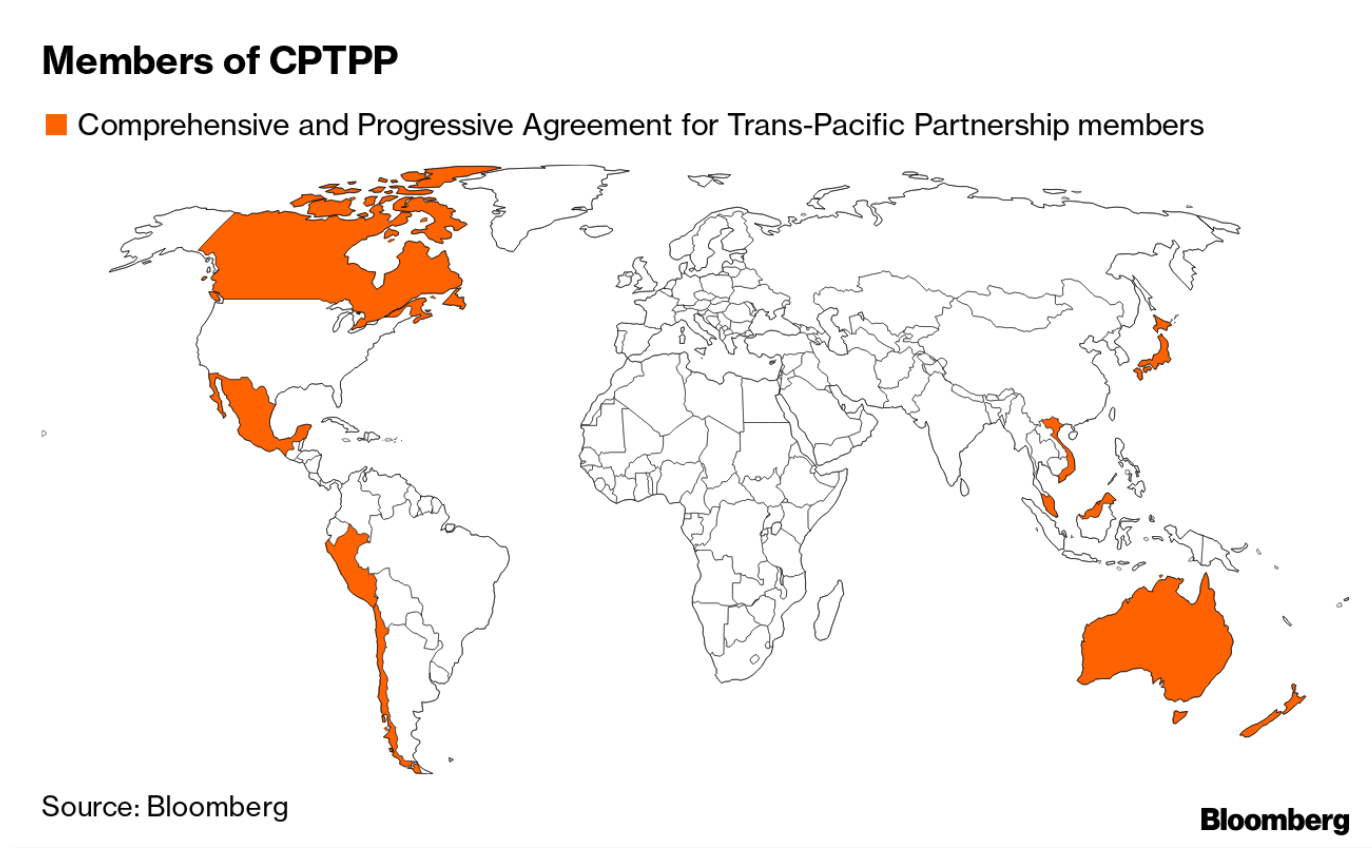 China is pushing ahead with behind-the-scenes talks to join a major trade deal that originally aimed to exclude Beijing and cement U.S. economic power and trade ties in the Asia-Pacific region.
Officials from Australia, Malaysia, New Zealand and possibly other nations have held technical talks with Chinese counterparts on details of the Comprehensive and Progressive Trans-Pacific Partnership. Today's Must Reads - Japan stalls. Japan's recovery stalled as renewed restrictions to contain the coronavirus hit shoppers and discouraged investment, raising fears of a double-dip recession.
- Spanish demographics. For the first time in decades, some towns outside of Spain's main urban centers are counting more people arriving and than leaving and the government wants them to stay.
- Black Britons left with nothing. Data compiled exclusively for Bloomberg by the Office for National Statistics show that over the past decade, the median accumulation of wealth through home ownership by a Black family in Great Britain is zero.
 - Argentine beef. Argentina's government is limiting exports of beef, a staple in the country, in the latest unorthodox move to try to contain runaway inflation.
- No bubble. An air travel bubble between Singapore and Hong Kong has been delayed as the former battles an increase in unlinked Covid cases. The World Economic Forum has canceled the annual meeting it was planning to hold this August in Singapore too.
- Gig jobs. New legislation creating collective bargaining rights for gig-economy workers is poised to be introduced in New York State, according to the president of the Transport Workers Union.
Need-to-Know Research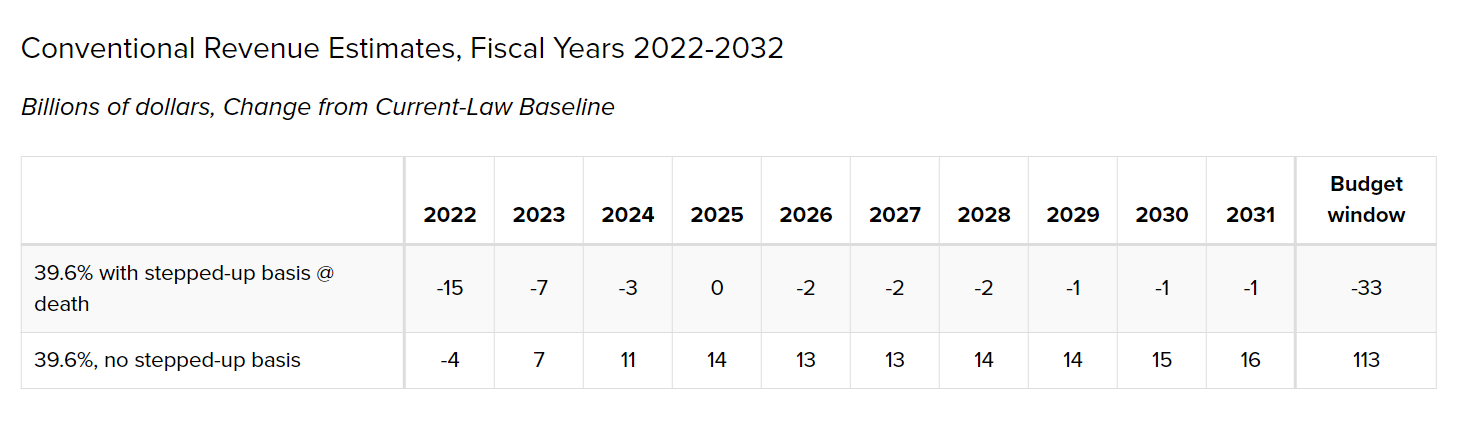 Number-crunchers at the Wharton School of the University of Pennsylvania reckon that by 2050, pandemic-related school closures and remote learning will have cut labor productivity by 3.3% and gross domestic product by 3.6%. Read the study here. On #EconTwitterIs inflation back to stay or not? It's probably the number one issue in global economics right now. And just to make answering that question even more difficult are doubts over the very basket which determines the consumer price index. 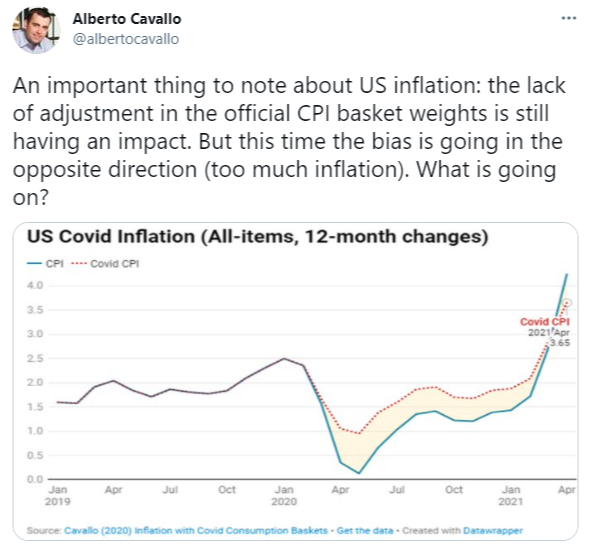 Read more reactions on Twitter and see our write-up of the analysis here Enjoy reading the New Economy Daily? -
Click here for more economic stories -
Tune into the Stephanomics podcast -
Subscribe here for our daily Supply Lines newsletter, here for our weekly Beyond Brexit newsletter - Follow us @economics
| 


Post a Comment