| Chip danger | A surge in coronavirus infections in Taiwan — with only about 1% of its population immunized so far — and a dispute with China over vaccine access threatens to trigger an island-wide lockdown and disrupt a semiconductor industry that's critical to already squeezed global supply. Alan Crawford, Debby Wu and Iain Marlow explain how the predicament illustrates its strategic yet vulnerable position at the confluence of U.S.-China tensions. Mounting anxiety | Democratic congressional staffers are paring down plans for Biden's proposed tax increases, wary of Republican criticism that higher rates could damage growth. Their concern is heightened by the pace of the economic recovery, with more than 8 million Americans still without jobs than before the pandemic. - Senate Majority Leader Chuck Schumer's plan to pass a bill this week to help the U.S. compete with China faces delay because of Republican requests for changes.
Seeking a deal | As talks involving global powers resume this week in Vienna, Iran is likely to extend a United Nations nuclear inspections agreement by another month. That will help buy diplomats time to negotiate the return of the U.S. to the 2015 nuclear accord and usher in a reentry of the Persian Gulf nation to world oil markets in exchange for curbs on its atomic work. 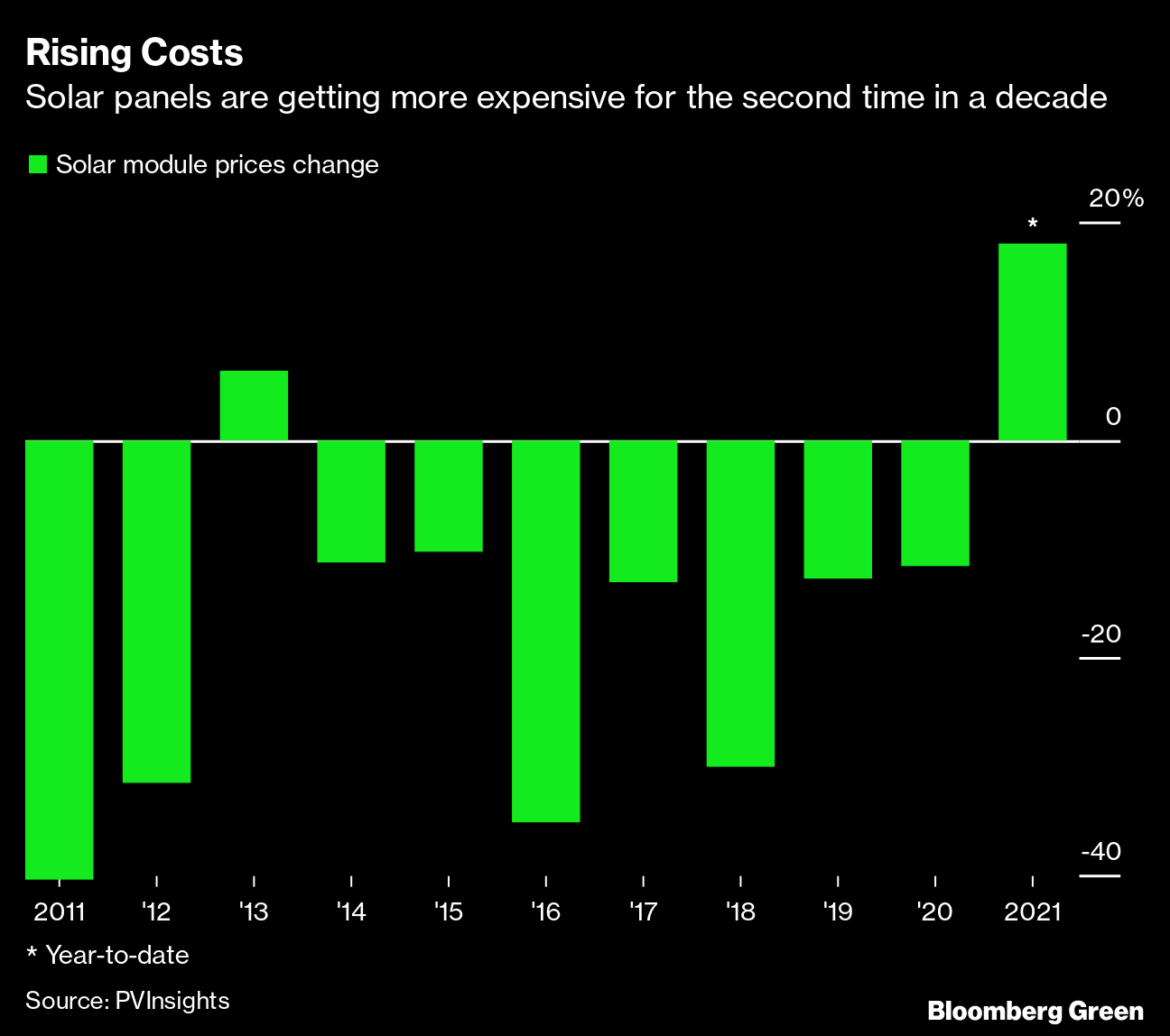 The 18% rise in prices of solar modules since the start of the year — fueled by a quadrupling in the cost of the key raw material polysilicon — threatens to delay projects in India and the U.S.
Urging restraint | China intensified its weeks-long campaign to cool a raw-materials boom, vowing "zero tolerance" for monopolies in spot and futures markets in a sign its demand for commodities may be teetering. With global prices hitting record highs, officials are trying to reduce some of the speculative froth that's driven markets. - Read here about how China's "bad bank" poses a crucial test of a debt-ridden system.
Ethiopia penalties | The U.S. imposed "wide-ranging" economic sanctions on Ethiopia to push it to end violence in the Tigray region that has killed thousands of people and displaced hundreds of thousands more. The action sets back relations between two longtime allies in the fight against Islamist militants in the Horn of Africa. - Read here about the expulsion of Simon Marks, a journalist who was reporting for Bloomberg News and other media organizations.
What to Watch This Week - China's top diplomat, Yang Jiechi, will visit Russia today for strategic talks, the Foreign Ministry said.
- Former banker Guillermo Lasso takes office as Ecuador's president today, promising to dig the nation out of its deepest economic slump in decades.
- South Africa's state security minister said she's making headway in turning around the country's dysfunctional spy agency in the face of fierce opposition from some staff.
- A volcanic eruption in eastern Congo over the weekend killed two people and damaged 17 villages.
- Dominic Cummings, the former chief aide of U.K. Prime Minister Boris Johnson, is due to give evidence on the government's handling of the pandemic to lawmakers on Wednesday.
Thanks to everyone who answered our Friday quiz question and congratulations to Mostapha Koja Nahhal, who was first to name Singapore as the country where two bloggers turned to crowdfunding to pay damages and costs from defamation suits brought by the nation's leader. And finally ... Researchers are working on a pilot program backed by Russia's Rosatom to inject rhino horns with radioactive material that would help track them along international borders. As Paul Burkhardt reports, it's part of efforts to discourage the illegal hunting that remains the gravest threat to the nearly 20,000 animals in South Africa — the world's biggest population. Almost 400 were killed last year. 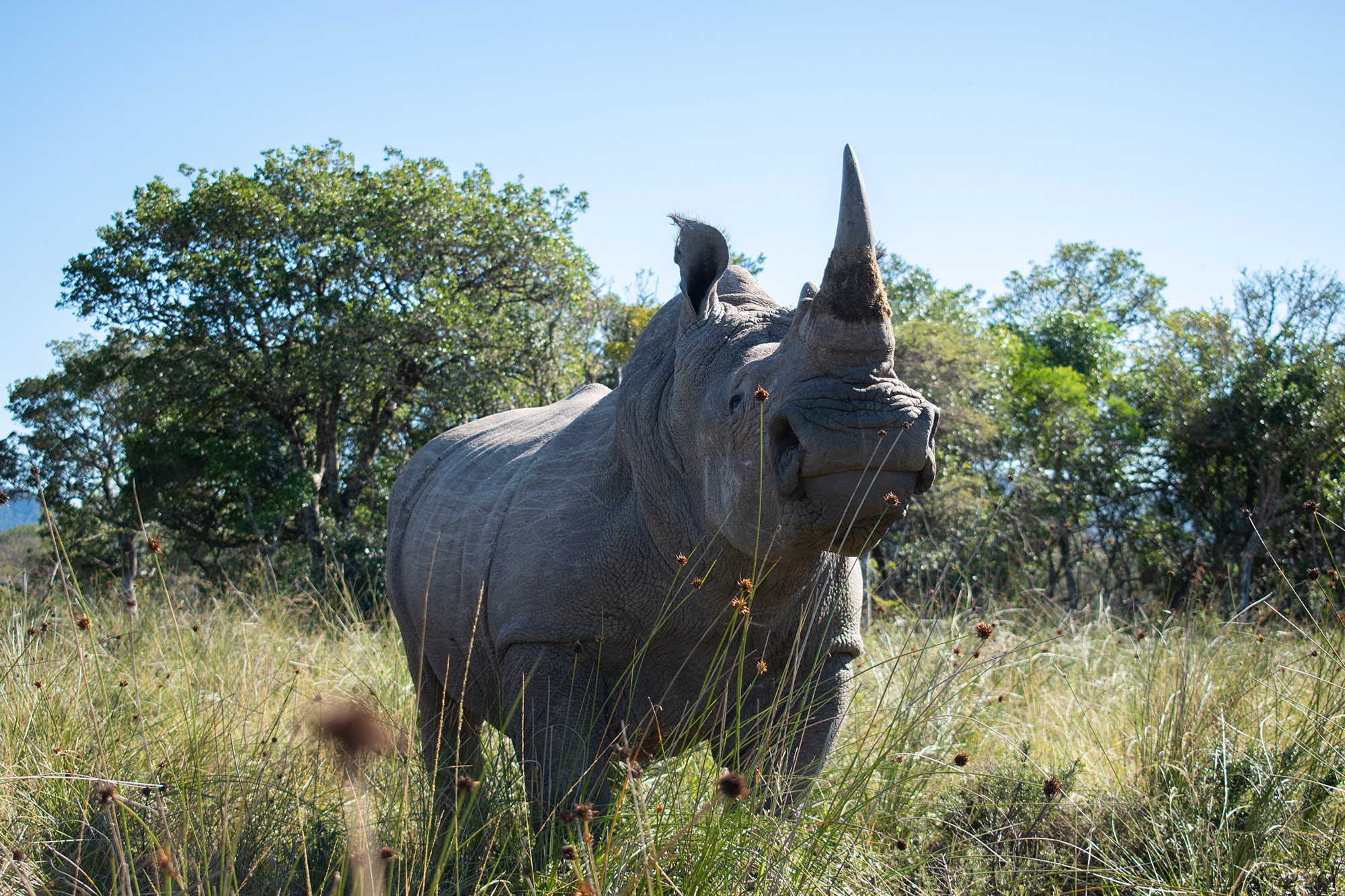 A rhino at a private game reserve in South Africa that's part of the pilot project. Source: Rosatom | 





Post a Comment