| Trailing China | Secretary of State Antony Blinken said the U.S. is lagging China in seizing opportunities from tackling climate change — such as creating jobs. With President Joe Biden hosting a virtual summit on the environment starting Thursday, Blinken added Washington won't turn a blind eye to human rights abuses just because countries make progress on climate issues. -
Chinese President Xi Jinping called for more global economic integration and told the U.S. and its allies to avoid "bossing others around." -
Congress could put at risk research collaborations and funding for U.S. universities from China by subjecting some foreign gifts and contracts to national security reviews. Seeking relevance | Once the primary government creditors to the developing world, Paris Club members have been eclipsed by China. But, as Alonso Soto and William Horobin write, a new plan to defuse a debt blowout from the pandemic gives the Paris Club a shot at reclaiming influence. Kept apart | It's been a year since migrant workers in Singapore were confined to dormitories to prevent an outbreak of Covid-19 spreading across the island. Now, with almost no new cases among the laborers and thousands of them vaccinated, some wonder how long it will take for restrictions to end, as Philip Heijmans explains. Tricky waters | Barclays Plc faced an outcry for helping raise hundreds of millions of dollars in the municipal bond market to build two privately owned prisons in Alabama — two years after the bank vowed to cut financing ties with the for-profit industry. Its withdrawal as underwriter marks a rare win for activists and investors focused on environmental and social causes in the $3.9 trillion municipal market. Vaccine suspicion | Only 5.22 million of Sub-Saharan Africa's almost 1 billion people have received Covid-19 shots due to scarce supplies, mistrust of Chinese-made vaccines and fears the pandemic is a foreign plot. Antony Sguazzin and Katarina Hoije explain the skepticism threatens to put the continent's inoculation rollout further behind the rest of the world. 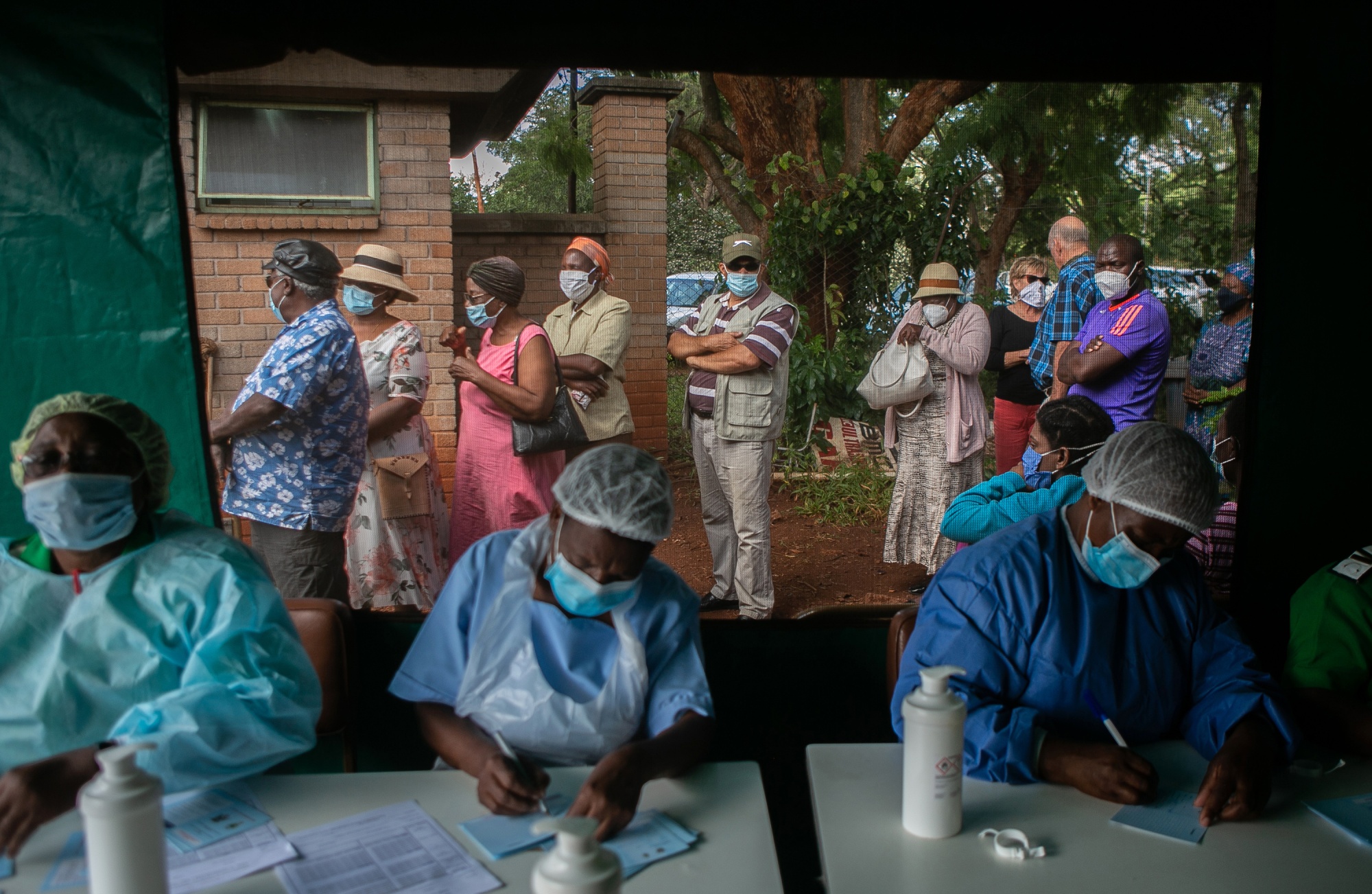 Waiting for the Sinopharm vaccination in Harare, Zimbabwe, on March 29. Photographer: Tafadzwa Ufumeli/Getty Images Europe What to Watch - Ethiopia told the United Nations Security Council that Egypt and Sudan haven't negotiated in good faith on a controversial Nile dam and asked it to coax the parties back to talks.
- Nations including Germany, Russia and China continue to meet in Vienna to help the U.S. and Iran map a path back to the 2015 nuclear deal.
- Saudi Arabia could be weeks from clinching a $3.7 billion green loan for a key part of Crown Prince Mohammed bin Salman's program to diversify the economy.
- The U.K. and the Pentagon reached agreement on a $2 billion sale of 14 Chinook helicopters built by Boeing, as well as engines, machine guns, radar and missile-jamming equipment for the choppers.
And finally ... Mountains of paperwork, visa requirements and spiraling fees for European tours are forcing musicians to reconsider life in the U.K., Isolde MacDonogh reports. In this post-Brexit world, the careers of scores of British musicians have been upended, forcing many to consider moving to Europe.  New restrictions don't just impede U.K. musicians' abilities to tour in Europe, they also jeopardize artists' ability to rehearse. Photographer: Graeme Robertson/Getty Images Europe | 




Hey there, You've done an excellent job. I will certainly digg it and individually suggest to my friends. I'm sure they'll be benefited from this web site. a5 frame
ReplyDelete