| What's keeping the world from sticking highly effective messenger RNA Covid-19 shots into 8 billion people's arms? For one thing, a lack of lipids. Drugmakers Pfizer, BioNTech and Moderna have earned plenty of praise for quickly developing Covid shots based on cutting-edge mRNA technology. But no matter how powerful the technology is, it faces the same hurdle that most medicines need to overcome—making the journey from factory to someone's body, and then getting inside cells. Humans don't make this odyssey easy. Our bodies teem with enzymes designed to immediately cut up mRNA that's found floating about—that is, unless the genetic material is protected. Which brings us to lipids—or, more specifically, tiny spheres of four different types called lipid nanoparticles, or LNPs. For decades, researchers have experimented with lipids and other substances to create better drug-delivery vehicles. Bob Langer started working on this back in the 1970s, convinced it was possible to transport big, complex molecules like DNA and RNA inside tiny particles without destroying them. While many deemed it impossible, Langer made it work, and decades later put his expertise to use when he co-founded Moderna. 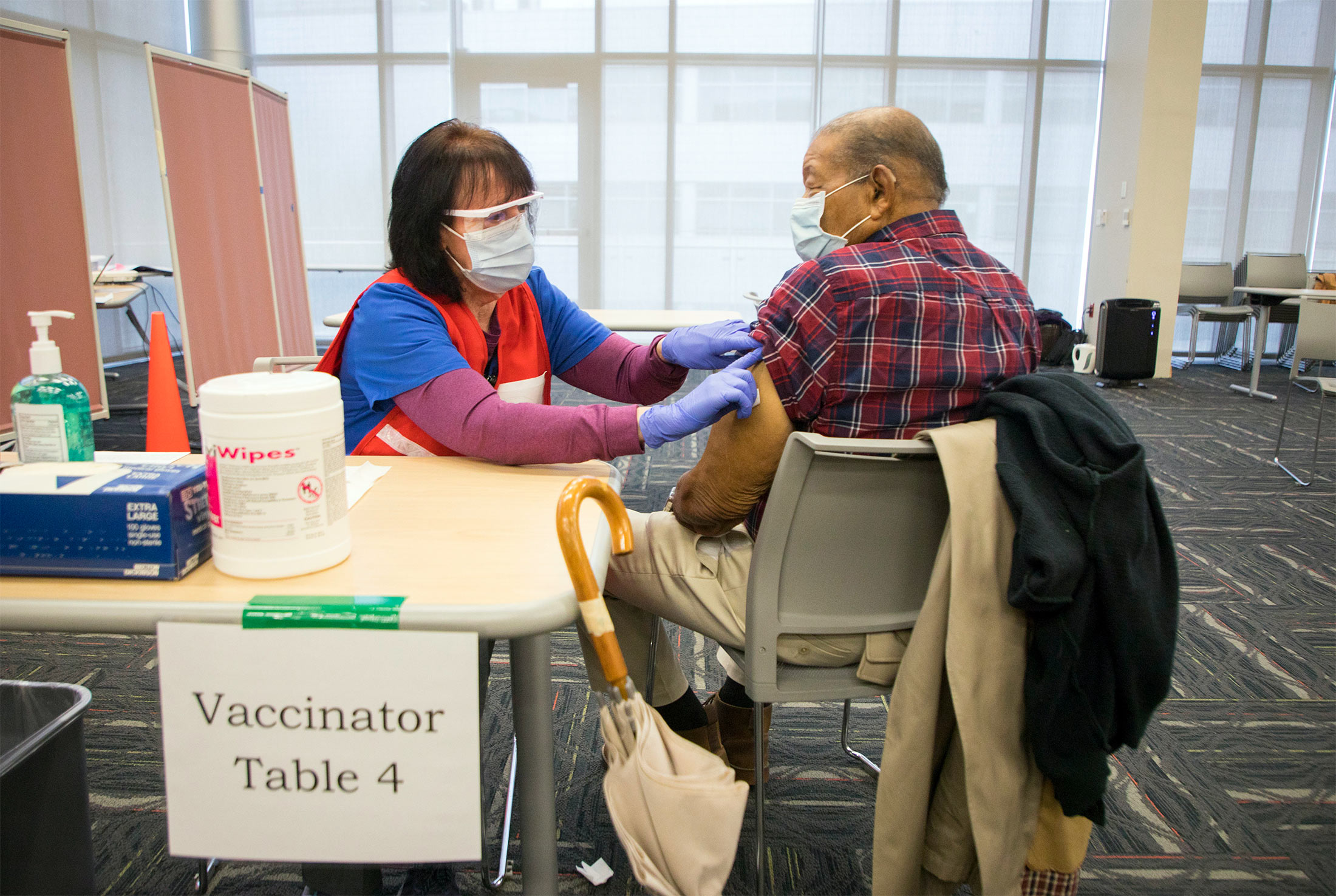 A health worker puts a bandage on a man who's received the Moderna vaccine. Photographer: Julia Wall/The News & Observer/AP "I don't think people realized just how important the delivery systems are to all kinds of medicines," Langer, a professor of biological engineering at the Massachusetts Institute of Technology, said in an interview. As next-generation medicines become increasingly complex, lipid nanoparticles are going to be a big piece of the arsenal." Lipids are basic building blocks of biology—an example is cholesterol—but they can also be engineered to carry out specific tasks. Within the LNP for Covid shots, there are two highly specialized lipids. Moderna makes its own versions, while a Vancouver company called Acuitas Therapeutics licenses its technology for the Pfizer-BioNTech shot. As Pfizer, BioNTech and Moderna look to produce a combined 3 billion Covid shots this year, the demand is surging for lipids. German chemical giants Merck and Evonik Industries, among others, have agreed to re-purpose factories to churn out more lipids—and, like everything else in the pandemic, to do so quickly. "Typically, this process in the pharma industry takes a year or two," said Thomas Riermeier, head of Evonik's health-care business. "What's required here is to do this more or less in a couple of months."—Tim Loh | 



Post a Comment