| Behind the triumphant proclamations of the Chinese leadership in the run-up to this year's National People's Congress ("The East is rising and the West is declining," declared President Xi Jinping), the party-state's growing defensiveness was also on display. On the opening day of the annual parliamentary session on Friday, Beijing unveiled a new electoral process for Hong Kong that will make it just about impossible for pro-democracy candidates to win seats. The last vestiges of Hong Kong's independence from the mainland are disappearing. This week the Heritage Foundation dropped the territory from its "Index of Economic Freedom," an influential benchmark, issued annually, which Hong Kong has dominated for decades. Internationally, China's diplomats have gone into full "wolf warrior" mode during the coronavirus pandemic, helping to create the kind of tense international environment that decades of prior diplomacy sought to avoid. China's ascent is heavily dependent on foreign trade and investment and, above all, infusions of technology from the U.S. and other advanced economies. Rather than focus on the bravado, the world may want to pay more attention to signs of wariness. Historically, an insecure China becomes more repressive domestically and unpredictable on the world stage. 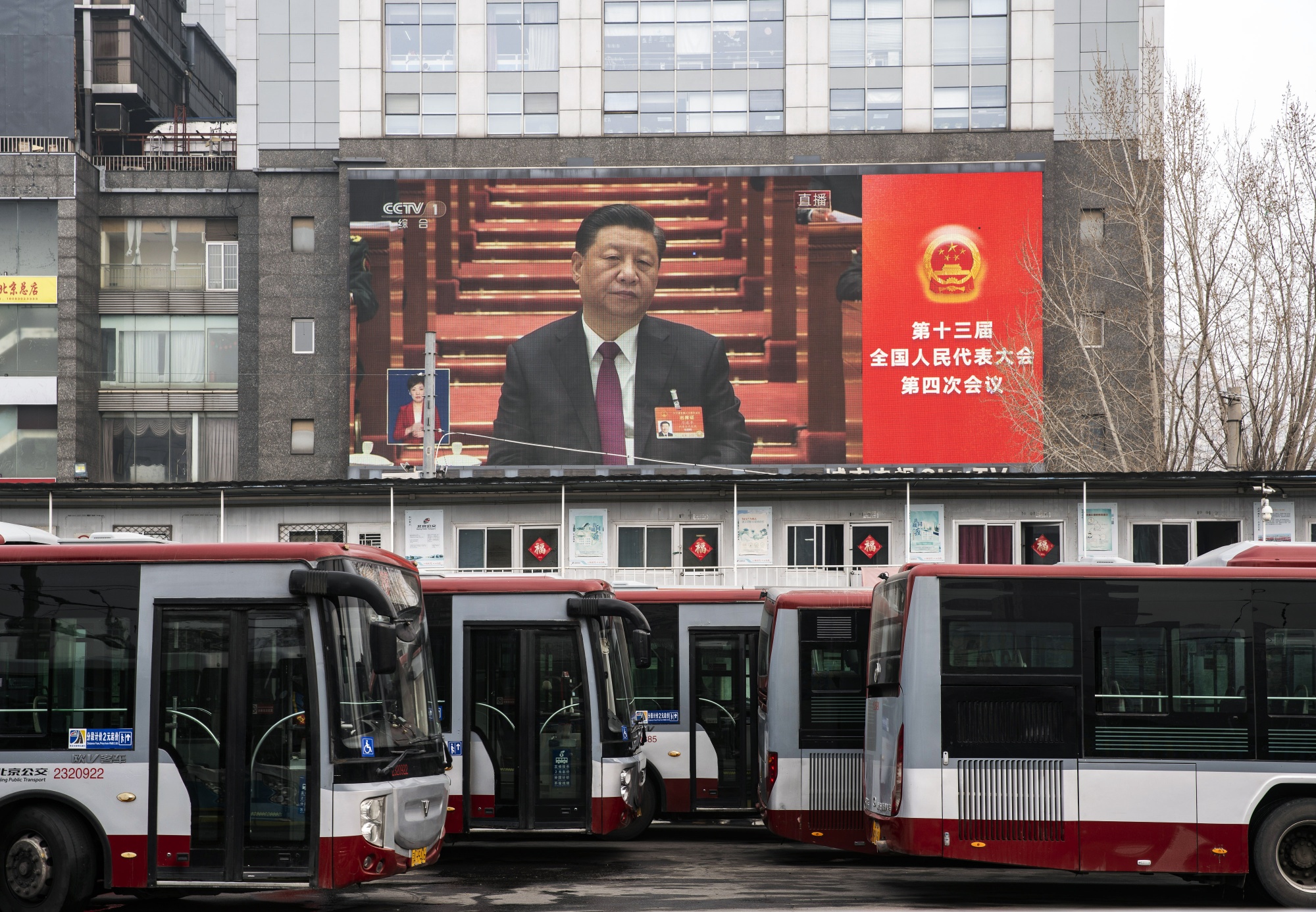 A live news broadcast of Chinese President Xi Jinping at the National People's Congress is broadcast at a bus depot in Beijing on March 5. Photographer: Qilai Shen/Bloomberg This week in the New Economy There's no question that the "West," led by the U.S., is in relative decline. And the Trump administration's botched response to Covid-19, in contrast to China's ruthless efficiency, gave party propagandists plenty to crow about. But America still has powerful leverage, a fact that Xi himself acknowledged, even as he prepares to roll out a five-year blueprint to cut dependence on the West for crucial technology inputs while making big bets on emerging technologies, from hydrogen vehicles to biotech. "The U.S. is the biggest threat to our country's development and security," Xi was quoted as saying. For all Xi's success in defeating the last pockets of poverty in China, it is still in many ways a developing country, one that remains far from the frontiers of technology in key areas, notably semiconductors. 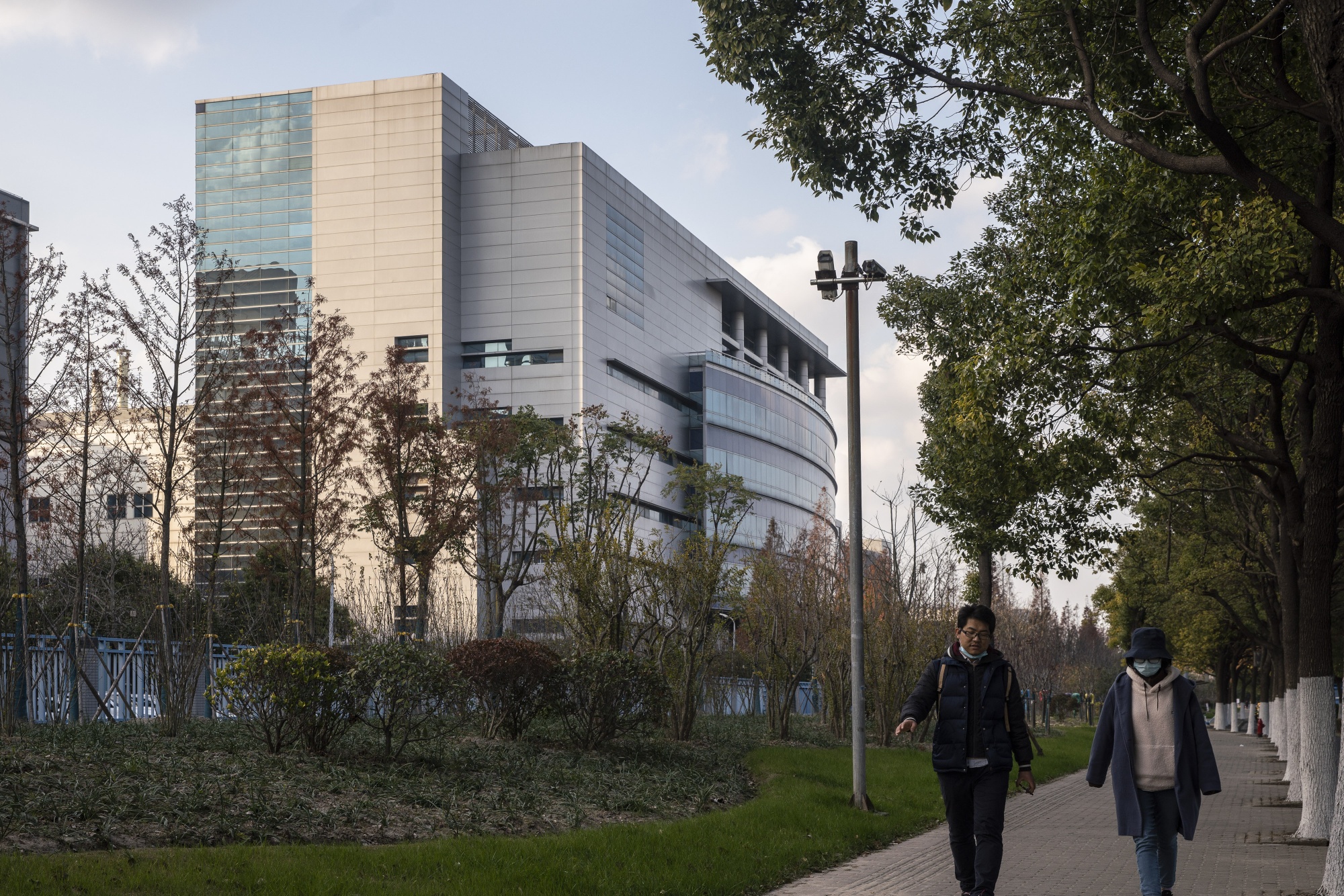 The Semiconductor Manufacturing International Corp. headquarters in Shanghai Photographer: Qilai Shen/Bloomberg China must now reckon with an ever-tightening technology blockade. U.S. President Joe Biden plans to exploit Beijing's vulnerability in semiconductors, as well as artificial intelligence and next-generation networks, by building a coalition of "techno-democracies" to stand up to "techno-autocracies" like China. Denying China technology won't derail its rise, however. Eventually, it will catch up in chip production as just about every other area where it now lags. But the uncertainty complicates the leadership's efforts to build a more innovative society, while deepening the country's growth dilemma. While it is true that a V-shaped recovery from the pandemic has advanced the timetable for China to overtake the U.S. GDP, the sharp rebound has also left its economy more lopsided than ever, reliant on debt-fueled infrastructure investment for growth. This is why Premier Li Keqiang set a relatively unambitious growth target of more than 6% for this year at the opening day of the parliamentary session on Friday. Li's reference to the need for "high quality" development was an acknowledgement that China's current trajectory is unsustainable, prone to bouts of overheating. 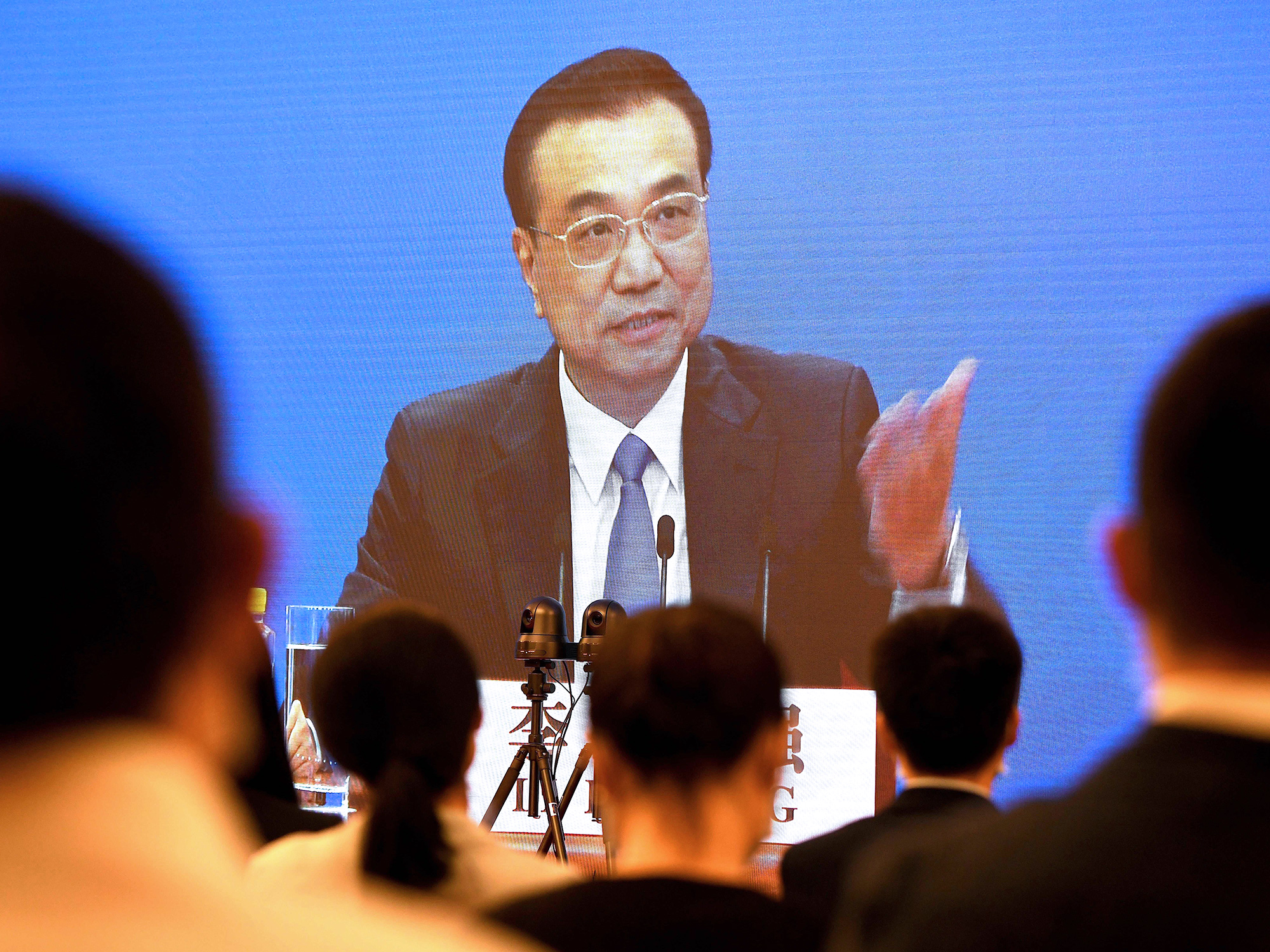 Chinese Premier Li Keqiang speaks at a press conference held via online video link following the National People's Congress in Beijing last year. Photographer: Noel Celis/AFP Guo Shuqing, China's top banking regulator, warned of "bubbles" in the all-important Chinese real estate market as well as in international markets— a reminder that as money from Wall Street piles into Chinese stocks and bonds, China is now vulnerable to financial shocks from abroad. Sudden inflows can just as quickly reverse. Then there's the looming demographic crisis. China's working-age population has started to shrink, and although Beijing has dropped its one-child family policy, there's little prospect that will produce a new baby boom. In fact, registered newborns in 2020 were down 15% from the year before. At this rate, warns the economist Andy Xie, China is heading not just toward an economic calamity but "the end of Chinese civilization as we know it." Hyperbole, perhaps. Still, Beijing has yet to impose a change that could mitigate the problem—raising the retirement age to ease the burden on workers who fund pensions and healthcare for the elderly. Many in China expect the move. But it will be deeply unpopular when it comes. Likewise, the absence of any real momentum towards Xi's goal of achieving carbon neutrality by 2060 is telling. Beijing's net-zero ambitions collide with the plans of powerful state industrial conglomerates and local governments that are addicted to coal. Li said only that the country will reduce carbon emissions per unit of economic output by 18% over the next five years—a target unchanged from the previous five years. __________________________________________________________ Like Turning Points? Subscribe to Bloomberg.com for unlimited access to trusted, data-driven journalism and gain expert analysis from exclusive subscriber-only newsletters. Cities are changing fast. Sign up for the Bloomberg CityLab Daily newsletter to keep pace with the latest news and perspectives on communities and neighborhoods around the world. Download the Bloomberg app: It's available for iOS and Android. Before it's here, it's on the Bloomberg Terminal. Find out more about how the Terminal delivers information and analysis that financial professionals can't find anywhere else. Learn more. | 


Post a Comment