Kamala Harris is Joe Biden's running mate. Gold plunges the most in seven years. SoftBank targets public stock investments of as much as $10 billion. Here are some of the things people in markets are talking about today. Joe Biden chose Senator Kamala Harris as his running mate, betting that her ties to the African-American community and self-branding as a "progressive prosecutor" will help propel him to the White House. Harris, 55, who ran against Biden in the Democratic presidential primaries, becomes the first Black woman and first Asian-American woman on a major party presidential ticket. Known as an aggressive campaigner, the junior senator from California has won statewide elections in the most populous U.S. state three times. She built her early career as district attorney of San Francisco and later California attorney general. Harris tweeted her reaction, pledging to help Biden defeat President Donald Trump. Stocks in Asia headed for a mixed start after a rally in U.S. equities fizzled late in the Wall Street session amid concern a spending package from Washington is not imminent. Gold tumbled the most in seven years. Futures nudged up in Japan and Australia, while contracts in Hong Kong retreated. S&P 500 futures opened stronger. The S&P 500 fell for the first time in eight trading sessions as investors sold some of the rally's biggest winners and some traders cited comments from Senate Majority Leader Mitch McConnell saying stimulus talks are at a stalemate as a catalyst. Treasury yields jumped before this week's debt auctions. Treasuries and European bond yields climbed, cutting into the negative real rates that had supported the metal. SoftBank is targeting investments of more $10 billion in public stocks as part of a new asset management arm, far exceeding the initial holdings that founder Masayoshi Son outlined to shareholders on Tuesday, people familiar with the initiative said. The tally could reach into the tens of billions, said one of the people, all of whom asked not to be identified because the plans are private. Son, the chief executive officer, unveiled the investment arm in a conference call to discuss earnings on Tuesday. He said the unit has about $555 million in capital. However, the amount is seen as a placeholder, people familiar with the project said; 555 is slang in Japanese gaming culture meaning "go, go, go." The group has been quietly amassing multibillion-dollar stakes in American Big Tech companies over the past few months, the people said. Australia is showing increasing signs of a three-speed labor market, with real-time data underscoring the importance of successful virus containment so firms can reopen with confidence and employees can return to work. After an almost uniform pickup from April lows amid the national lockdown, payrolls in Victoria, New South Wales and Western Australia diverged in late June. Employment in Victoria began to collapse as surging infections forced the reintroduction of tough restrictions; New South Wales flatlined as Sydney contended with outbreaks; and Western Australia, virus-free and sealed off, kept improving. The outcomes underscore central bank Governor Philip Lowe's warning that the recovery depends on a vaccine for Covid-19. They've mapped out exit routes, opened offshore bank accounts and secured overseas passports. But for now at least, Hong Kong's high-net-worth investors are mostly staying put, easing fears that the city's new national security law would unleash a flood of capital outflows. Withdrawals have been minimal since the law came into effect on June 30, in part because rich investors are still assessing how the Chinese government's tighter grip on Hong Kong will impact asset prices and the long-term business environment, according to executives at four of Asia's biggest wealth managers who asked not to be identified discussing private information. While critics of the legislation have argued it will undermine Hong Kong's role as a financial center, some wealthy investors are open to an alternate narrative — espoused by Hong Kong's government and the city's richest tycoons — that the law will help stabilize an economy battered by months of pro-democracy protests. What We've Been ReadingThis is what's caught our eye over the past 24 hours: And finally, here's what Tracy's interested in this morningOne way to look at the massive growth of government debt is that it is a ticking time bomb of liabilities that is doomed to explode at some point in the future. Another way of looking at it is that governments are satisfying demand for "safe assets" that serve an important role in the financial system. If you take the latter view, then this week — when the U.S. Treasury is scheduled to sell a record $112 billion of securities — looks like a logical step in the midst of the biggest economic crisis in decades, as opposed to a prelude to an upcoming debt disaster. Sure, there are some short-term challenges to issuing a huge amount of debt during the dog days of August and yields have backed up in recent days. But as Kit Juckes over at Societe Generale points out, there are a couple of things driving relentless demand for safe assets that should provide a cushion for this week's debt sale. Those things include demographic trends (as aging baby boomers need lots of bonds for their retirement portfolios), financial regulation (as banks are required to hold buffers of government debt), and a global monetary system that still revolves around the U.S. dollar (as foreign governments have had to build up FX reserves, in effect creating a source of demand for safe assets such as U.S. Treasuries). 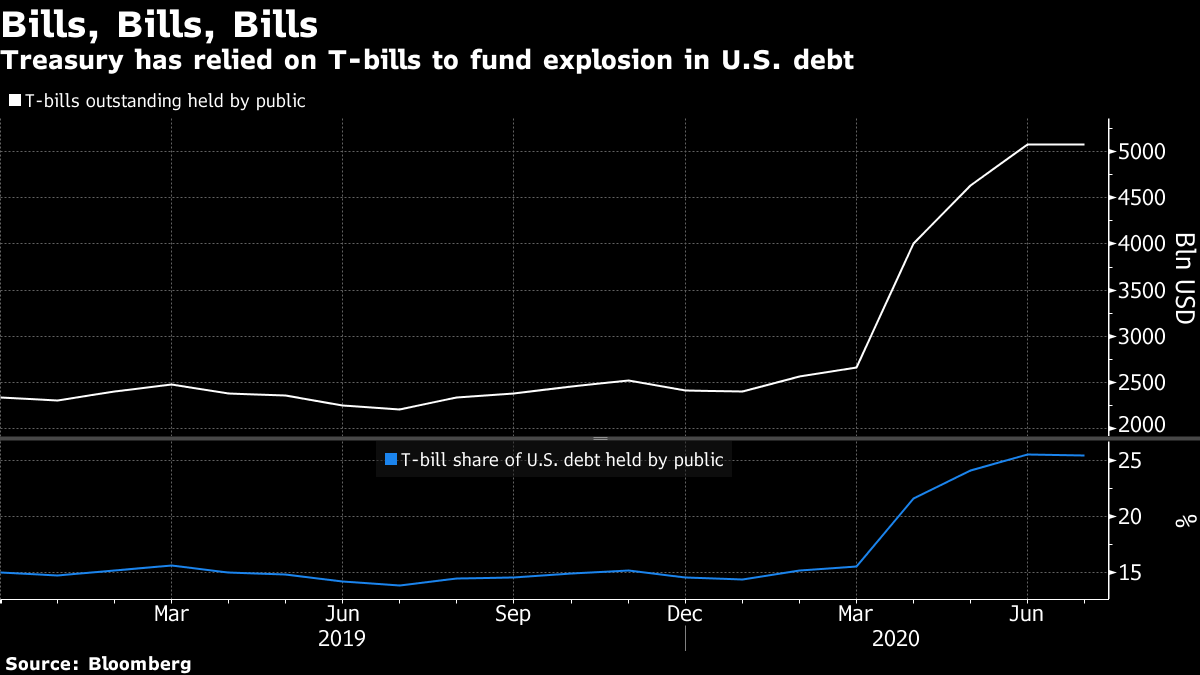 It's worth pausing to consider just how important appetite for safe assets is to the global economy. Last month, Federal Reserve Board economists Thiago Ferreira and Samer Shousha estimated in a new paper that the accumulation of international reserves had lowered the available supply of safe assets and effectively reduced the neutral rate of interest by up to 50 basis points. In other words, the "natural" rate of interest at which the economy achieves full employment while keeping inflation constant would be much higher without demand for safe assets that has overwhelmed supply in recent years. It's this delicate dance between supply and demand for safe assets that arguably holds the key to the future direction of interest rates. You can follow Tracy Alloway on Twitter at @tracyalloway. | 


Post a Comment