| This is Bloomberg Opinion Today, a Nasdaq index of Bloomberg Opinion's opinions. Sign up here. Today's Agenda  Today's stock market, more or less. Photographer: HENNY RAY ABRAMS/AFP/Getty Images Investors May Be Getting Carried Away Irrational exuberance is running amok in the stock market, both generally and specifically. Take Tesla: Its market value has appreciated nearly six times over in the past year, making it the world's most valuable car company, even as its deliveries of actual cars have fallen. A bet on Tesla is less a bet on future earnings than on Muskiness and The Future. But Chris Bryant writes that even by those unusual standards, the stock price is wildly unjustified. Similarly, Spotify's stock has doubled since March, as investors cheer deals with Joe Rogan and other podcasters. But Alex Webb warns investors are overestimating the value of such deals, especially when bigger players are getting into the podcast game too. Also popping are shares of Lemonade Inc., which is a hip, fun, um, insurance company. It doubled on its debut on Thursday, and soared only slightly less today. This is a relief to its VC backer, SoftBank, which really needed one, notes Tim Culpan. But Lemonade itself has much in common with other SoftBank specials, including a quirky mission statement, a special relationship with profitability and a founder with too much power. One such alumnus, Uber, is buying Postmates for $2.65 billion. This helps it consolidate the very terrible food-delivery business and lose less money, as Matt Levine notes. But it has a stealthy second purpose: helping Uber challenge Amazon and Walmart in local delivery, writes Tae Kim. Amazon shares, meanwhile, are now worth $3,000. The Arctic Is Melting Global warming isn't just a function of how much carbon we spew into the atmosphere. Warming creates feedback loops that make the warming even worse. And right now there's an alarming amount of feedback happening in the Arctic Circle. Fahrenheit temperatures are in the 90s on the East Coast of the U.S., as you'd expect in July, but a Siberian town recently hit 100, which you'd expect much less. It's unusually hot all over Russia's typically frozen territory right now, notes Julian Lee, removing the "perma" from permafrost. This encourages wildfires that belch more carbon into the air and may make the bubonic plague not the only ancient disease enjoying a comeback. It also shakes the literal foundations of much of Russia's oil and gas industry: 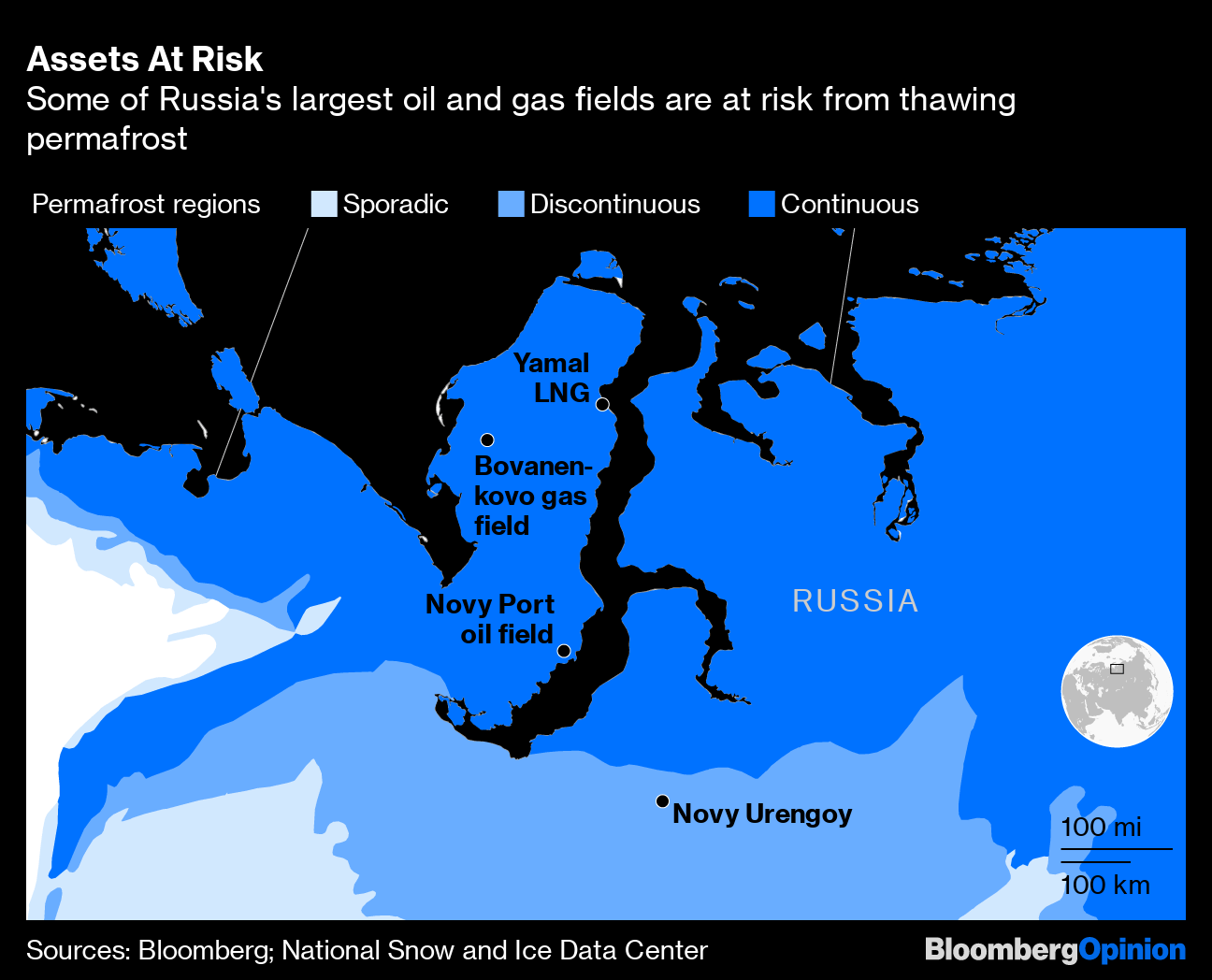 One's knee-jerk reaction might be "Hooray, less oil and gas extraction." But this will also mean many more oil spills and gas leaks, wreaking environmental havoc of a different sort. Meanwhile, the Trump administration is opening Alaskan permafrost to new oil and gas development. Expect more feedback. Further Green Energy Reading: Stimulus Dos and Don'ts Way back in March, when America's pandemic recession was just beginning, there was little time to mull the most effective tools to rescue the economy. Now that it's no longer a five-alarm fire, but still burning furiously, it's a good opportunity to think about what works and what doesn't. Europe seems to offer a good model for at least short-term job-market management, writes Ferdinando Giugliano. Thanks to its furlough program, the hit to employment and wages has been far less severe than in the U.S.: 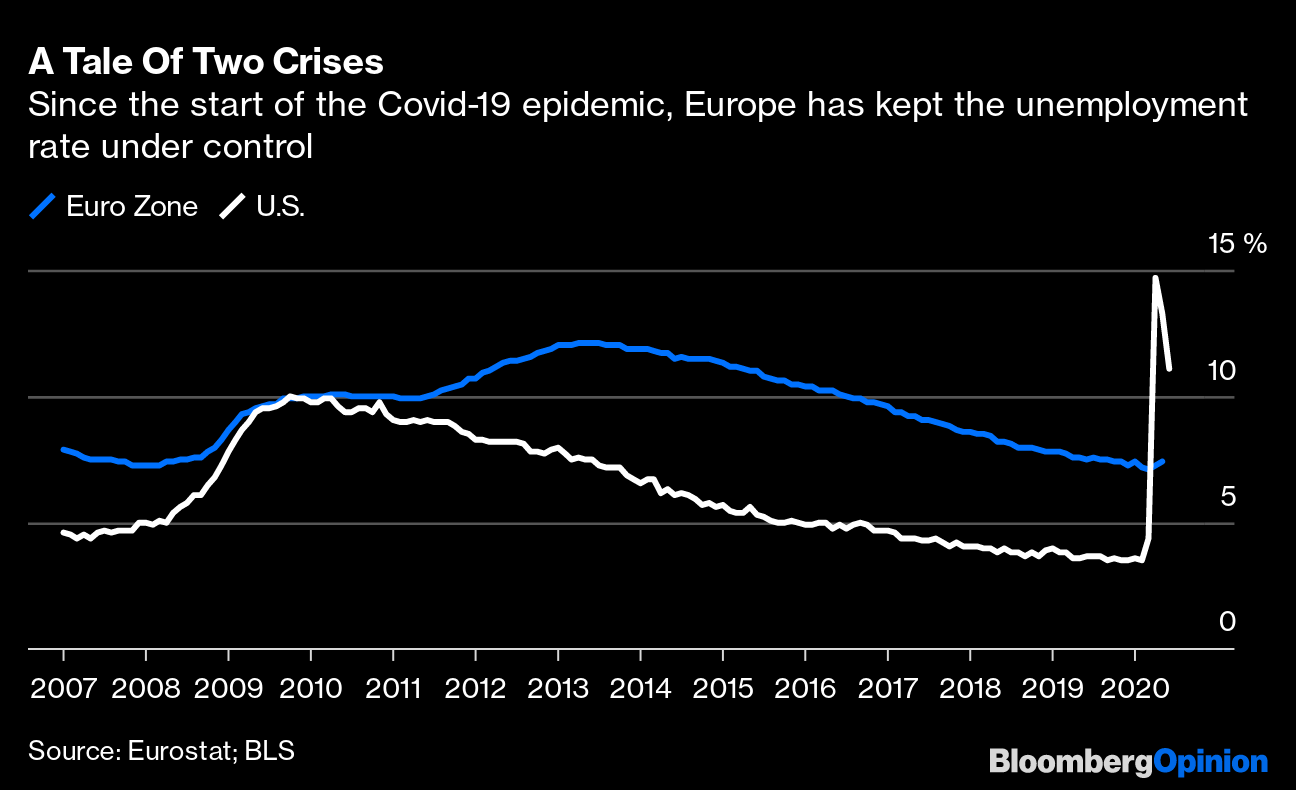 Europe's approach can't last forever without propping up zombie companies, but for now its workers are less stressed than their American counterparts. Job growth in May and June was shockingly good, but the U.S. economy still faces a long and potholed road out of a deep valley, writes Mohamed El-Erian. You see the handiwork of the Federal Reserve's particular heroism in financial markets every day, with stocks climbing back toward all-time highs and credit flowing freely. But it may have been a little too heroic. For example, its strings-free bond-buying program is helping Apple Inc. borrow money at rock-bottom rates not to build new iPhones in America but to finance stock buybacks, writes Brian Chappatta. Is that really how we want to use the Fed's power? The Supreme Court Keeps Opining It's been a busy few weeks for the U.S. Supreme Court, with consequential rulings on DACA, abortion and LGBTQ rights. Its latest decisions haven't been as headline-grabby, but they're big deals anyway. Late last week, the Supreme Court ruled the Consumer Financial Protection Bureau isn't unconstitutional, in another blow to conservatives' hopes. It did curb the power of the agency's director, but Bloomberg's editorial board writes this just means a Democratic president can immediately install leadership that upholds the CFPB's mission. It could use a stronger structure for long-term viability, but it's no longer an endangered species. Today, the high court ruled states could punish electors who buck the will of voters in presidential elections. The 2020 election will be chaotic for a lot of reasons, but the Supreme Court just ensured this won't be one of them, writes Noah Feldman. Today's second big ruling seems to be a win for common sense and sanity, upholding a ban on robocalls. But the particulars of the argument also show conservatives on the court plan to gut the regulatory state, Noah Feldman writes. Telltale Charts Warren Buffett finally made a deal, but it's hardly the blockbuster on which you'd expect him to end his career, writes Tara Lachapelle. 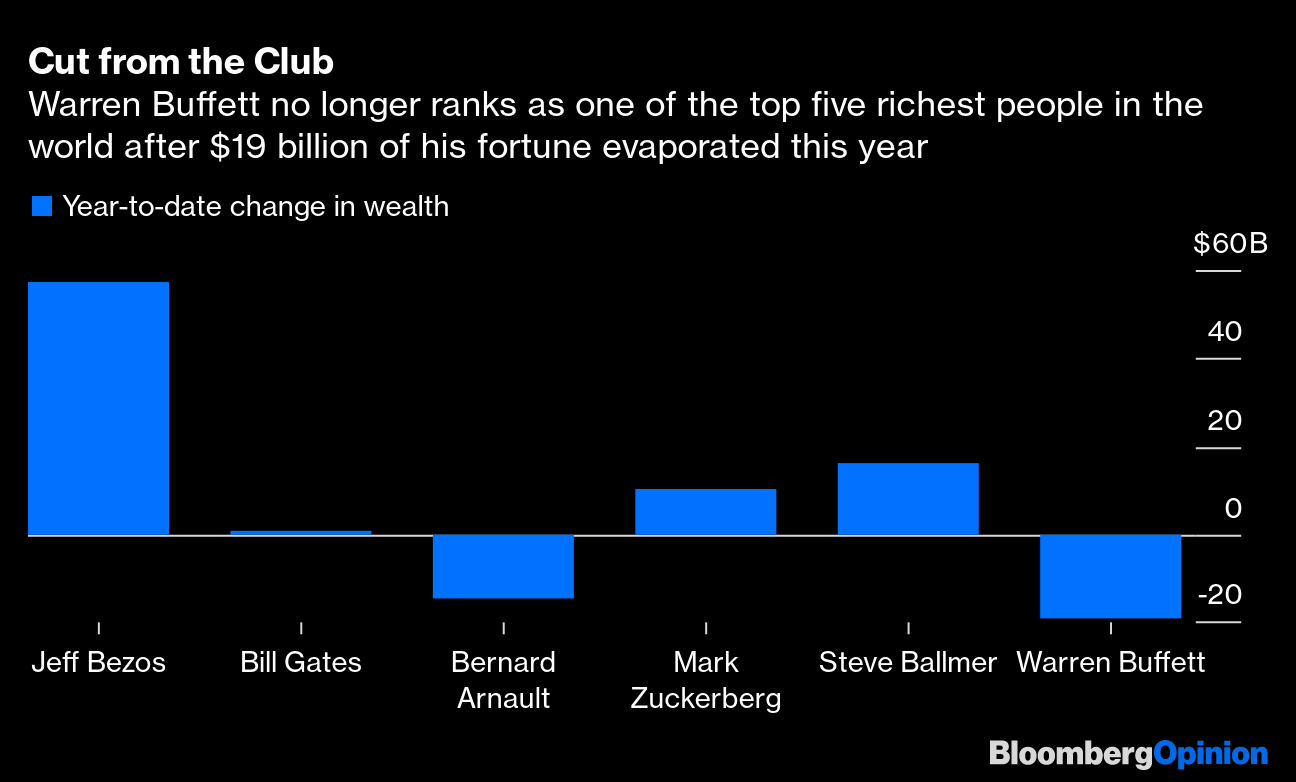 America's elites keep finding reason to revolt, as the pie keeps shrinking and wealth and prestige keep getting harder to attain except for a lucky few, writes Noah Smith. 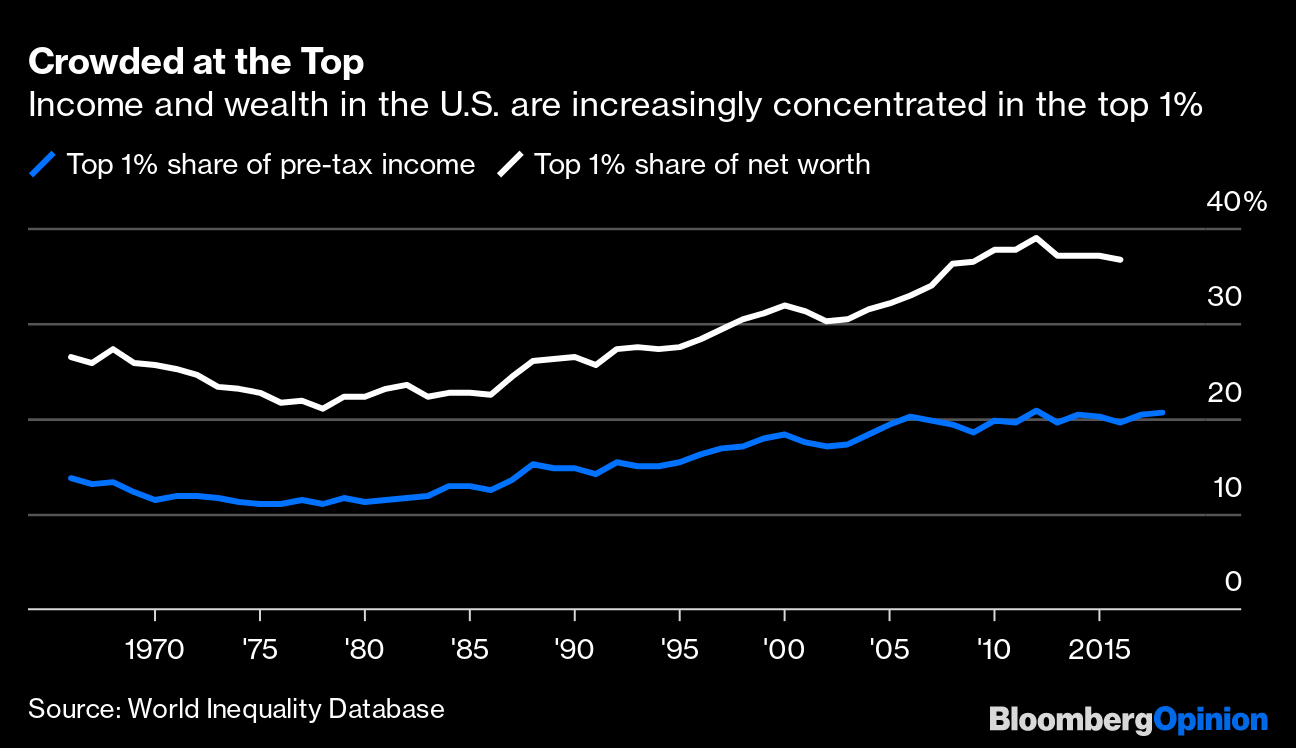 Further Reading The U.S. should join the rest of the world in defending Hong Kong's independence. — Bloomberg's editorial board The Labor Department's ban on ESG investing seems confused about what ESG is meant to do. — Nir Kaissar Boris Johnson has converted to the war on obesity after his brush with coronavirus death. — Therese Raphael Creditors should take Argentina's latest offer. — Mohamed El-Erian President Donald Trump's approval ratings have fallen into Carter territory. — Jonathan Bernstein The weird nature of this pandemic recession makes it a rare money-saving opportunity for some. — Teresa Ghilarducci But you won't be able to itemize working-from-home expenses, thanks to the 2017 tax law. — Alexis Leondis ICYMI Harvard and Princeton say some students can return this year. Trump-connected companies got PPP loans. Anthony Fauci said a coronavirus vaccine would likely only offer "finite" protection. Kickers Scientists photograph evidence of a still-forming planet. Maybe don't shower during your Zoom meeting. (h/t Scott Kominers for the first two kickers) FINALLY, green-onion-flavored Chex cereal. (h/t Mike Smedley) Note: Please send green-onion Chex and complaints to Mark Gongloff at mgongloff1@bloomberg.net. | 


Post a Comment