| Trump aides weigh proposals to undermine Hong Kong's dollar peg. Nearly 370,000 Chinese students in the U.S. may be at risk of deportation. And Singapore faces its ultimate test. Here are some of the things people in markets are talking about today. Some top advisers to President Donald Trump want the U.S. to undermine the Hong Kong dollar's peg to the U.S. dollar as the administration considers options to punish China for recent moves to chip away at the former British colony's political freedoms, according to people familiar with the matter. The idea of striking against the Hong Kong dollar peg — perhaps by limiting the ability of Hong Kong banks to buy U.S. dollars — has been raised as part of broader discussions among advisers to Secretary of State Michael Pompeo and hasn't been elevated to the senior levels of the White House, suggesting that it hasn't gained serious traction yet, according to people who discussed the matter on condition of anonymity. The very idea that undermining the peg has even been raised offers some insight into the range of discussions now underway for punishing China. But the proposal faces strong push back from some in the administration who worry such a move would only hurt Hong Kong banks and the U.S., not China. Meanwhile, here's why big Wall Street banks' expansion plans in China could be under threat from new U.S. sanctions relating to Hong Kong's national security law. Hundreds of thousands of Chinese students enroll at U.S. colleges and universities each year, and right now, a lot of them are concerned. As schools try to figure out how to start the fall semester amid the coronavirus pandemic, some — including Harvard University and the University of Southern California — are opting for online-only instruction. And that means their foreign students will have to leave or transfer, according to new rules issued Monday by the U.S. Immigration and Customs Enforcement agency. By noon on Tuesday, posts on Weibo related to the new guidelines had gained almost 55 million views, many of them aiming their anger at U.S. President Donald Trump. It's not clear how many of the nearly 370,000 Chinese students in the U.S. really might have to leave; if large numbers do, the guidelines may add to the financial stress on American universities, which have become increasingly dependent on foreign students to pay full tuition. The global equity rally paused overnight after a strong start to the week, with European shares slipping alongside U.S. stock futures. The dollar snapped a five-day losing streak. The Stoxx Europe 600 Index fell, dragged lower by banks and health care shares, as data showed German industrial production rose less than forecast in May, underscoring the challenges as the region emerges from lockdown. The Shanghai Composite climbed for a sixth day, iron ore futures jumped and the offshore yuan briefly strengthened through the 7 per dollar level for the first time since March. Treasuries edged higher alongside most European bonds. The pandemic is proving to be the ultimate test for Singapore, which reinvented itself after the Asian financial crisis and the dotcom bubble and is now one of the richest and most competitive economies in the world. As the city-state's leaders grapple with what's turning out to be its worst slump since independence in 1965, the ruling party is looking to extend its mandate in Friday's election to help reinvent the economy once again. They're already positioning for a post-Covid-19 world with planned investment in health and biomedical sciences, climate change and artificial intelligence. Read more about their plans here. Rushed policy decisions, botched execution and instances of public complacency. These are some of the factors being blamed for the unraveling of what had largely been a Covid-19 success story for Australia, leading Melbourne back into lockdown for the second time in four months. Australia's second-largest city is responsible for the vast majority of the country's new Covid-19 cases in the past month, plagued by a level of community transmission previously unseen there. So from midnight Wednesday the city's 5 million residents will be back under stay-at-home orders for six weeks, showing the fragility of early success in battling the virus. What We've Been Reading This is what's caught our eye over the past 24 hours: And finally, here's what Tracy's interested in this morning One of the most interesting things to come out of the U.S. government releasing loan data for its Paycheck Protection Program, a bailout scheme intended to help save American jobs, is the fact that Chinese companies also tapped the federal funds. The North American unit of HNA Group — the sprawling Chinese conglomerate that's already getting bailed out by the Chinese state — received between $350,000 to $1 million, according to the U.S. Treasury Department. Meanwhile, state-owned defense giant AVIC — a company which just last month featured on the Pentagon's list of 20 Chinese companies facing increased scrutiny because of ties to the Chinese military — got between $5 million and $10 million. There's clearly a trade-off delivering stimulus programs as fast as possible and designing them so as to avoid controversy. In rolling out the PPP so quickly, the U.S. government may inadvertently have opened itself up to fresh political criticism. 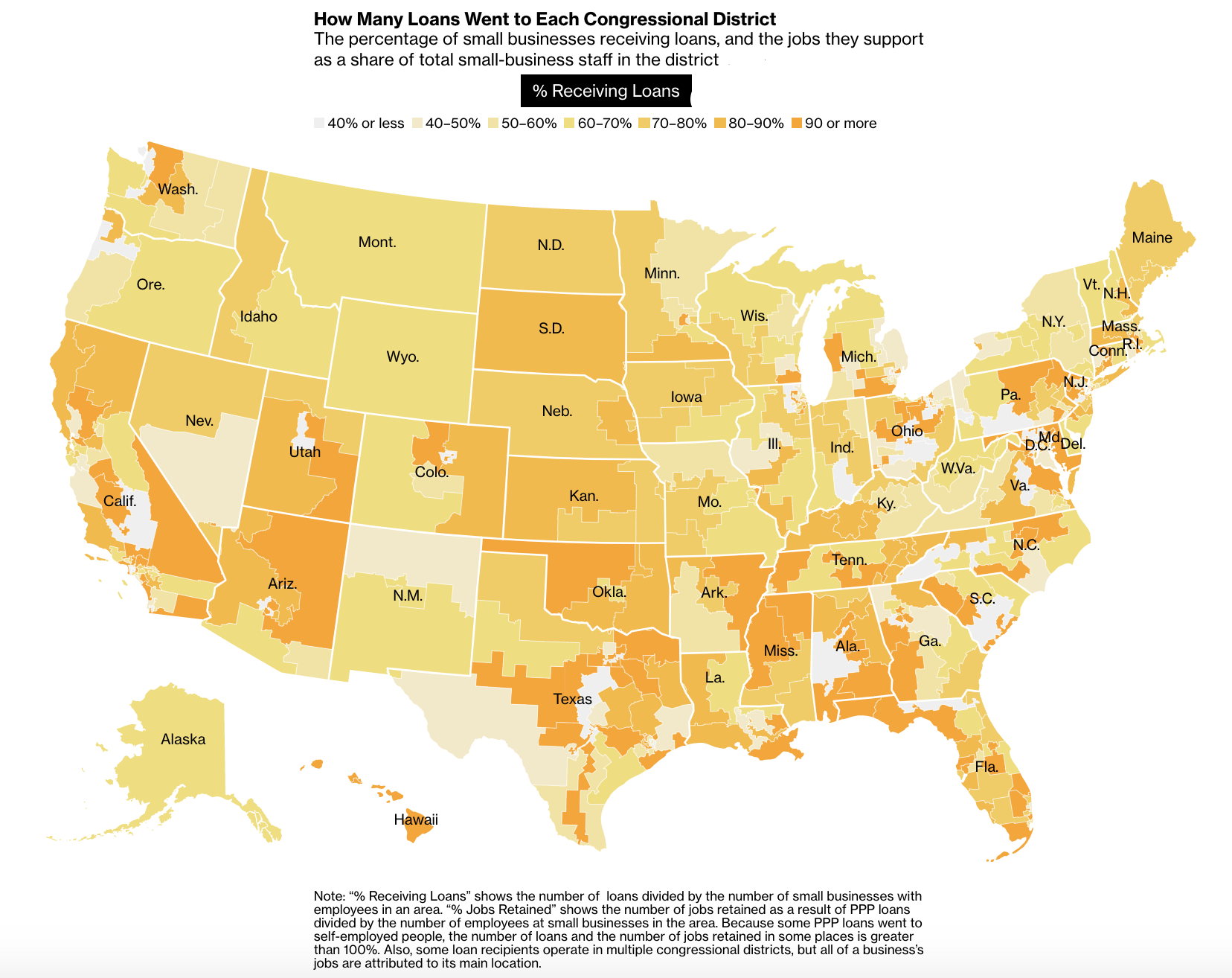 The best in-depth reporting from Asia and beyond. Sign up to get our weekly roundup in your inbox. | 


Post a Comment