Header Ads

The music industry wants to fight racism. Will it look inward?

Screentime
Bloomberg

Ever since protests against police brutality swept the U.S., the music industry has scrambled to show its support for the black community.

Following a brief experiment fighting racism with a meme, record labels took a day off work and opened up their checkbooks. Warner Music Group and Sony Music each created a $100 million fund to combat racial injustice, while Universal has created a $25 million "Change Fund" and a task force.

Spotify promised to match employee donations up to $10 million, and all the major streaming services promoted special playlists and podcasts.

Many music industry executives cheered the donations, before asking a follow-up question: What else you got? 

Protests that started in response to police brutality have renewed age-old conversations about racial inequality in health care, education, politics, pop culture and business. Few industries are more reliant on black labor than the record business, and few industries have faced more frequent criticism for exploiting that labor.

The biggest pop acts of all time -- from Elvis Presley and The Rolling Stones to George Michael and Justin Bieber – borrowed from black culture, some respectfully and some less so. Even as corporate America grew comfortable placing black musicians at the center of culture, they drew the line at upper management and ownership.

All three of the major music groups are run by white men, as are the two largest concert promoters, the two largest music agencies and the two largest streaming services. While these companies say they are diverse in general, they acknowledge that is not the case at the highest levels – the boards of directors and the direct reports to the CEO.

Just this week, Ukrainian-American billionaire Len Blavatnik made close to $2 billion by selling a piece of Warner on public markets. Blavatnik broke no laws. He made a savvy investment almost a decade ago, and profited immensely. That's capitalism.

But Blavatnik's windfall is a reminder of the gulf between the people making the music, and the people who own the music. In music, as in sports, owners love to support their stars  – so long as they remember that they are employees.

All week, agents, managers, artists and executives have been brainstorming ideas for how to reform their industry. One idea that gained currency is banning the word "urban," a catch-all for hip-hip, R&B and black music. Republic Records said Friday it would stop using the word.

That may sound minor, but it's a coded word that speaks to the long history of racism in the music industry. Prominent black musicians, be they rappers, pop stars or soul singers, have been grouped under the urban label. And urban acts never seem to win big at the Grammys.

So while record labels and streaming services put money towards a good cause, they must also look inward. These companies aren't going to buy artists' silence, or spend their way out of this problem. 

Substantive change will require constant education, dialogue and pressure. To that end, if you have thoughts about reforming the music industry, or any industry for that matter, please message me. – Lucas Shaw

The best of screentime

Mukesh Ambani Won the World's Most Expensive Sibling Rivalry
Being the brother of Asia's richest man is harder than you think.
Video Games Are the New Social Media
Garth Brooks considers releasing albums on Zynga, joining the shift of music, movies and socializing toward game platforms.
The World's Livestream Queen Can Sell Anything
Huang Wei, a 34-year-old known to fans as Viya, is more popular than football.
Las Vegas Casinos Reopen With $30-a-Night Rooms on the Strip
Casinos in Nevada began welcoming customers again on Thursday following a nearly three-month shutdown.

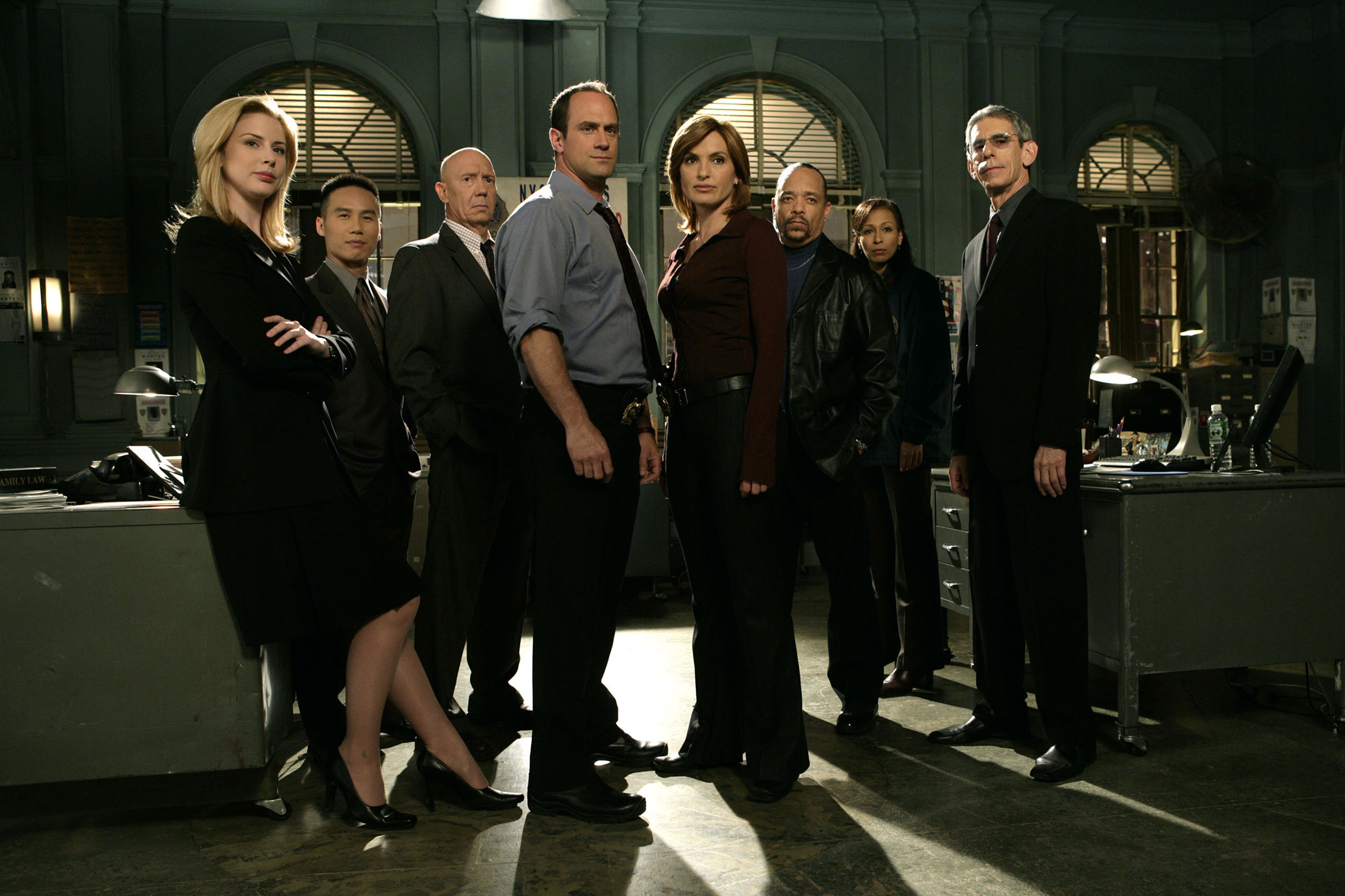
What happens to cops on TV?

Photographer: NBC/NBCUniversal

Photographer: NBC/NBCUniversal

Hollywood has spent a lot of the past decade trying to cast more people of color and women so that what we see on screen better reflects what we see in real life. (Despite many programs to improve diversity on screen, the numbers haven't improved much.)

Yet one topic Hollywood hasn't addressed is the portrayal of cops. Broadcast networks love a good cop show in prime time, whether it's "Blue Bloods" or "NYPD Blue." Dick Wolf has built a $550 million empire on cop shows.

In light of recent events, critics are wondering whether these shows should address flaws in the criminal justice system, including the disproportionate imprisonment of black men to police brutality. As Kelly Lawler writes in USA Today,

Television is a powerful medium, and it's long past time to reckon with decades of stories that portray cops mostly as heroes and protagonists and black people as the criminals they lock up. 

Kathryn VanArendonk has a good piece on the same topic. When it comes to representation, casting a diverse group of people isn't enough. How you portray them matters too.

The anti-racist reading list

Nationwide protests against police brutality and the killing of black people have sent Americans in search of movies, books and podcasts that can teach them a thing or two. Demand for Netflix's series "Dear White People" and "When They See Us" has skyrocketed. (Unfortunately, so has viewership of "The Help.") Several books that discuss race relations in the U.S. have sold enough copies to be out of stock on Amazon, including "How to Be an Antiracist," Ralph Ellison's "Invisible Man" and Isabel Wilkerson's "The Warmth of Other Suns." 

The NBA is back, but baseball isn't

The National Basketball Association will return at the end of July, and play through October, welcome news for sports fans starved for new games. Teams will arrive at Disney World in Orlando on July 7. In contrast, Major League Baseball's owners and players remain far apart on plans to return to play. The problem? $$$.

HBO Max's top hits are for kids

"Looney Tunes Cartoons," a new take on classic characters Bugs Bunny and Daffy Duck, is the most in-demand original on HBO Max, according to Parrot Analytics. That's a victory for AT&T, as it tries to turn HBO into a family-friendly brand. While HBO still means "Game of Thrones" and "The Sopranos," HBO Max is trying to appeal to a wider audience.

Weekly playlist

Read: "Souls of Black Folk." W.E.B. DuBois inspired a lot of the best writing on racism in America (including many of the books on your anti-racist reading list). Also, James Baldwin talked to Esquire in 1968. Do you need a reason to read Baldwin?

Listen: "Run the Jewels 4." The latest album from the rap duo of Killer Mike and El-P is perfectly timed. If you want to hear some smart people talk about the record, try this episode of "All Songs Considered."

Watch: "The Original Kings of Comedy." If you need a little release at the end of the day, this $2.99 rental fits the bill. 


Before it's here, it's on the Bloomberg Terminal. Find out more about how the Terminal delivers information and analysis that financial professionals can't find anywhere else. Learn more.


No comments