| Protests Across America Through the Eyes of Black Photographers
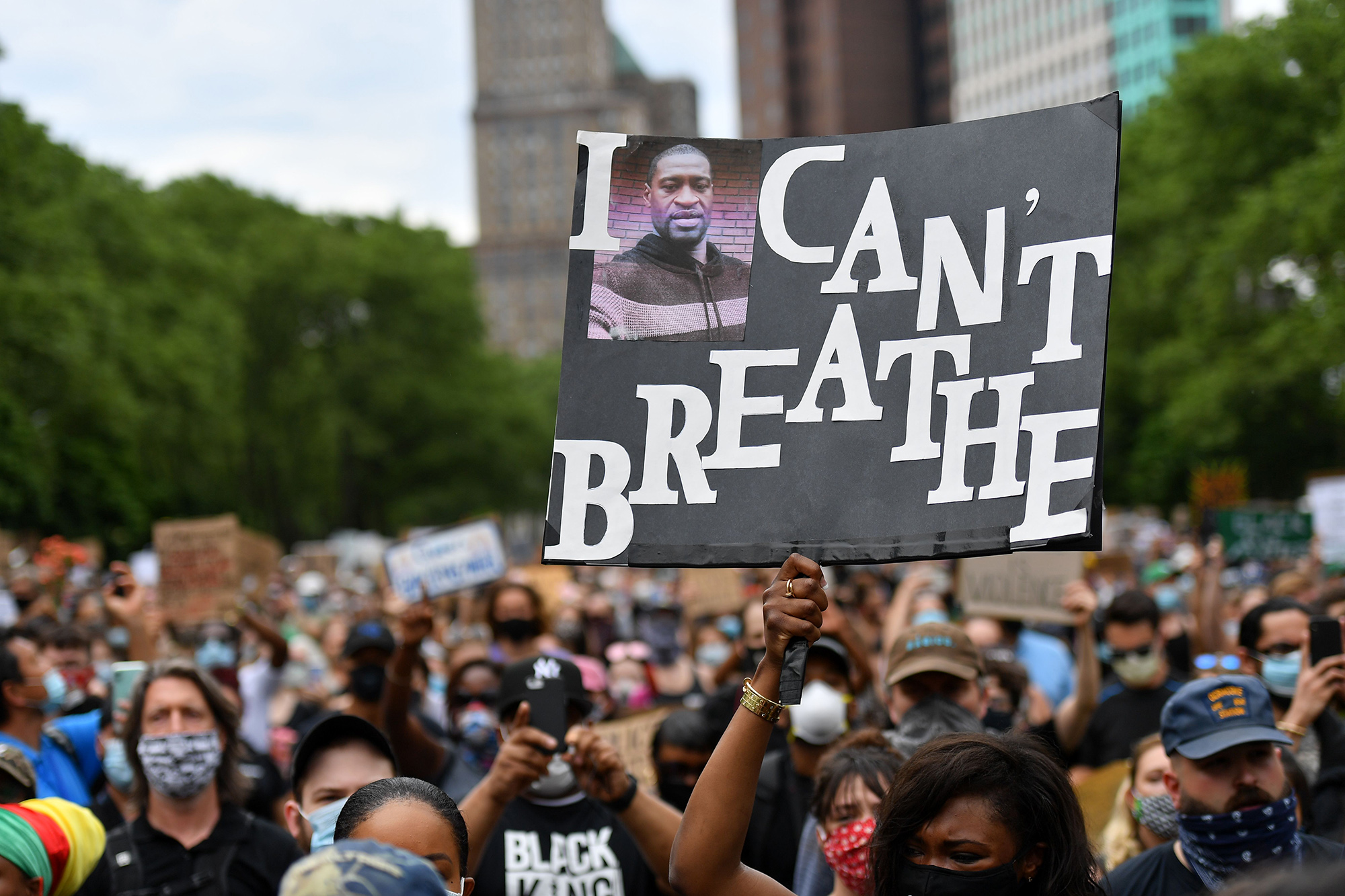
In Portland they lay on the roadway with their hands behind their backs. In Houston they marched in the thousands to City Hall and in Newark, they danced in unison to Cupid Shuffle. Everywhere, there were chants of "I can't breathe" and "Black Lives Matter" signs, as Amanda Hurley writes.
The City That Remade Its Police Department
Officers left the riot gear at home and brought an ice cream truck to a march in Camden N.J. As Sarah Holder reports, police chief Joseph Wysocki, who is white, brandished a "Standing in Solidarity" poster alongside residents holding "Black Lives Matter" signs, after overseeing some of the most far-reaching reforms in the country. 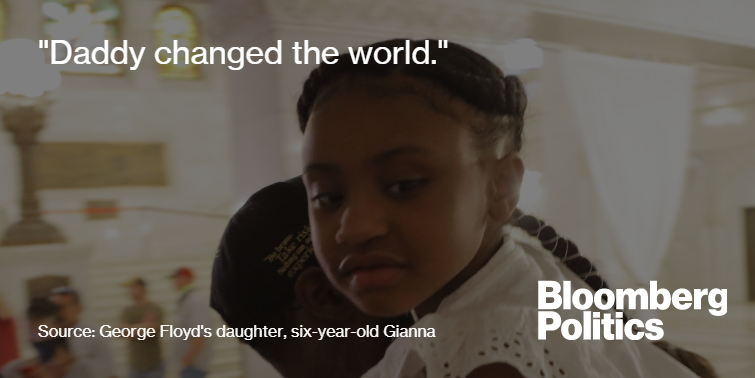 Gianna was speaking after protests against her father's death spread across the U.S. Authorities in Minneapolis, where Floyd's death sparked unrest, agreed to ban chokeholds by police, while the Minnesota attorney general upgraded charges against the ex-police officer who knelt on Floyd's neck . Next Wave of U.S. Job Cuts Targets Millions of Higher-Paid Workers
The pandemic isn't finished with the U.S. labor market, threatening a second wave of job cuts — this time among white-collar workers. Close to 6 million jobs are potentially on the line, including higher-paid supervisors in sectors where frontline workers were hit first, as Katia Dmitrieva, Reade Pickert, Alex Tanzi and Cedric Sam explain. Evangelicals Give Bolsonaro a Miracle While Allies Jump Ship
When the pandemic began, Brazilian evangelicals put their faith in President Jair Bolsonaro to get them through it, Simone Iglesias and Samy Adghirni write. They knelt along city streets, fasting and praying for the virus to go away. Their backing is becoming all the more important as protests against the president start to take shape. 'Intelligent Lockdown' Worked Because the Dutch Follow Rules
Despite a largely laissez-faire attitude, the Netherlands has fared better than most in the pandemic, as Paul Tullis reports. Like much of Europe, it was hit very hard early in the pandemic — but the country also had among the world's briefest peaks in new cases. 20 Years of Power and $180 Million Divide Syria's Ruling Family
A feud between President Bashar al-Assad and his cousin is laying bare the catastrophic state of the war-ravaged country's finances. As Donna Abu-Nasr writes, Syrians have been shocked and mesmerized by the family feud unfolding publicly in the past few weeks after the family's grievances were aired on Facebook. India's China Standoff Shows Risks of Getting Too Close to Trump
India and China — which together account for one third of the world's people — are no strangers to animosity, and fought a war in 1962. But that was supposed to be behind them as economic and commercial realities took precedence. Now, as Archana Chaudhary explains, both nations are marshaling extra troops and artillery on the Himalayan frontier. 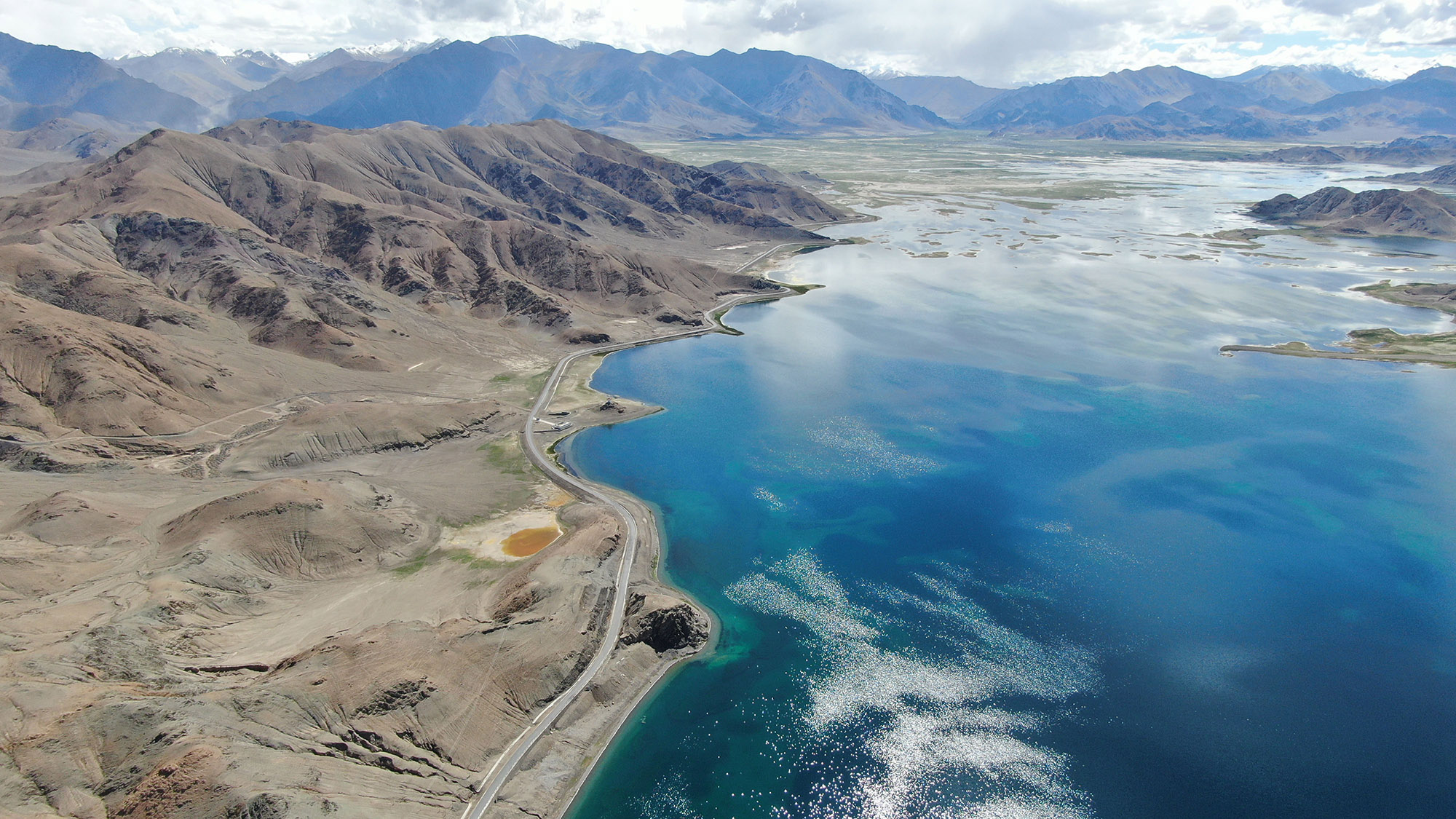 The tensions are have played out on the banks Pangong Tso, high in the Himalayas. Despite the remote location, the military buildup at the un-demarcated border is set against the backdrop of Beijing's deteriorating international relations during the coronavirus outbreak. Photographer: Jigme Dorje/Xinhua via Getty Images Hong Kong Has Been Tested Before, But Never Like This
In late May, with the U.S. and other Western powers distracted by the pandemic, President Xi Jinping's government announced planned legislation to prevent "separatism, subversion of state power, or organizing or carrying out terrorist activities" in Hong Kong. As Iain Marlow writes, the reaction has been furious. Facebook Takes Grim Role in World's Most Fragile Nation
Even during the harrowing last five years of conflict, Yemenis flooded Facebook through the holy month of Ramadan with greetings and photographs of fasts being broken. This year, though, as Mohammed Hatem and Caroline Alexander report, their posts were often messages of condolence as the coronavirus ravaged the nation. Disaster Looms as Virus Robs Resources From Africa's Older Ills
Children in the Democratic Republic of Congo haven't been vaccinated against measles this year. Polio is making a comeback in Nigeria. In southern Africa, where millions live with tuberculosis and HIV, treatment centers have been converted into Covid-19 wards, as Pauline Bax and Antony Sguazzin explain. And finally ... Scorched by climate change and drained by industrial farms, the country's most important river system is nearing collapse. Matthew Campbell visits the Murray Darling, which has spent most of the past several years in a drought so savage that it completely dried out sections of the river for months at a time. 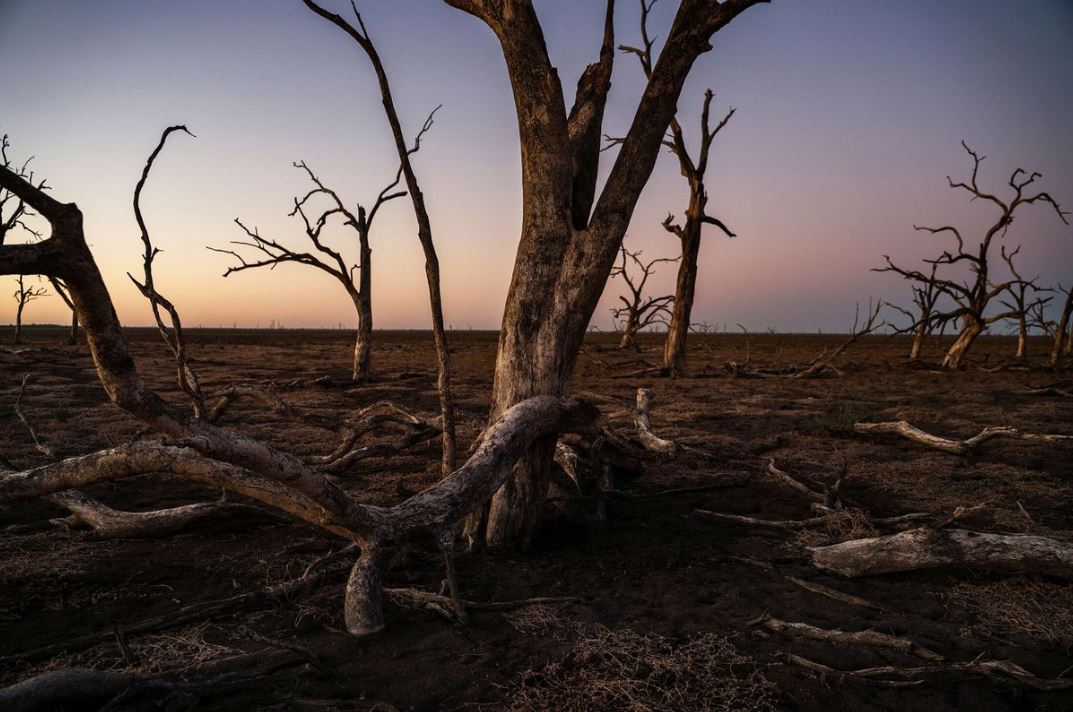 A dry lake bed in Menindee in New South Wales. Other global river systems may not be far behind. In South Asia rising temperatures are shrinking the glaciers that feed the Indus and Ganges, while in Africa the changing climate is making the flows of the Nile far less predictable. The Colorado, Mekong, and Yangtze all face their own climate challenges. Photographer: Adam Ferguson | 



Post a Comment