| Happy Saturday morning. After another hectic and often terrifying week, we thought it was worth sending a special version of the newsletter for the weekend. I am not going to say anything about what has happened in the last week — we all of us deserve a respite from the headlines. But I do think it might be useful to offer some recommendations on reading to fill the long hours we all face. Whether or not you are already regularly reading the Bloomberg book club selections, I hope this will be helpful. Be safe and be healthy. Many of us have far too much time on our hands at present, and also have far too many distractions. At times like this, reading becomes ever more valuable. It focuses the mind and helps zone out distractions in a way that binge-watching videos, or attempting to follow the news, will never do. And it's a great way to take advantage of the extra hours we have to ourselves, thanks to social distancing; we get much more out of big door-stopper books if we have the chance to read them uninterrupted for a while. Here then, for the weekend, is a list of five great nonfiction books that are worth reading now for the light they can shed on our current predicament. All of them are great, all of them are very readable — more or less like a novel — and all of them are worth another look even if you've read them before (as I am discovering with the first selection). The first three have the added advantage in current circumstances of being big long undertakings that take a while to get through: 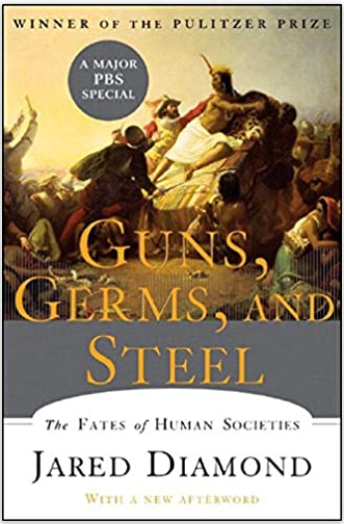 "Guns, Germs, and Steel": Long an established classic, this multi-disciplinary epic by Jared Diamond attempts to explain why some societies develop and grow wealthy while others do not, combining geography, history, biology and many other branches of knowledge in a grand global survey. The second word in the title is of the greatest interest at present; in the book, Diamond examines how epidemics came to shape society as well as looking at their biological causes. And he makes clear how Europeans came to supplant the native populations of North America so completely: "That might not have happened without Europe's sinister gift to other continents — the germs evolving from Eurasians' long intimacy with domestic animals." I recently embarked on re-reading it, and I am already discovering that the events of the last few months make it read very differently. This is the time to read or re-read. 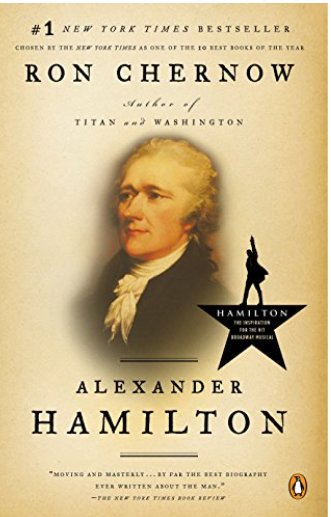 "Alexander Hamilton": This huge and rewarding biography by Ron Chernow of a founding father born into poverty in the Caribbean who lost his life in a dual is now famous chiefly as Lin Manuel Miranda's inspiration for writing the phenomenal hit musical Hamilton. The man at the center of this book was a true genius, and a man of action. Chernow also reveals him to be tragically flawed as a driven man who never lost the need to prove himself. The story of his life is the perfect vehicle for explaining how the United States came into being. But for Bloomberg readers it may be of greatest interest in telling the story of how the U.S. financial system was created from scratch, and of how different it could have been. Thomas Jefferson, an even more gigantic historical figure, was deeply opposed to the notion of secondary trading in bonds, and the possibility that some might trade bonds for a loss and others for a profit. What is now the bedrock of the global financial system might easily not have come into existence at all without the brilliant foresight and determined political drive of one man. 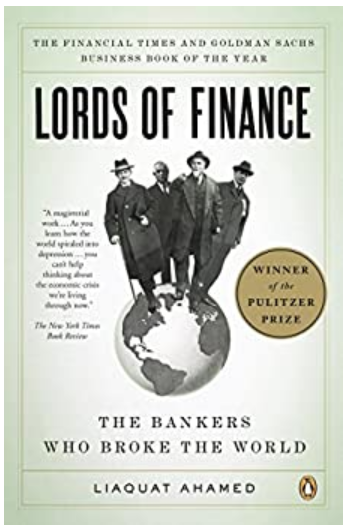 "Lords of Finance": This is the classic tale by Liaquat Ahamed of how policy mistakes and bad international coordination allowed the Great Depression to happen. It arrived just as the last global financial crisis was breaking out, and many still regard it as the most relevant book written about that crisis even though it covers events that took place almost eight decades earlier. Ahamed delves deep into the lives and motivations of the central bankers who made some critical decisions which — to borrow from his sub-title — "broke the world." In hindsight, they were at a point where an old financial regime had reached the end of the road, and the world would have to grope for a new one. As would later happen in the 1970s, it took a long time to get there. This book should give us all some great insight into how the new financial order that awaits us will take shape.  "When Genius Failed": This is still by far the best narrative book of a financial crisis yet written. Authored by Roger Lowenstein, it covers the implosion in 1998 of Long-Term Capital Management in a string of events that worked as a dress rehearsal for the financial crisis a decade later. The Federal Reserve's desperate attempts to contain the LTCM crisis, successful at the time, arguably amped up moral hazard, convinced the financial world that there would always be a "Greenspan Put" under the stock market, and led to both the dot-com bubble of 2000 and the crisis around the Lehman Brothers bankruptcy eight years later. Why read about LTCM rather than the crisis of 2008? LTCM was just limited enough for its story to be told in one definitive book. What eventually happened in 2008 was so vast as to elude any clear narrative story telling. It has spawned many great books, but none come close to the completeness of "When Genius Failed." And the trends and flaws that brought down LTCM were identical to those that recurred in 2008 and have recurred again now. Also, it tells the story of how an external shock (Russian default in the case of LTCM) could send modern finance into total disarray. The relevance is obvious. And it's a really entertaining book. 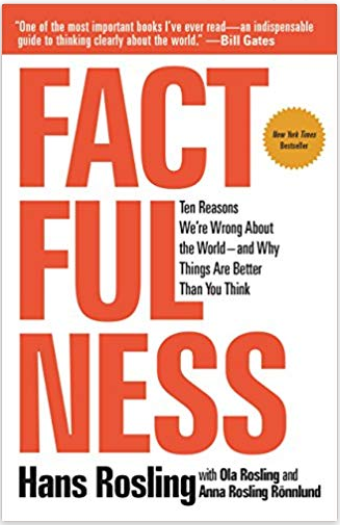 "Factfulness": The current Bloomberg book club selection by Hans Rosling suggests the world is a far better place than we realize, and proves it by laying out our advances in public health, none of which would have been possible if much of the developing world were not now ready to take a big economic step forward. Engagingly written by a great public health expert who tragically died of pancreatic cancer before the book was published, the book comes with a fantastic website, gapminder.org, which is stuffed with remarkable information that will make all of us feel a bit better about the world. To see the great man in full flight in a TED talk, click here. His son and daughter-in-law completed the work, and continue to keep the website as a great place to explore. It should certainly be better for your mental health than spooling through your Twitter feed. As a side note, it looks as though we aren't going to be able to hold a live blog on "Factfulness" any time soon, due to circumstances well beyond our control. But I would welcome all feedback about this book to the book club email address, which is authersnotes@bloomberg.net. Let me also offer a couple of bonus picks: 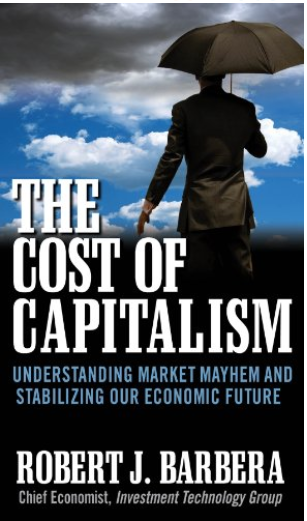 "The Cost of Capitalism": For those prepared to cudgel their brains a little more, this book by Robert Barbera (a recent book club pick) tells you all you need to know about Hyman Minsky, whose ideas about artificial stability in financial markets engendering instability and the risk of financial crashes sure look relevant now. It is slightly harder reading than the other selections, but not too difficult. Barbera's book, which came out during the last financial crisis, is a very clear re-telling of Minsky's ideas by someone who knew him. It also shows how pertinent they are to the current situation. Minsky himself had some very left-wing ideas, which is why he was not very influential in his lifetime; Barbera shows that there are ways to deal with Minsky's warnings without going to the lengths of nationalizing all investment, which was Minsky's favored solution. You can read the transcript of the live blog where Barbera answered questions about his book here, and listen to him with me, Lisa Abramowicz and Paul Sweeney on Bloomberg radio here. 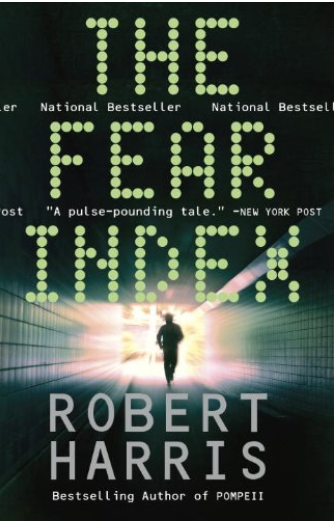 "The Fear Index": And for those who want something really easy and escapist (and I can understand why you might feel that way), my favorite financial thriller by a mile is this book by the British historical novelist Robert Harris. It's a brilliantly told tale of a hedge fund manager whose algorithm takes on a life of its own. I'll leave it at that; suffice it to say that the denouement is amazing. Stay safe everyone. These conditions are no fun at all. I hope this list will be some small help in the weeks and months ahead. Like Bloomberg's Points of Return? Subscribe for unlimited access to trusted, data-based journalism in 120 countries around the world and gain expert analysis from exclusive daily newsletters, The Bloomberg Open and The Bloomberg Close. | 


Post a Comment