| Welcome to your morning markets update, delivered every weekday before the European open. Good morning. Cornavirus fatalities are rising in Europe while some Asian regions deal with a second wave of infections. Oil prices surged and stock futures are pointing higher. Here's what's moving markets. Italy Deaths Top China's Another unwanted virus milestone was reached in Europe as Italy surpassed China as the country with the most coronavirus deaths, with its number of fatalities reaching 3,405. The death toll is also rising sharply elsewhere in Europe, with numbers shooting up in Spain and France. In the U.K., meanwhile, an upbeat Boris Johnson insisted the country can "turn the tide" against the illness by June, while the country's 93-year-old monarch urged Britons to adapt their lifestyles. Second Waves in Asia The Chinese province at the center of the coronavirus outbreak reported no new infections for the first time since the pathogen emerged more than two months ago, marking a turning point. However, as the pandemic widens overseas and engulfs Europe in particular, there might be a lesson to learn from the experience of places like Hong Kong, Singapore and Taiwan. Those areas had successfully contained their first wave from China but are now facing a second surge from the West. The problem? Humans simply aren't able to sustain a state of high vigilance. Oil Rebound Oil had its biggest-ever one-day gain in New York as Middle East producers began to show signs of strain and as the U.S. president said he would get involved in the oil price standoff at the "appropriate time." Futures rose 24% on Thursday, the most since trading began in 1983, and prices continued to rise overnight. Oil traders struggling to navigate one of the biggest oil crashes in history had warned earlier that the worst could be yet to come. Here's why the idea of negative oil prices might be more realistic than you think. Markets Latest European stock futures are edging higher as traders take note of stimulus measures and as economists continue to debate the likely size of the recession. While investors have displayed a distaste for global stocks in recent weeks, corporate directors and the world's billionaires are hunting for bargains. Outside of equities, the U.S. dollar slumped from a record high after a statewide stay-in-place order in California ignited worries that other states may follow suit. The world's reserve currency had surged this week amid a rush for cash in anticipation of a prolonged pandemic. Coming Up… There's not much scheduled on the macroeconomic front, but be on the look out for any more monetary responses to the health crisis, with central banks around the world already going into overdrive. And on the corporate front, we're sure to see more updates on how the pandemic is impacting sales across industries. What We've Been Reading This is what's caught our eye over the past 24 hours. And finally, here's what Garfield Reynolds is interested in this morning Global bond markets are broken, with long-end yields blowing up even across the AAA space. That's a nightmare for investors -- suddenly discovering that traditional haven securities are just as storm tossed as everything else, if not more. And it's also tough on central banks as they discover that the financial crisis this time round is even harder than in 2008-9 as both conventional and unconventional tools struggle to get a grip on the system. The irony here is that the regulatory response to the GFC was to push banks out of the market-making role they once played. That was deemed to create dangers to financial institutions -- who could get stuck with worthless paper -- and for investors stung by the conflicts of interest. Now, no one is left to warehouse risk, so investors are piling into cash and leave no liquidity for 10- and 30-year debt. Until central banks can cut that Gordian knot, markets from stocks to credit to bonds and commodities will go on getting strangled. 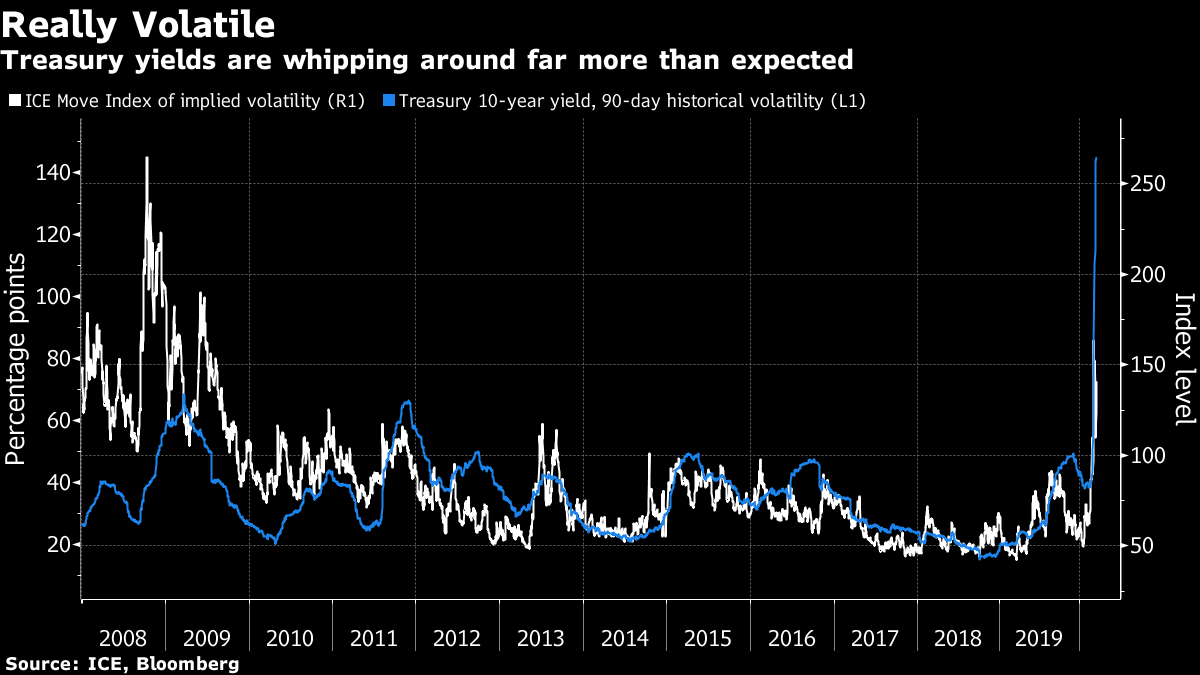 Garfield Reynolds is a Markets Live reporter and editor for Bloomberg News in Sydney. Like Bloomberg's Five Things? Subscribe for unlimited access to trusted, data-based journalism in 120 countries around the world and gain expert analysis from exclusive daily newsletters, The Bloomberg Open and The Bloomberg Close. | 


Post a Comment