| Reactions to the coronavirus across China have been swift. Local officials rushed to deploy everything from police to drones in a bid to insulate their communities. Some of those measures will unfortunately end up doing more harm than good. The alarm is understandable. More than 1,400 have been killed by the disease newly named Covid-19, surpassing the toll from the Severe Acute Respiratory Syndrome, or SARS, outbreak in the early 2000s. Tens of thousands have been infected. To be sure, officials have taken many steps that are helping. The most extreme has been the quarantining of 50 million people in Hubei province, where Covid-19 first emerged. While there's not yet a definitive appraisal of its effectiveness, the quarantine does seem to have limited the virus's spread. The efficacy of other measures is more questionable. Take for example the coastal city of Fuzhou, where authorities locked in an entire apartment block after one resident tested positive for the virus. Other regions have imposed restrictions to keep out visitors and limited travel by locals. 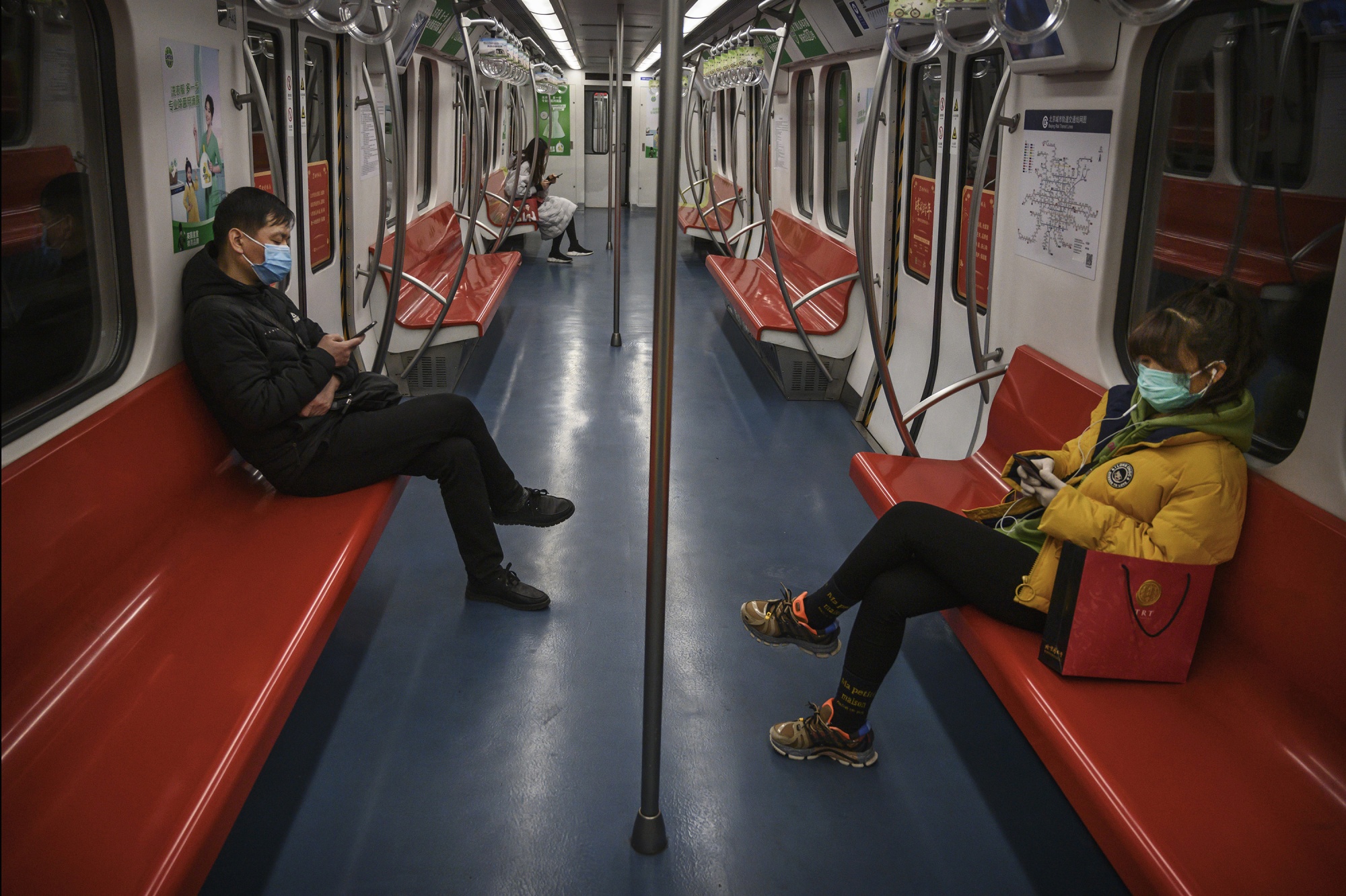 People wear protective masks as they ride on a nearly empty subway car during the evening rush period on February 10, 2020 in Beijing. Photographer: Kevin Frayer/Getty Images The worry for policymakers in Beijing is that these measures will amplify the economic pain inflicted by the outbreak while doing little to counter the virus. And so they've pressed local officials to be more prudent and ordered excessive steps to be rolled back. But fear will make that a difficult message to get across. The death last week of Li Wenliang, a doctor in Hubei who was punished for raising early alarms about the virus, has compounded the unease. A sudden jump in death and infection numbers after a revision in methodology also didn't help. It was not surprising to see President Xi Jinping, during a visit this week to a Beijing hospital, exhorting the crowd to have confidence in China's ability to get the virus under control. With all eyes watching for a turning point that's yet to arrive, confidence is in greater need than ever. Property Problems Real estate occupies a special place in China's economy. With significant portions of household wealth invested in property, a housing downturn can just as easily drag down economic growth as it can spark social unrest. This week, new data showed home sales at the start of February fell 90% in many of China's largest cities. It should be noted, though, that a drop in volumes doesn't necessarily mean lower prices, at least not immediately. Hong Kong is an example of why. Home sales there have plunged because of the virus just as they have in the mainland, but prices have ticked up slightly. That's because homeowners, having experienced the property crash and subsequent rebound during SARS, are resisting price cuts as they wait for the outbreak to pass. The longer that wait goes on, however, the more anxious the market will get. Force Majeure The global economic implications of the coronavirus reach far and wide. Multinationals from Toyota to Burberry to Disney have felt the pain. It's also on the mind of U.S. Federal Reserve Chairman Jerome Powell. But perhaps nowhere has the impact been more obvious than in the market for commodities and energy, where Chinese companies have begun walking away from previously-agreed to purchases. They're doing so citing the rarely used "force majeure" clause, which allows companies to break contracts in cases of unforeseeable and unavoidable external events – in this case, the coronavirus. Some suppliers are pushing back, though that seems unlikely to cushion the pain much. And with China being the world's biggest consumer of most commodities, it looks like there will be plenty of pain to go around. 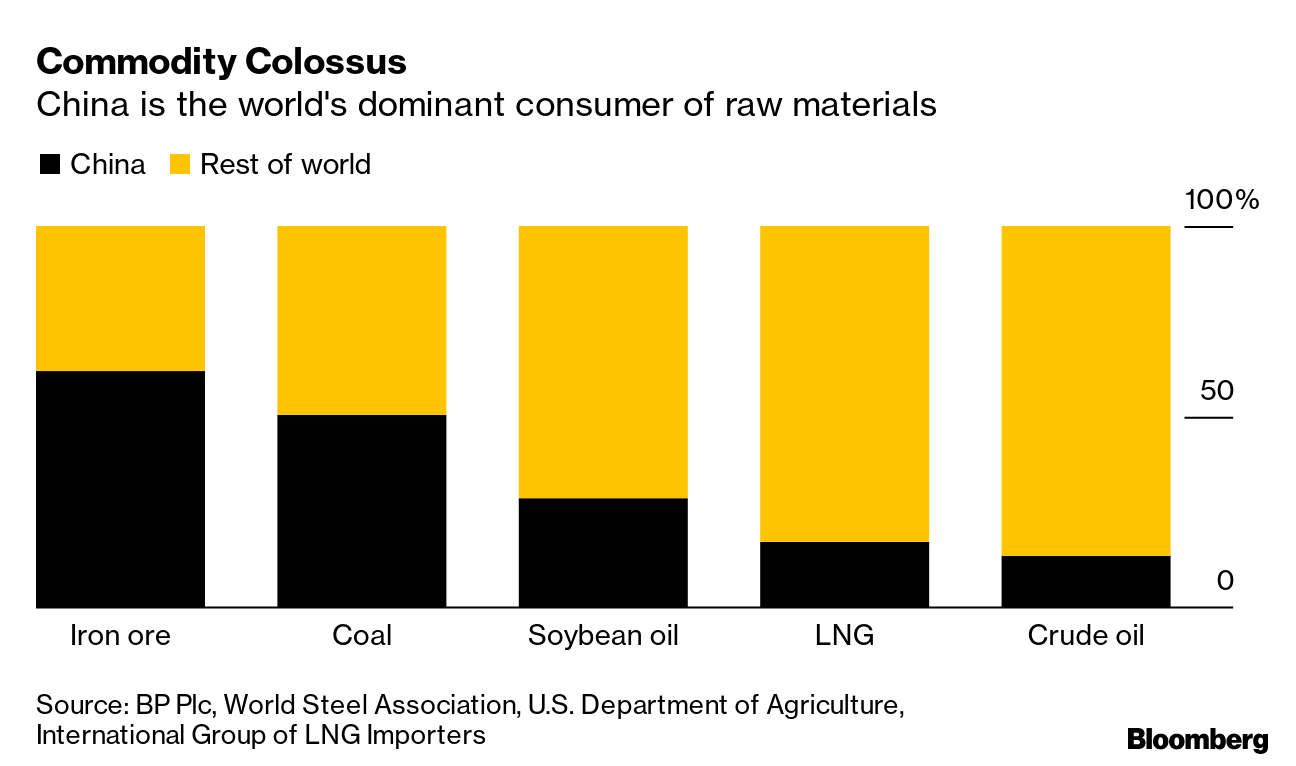 No Connection It's been five years since the start of so-called stock connects giving investors in Hong Kong access to shares traded in Shanghai and Shenzhen, and vice versa. The idea was for the link to help internationalize mainland markets. News this week suggests motivations may be changing. Alibaba, which did a secondary listing in Hong Kong late last year, was unexpectedly excluded from the connect, meaning mainland investors won't be able buy the shares via the Shanghai or Shenzhen exchanges. That's bad news for Hong Kong. What made the city a compelling venue for listings is that it's far more integrated with global markets than Shanghai or Shenzhen, but is also accessible to a base of enthusiastic mainland investors. With that now in doubt, other Chinese companies that had been considering Hong Kong for a secondary listing may take a closer look at Shanghai and Shenzhen. Beijing hasn't hidden its desire to see more Chinese companies list onshore. It's unclear if Alibaba's exclusion is part of that push, but it's obviously a trend worth watching. A conscious decoupling The tech war rumbles on. President Donald Trump's administration this week indicted four Chinese military officers over the 2017 hack of credit reporting agency Equifax. It's not the first such U.S. indictment – the Obama administration charged Chinese military officers with hacking in 2014. But unlike six years earlier, this action appears to be part of a broader push that threatens to technologically decouple the U.S. and China. For example, take the U.S. Education Department saying this week that it's investigating whether Harvard and Yale failed to properly disclose gifts and contributions from China and other foreign powers. That follows charges against Harvard professor Charles Lieber for alleged lying about his links to Chinese institutions. Then there's 5G, where the U.K.'s decision to not ban Huawei prompted Trump to berate Prime Minister Boris Johnson in a heated phone call. Germany is now grappling with the same decision of whether to heed U.S. demands on Huawei and face Chinese retribution. 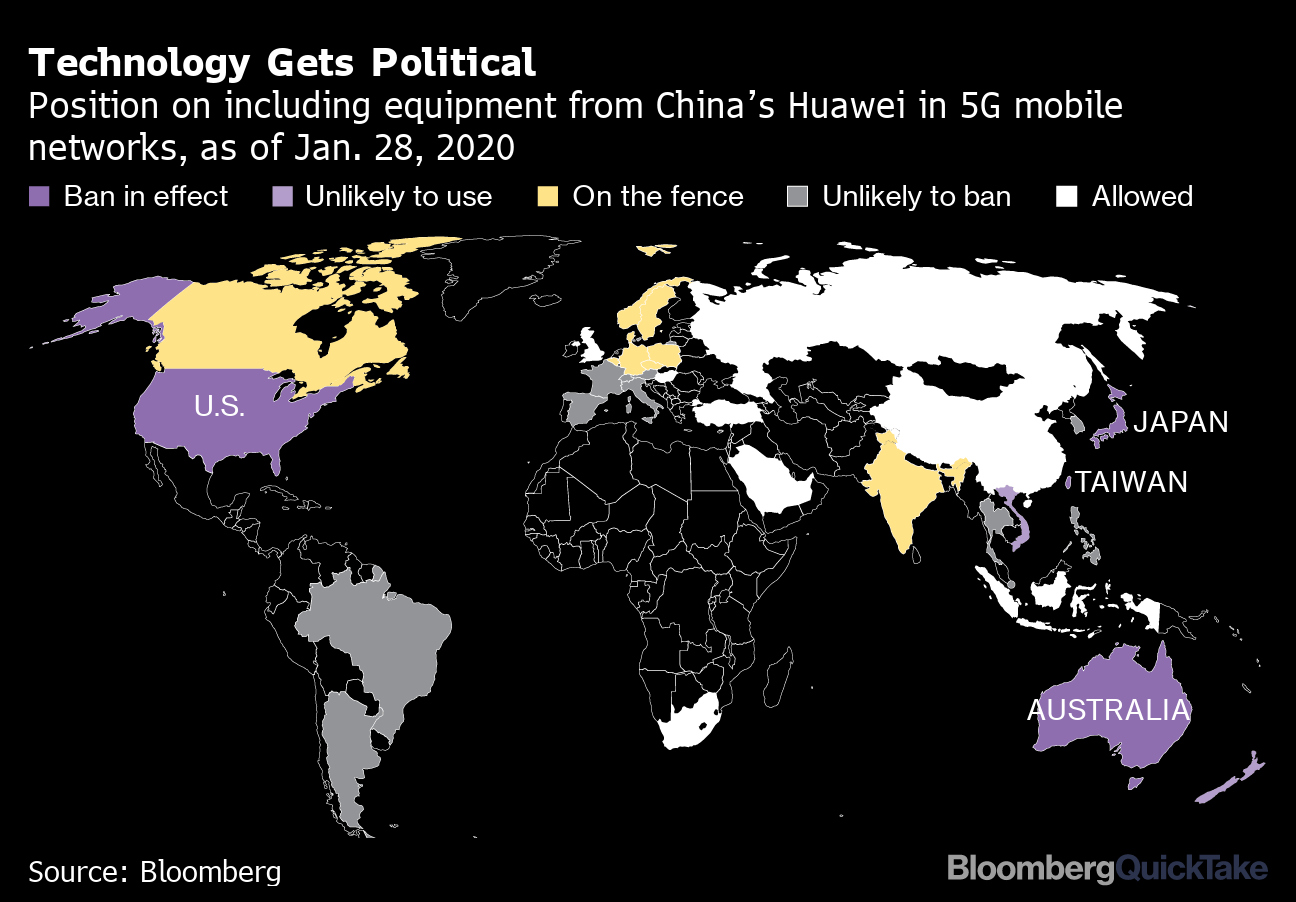 What We're Reading Finally, a few other things that got our attention: Something else we think you'll like: the new Bloomberg Green newsletter, a daily digest of climate news and insights on the latest in science, zero-emission tech, and green finance. Sign up here. | 


Post a Comment