Apple says it will miss guidance due to coronavirus, HSBC targets 35,000 job cuts and Michael Bloomberg qualifies for debate. Taking a hitThe ever-growing list of companies announcing problems from the extended shutdown in China due to the coronavirus outbreak now includes Apple Inc. after announcing it no longer expects to meet revenue guidance for the March quarter. Shares in the iPhone maker fell more than 4% in pre-market trading, with the company's suppliers in Asia and Europe also posting losses. The pace of infection growth and deaths from the outbreak in China appears to be slowing, but the World Health Organization has warned that it's too early to say if cases are truly declining. Bank overhaulHSBC Holdings Plc is set to cut about 35,000 staff and take $7.3 billion of charges as the bank looks to overhaul its business. The move will downsize its European and U.S. investment banking business, while it will seek to accelerate investments in Asia. There was a warning from the lender over its business in that region when it said that loan-losses in Hong Kong and mainland China could rise depending on how the coronavirus situation develops. Shares in HSBC dropped more than 6% in London trading. Qualification Michael Bloomberg has qualified to join the other Democratic presidential candidates on the debate stage for the first time on Wednesday, after reaching 19% in a NPR/PBS NewsHour/Marist poll. The survey, which placed Bernie Sanders first with 31%, is the fourth that shows Bloomberg having more than 10% support, the threshold for inclusion in debates. His rise has led to accusations from other candidates, most notably Sanders, that Bloomberg is trying to buy the presidency. (Bloomberg is the founder and majority owner of Bloomberg LP, the parent company of Bloomberg News.) Markets slipThe news that Apple is going to be hit by the outbreak is pushing global markets lower. Overnight the MSCI Asia Pacific Index dropped 1.1% while Japan's Topix index closed down 1.3%. In Europe, the Stoxx 600 Index had slipped 0.4% by 5:50 a.m. Eastern Time as investors favored defensive stocks. S&P 500 futures pointed to a lower open, the 10-year Treasury yield was at 1.551% and oil ended a five-day rally. Coming up…The economic data calendar is fairly light today, with Empire manufacturing at 8:30 a.m., the NAHB Housing Market Index at 10:00 a.m. and TIC flow data at 4:00 p.m. There have already been signs of further stress in the traditional retail space this morning, with Walmart Inc. announcing a miss on sales. Medtronic Plc and Ecolab Inc. are among the other companies due to report earnings. What we've been readingThis is what's caught our eye over the weekend. And finally, here's what Joe's interested in this morningIt's still too early to know exactly what kind of damage the coronavirus will do to the global economy, but as Apple has just reminded the world, the disruption will be substantial. It seems inevitable that the crisis will eventually kick off a wave of monetary and fiscal easing, but in the meantime, there's no amount of "stimulus" that can counteract the effect of people being forced to stay in, cancel travel, and shutter factories. The most important thing is containing the spread of the virus, and viruses don't respond to monetary incentives. This has led to some mockery of the typical "Keynesian" playbook that governments use to address an economic crisis. But even though governments can't spend their way out of a public health emergency, there are still lessons to be learned from the past. In an environment where people are prone to panic, the money being pumped into the economy is just one facet of the response. The other key thing, and we re-learned this in 2008 and 2009, is that government credibility is a valuable asset in its own right and essential when the public is overwhelmed with negative animal spirits. As such, part of the issue in containing the coronavirus is not whether the monetary firepower exists to fight the crisis, but whether public entities -- governments, the WHO, organizations like the CDC etc. -- have the credibility to do what is necessary to slow the outbreak. That remains an open question at this point. On this note, you should listen to the latest Odd Lots podcast that Tracy Alloway did with Olga Jonas of the Harvard Global Health Institute about the failed idea of "Pandemic Bonds" -- financial instruments designed to unlock funding from the private sector in the event of a pandemic. As Olga notes around the 20-minute mark, the issue in fighting a pandemic is never the lack of money. It's the capacity of public institutions to respond in a timely and coordinated manner, and no amount of clever market mechanisms can substitute for that ability and judgement. 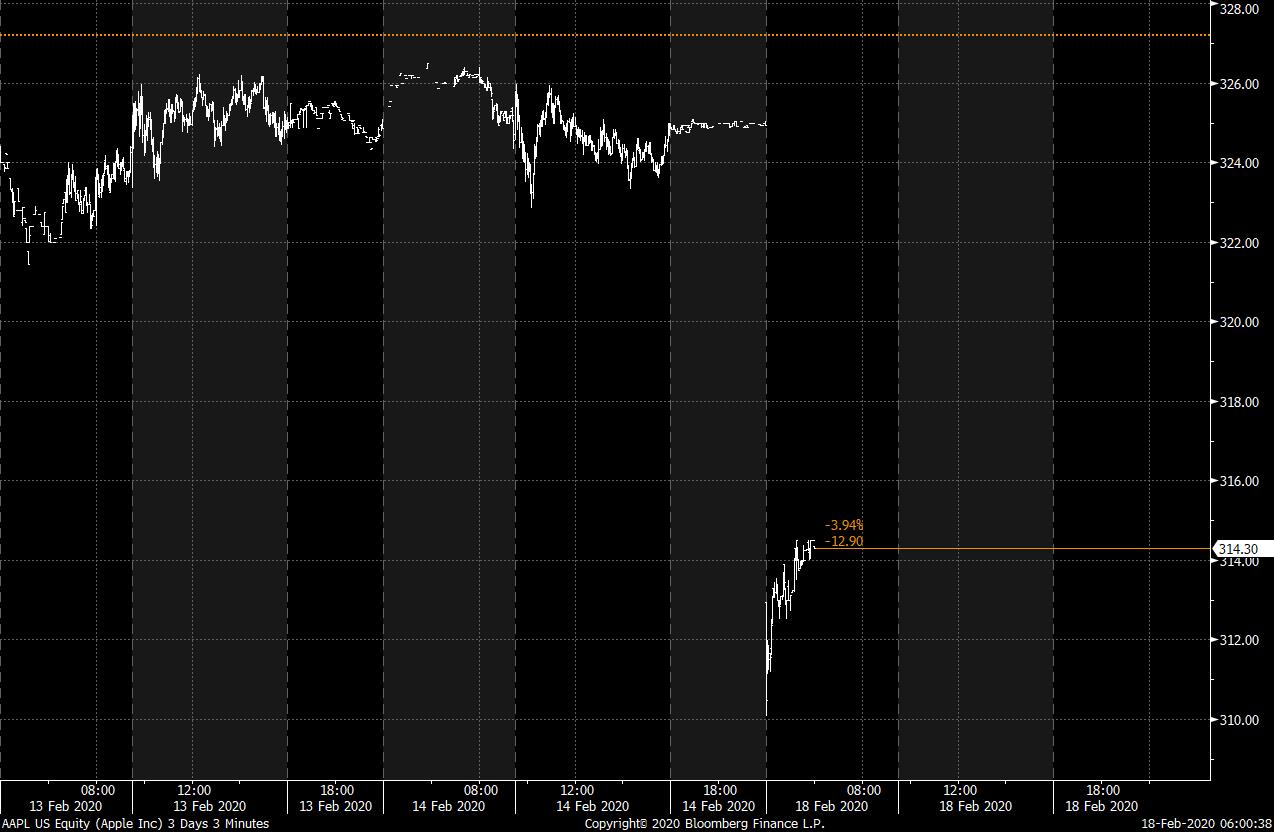 Like Bloomberg's Five Things? Subscribe for unlimited access to trusted, data-based journalism in 120 countries around the world and gain expert analysis from exclusive daily newsletters, The Bloomberg Open and The Bloomberg Close. | 


Post a Comment