| This is Bloomberg Opinion Today, a clown car of Bloomberg Opinion's opinions. Sign up here. Today's Agenda  Designed by clowns? Photographer: Stephen Brashear/Getty Images North America What Now, Boeing? What Now? Rule number one of email is: Never email. Rule number two of email is: If you must break rule number one, then imagine you are writing a press release instead of an email. Because anything you write that might bring shame to you, your organization, or your descendants in perpetuity will eventually be made public. Boeing Co. is the latest example of the merciless logic of these rules, established over decades of corporate scandals. Last night it released a trove of, you guessed it, emails, in which employees discussed the development of the troubled 737 Max in the most embarrassing terms imaginable. "This airplane is designed by clowns, who in turn are supervised by monkeys," said one. "I'll be shocked if the FAA passes this turd," read another. "Would you put your family on a MAX simulator trained aircraft? I wouldn't," said a third. One employee bragged they had "jedi mind tricked" the "fools" at the FAA. It would be entertaining if it did not foretell the deaths of hundreds of 737 Max passengers. If you're a Boeing shareholder, you must contend with how it speaks to Boeing's chronic failure to confront this crisis, writes Brooke Sutherland. She notes this batch of messages follows the release of another, similarly incendiary batch, both of which were unveiled long, long after this drama began. But Boeing wants credit for being "proactive" in releasing them. From its failures in developing Max to its overly rosy forecasts of when the plane will return to service to its foot-dragging on higher training standards and even to releasing these outrageous emails, Boeing has been anything but "proactive," Brooke writes. It's still not clear it has changed its ways. Read the whole thing. Further Email Reading: Passionate internal disagreements are good, but probably not in emails. — Matt Levine We Were Promised Better Wage Growth The December jobs report was a yawner; a little disappointing, but mostly reflecting a job market as solid as it has been for most of the past decade. The truly interesting bit was the fact that, despite a 50-year low in unemployment and eons of job growth, the trend in wages is going in the wrong direction, notes Brian Chappatta: 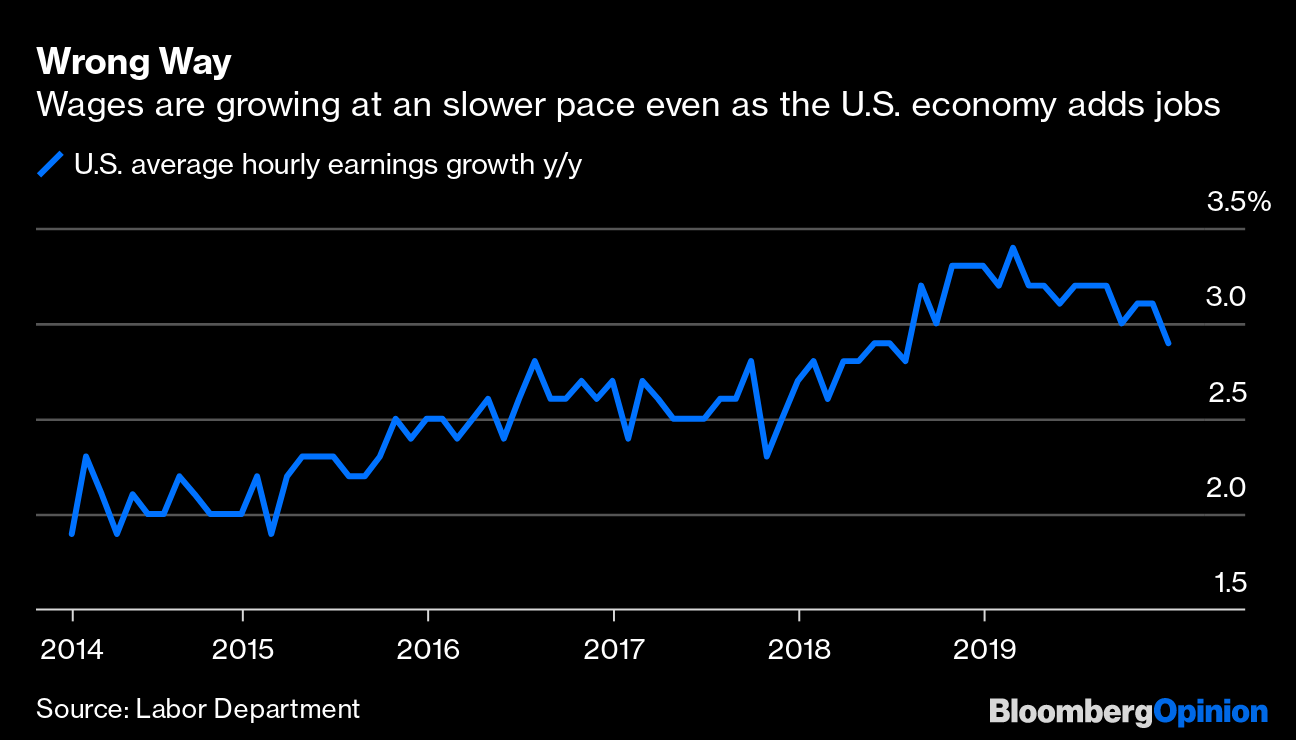 This came just a day after bond traders and would-be fast-food managers got themselves caliente and bothered over news Taco Bell is offering some managers $100,000 salaries. To some, that was a sure-fire harbinger of stronger wage growth and inflation, Brian writes. Now we have to wonder. December also marked the end of a couple of short-lived hiring trends. First, a mini-boom in shale-patch jobs has already come and gone, writes Liam Denning. Given the industry's struggles and the shorter shale production cycles, don't expect another boom soon. And another brief boomlet in manufacturing jobs has also ended, notes Justin Fox. An impending "phase one" trade deal between the U.S. and China might help with this. But for now services jobs dominate the economy again: 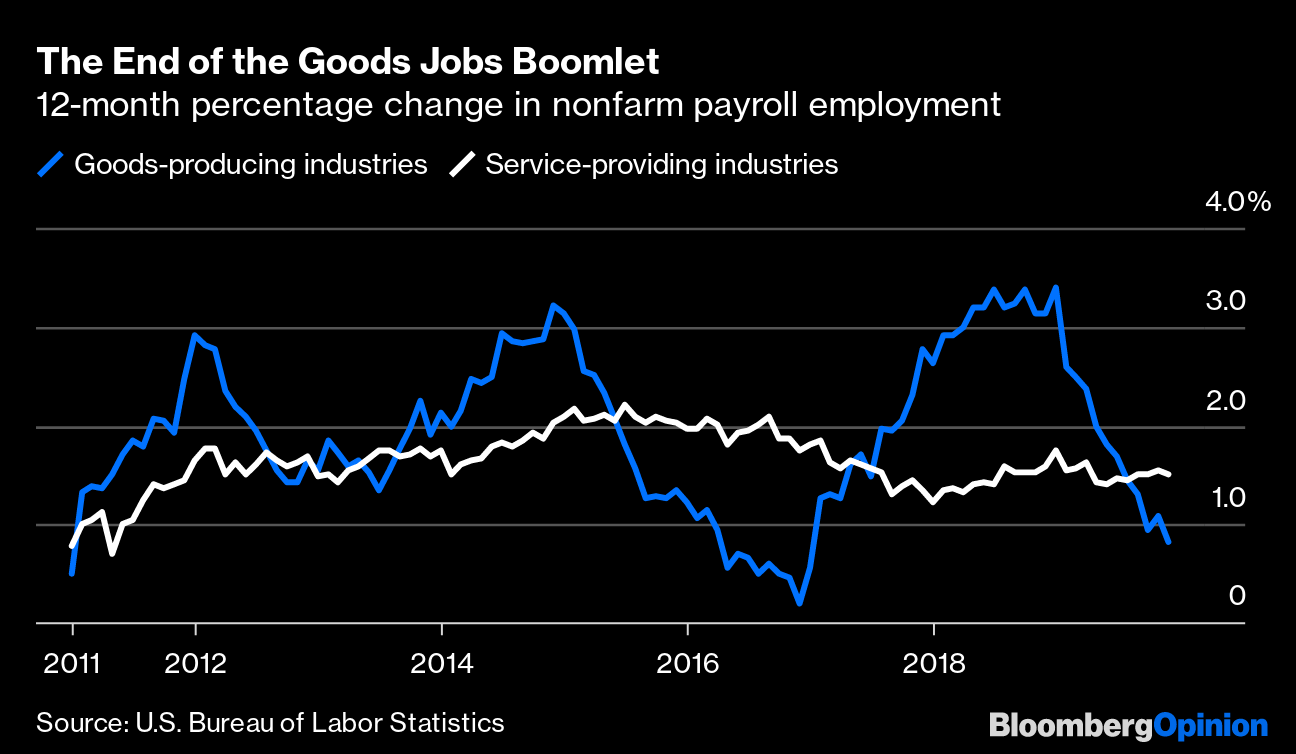 The trouble is, these jobs tend to pay less — unless we can get a lot more of those $100,000 Taco Bell jobs. Iran Gets Defensive About Flight 752 If there was any silver lining today for Boeing, it was the growing realization that at least its equipment probably wasn't to blame for this week's deadly 737 crash in Iran. It increasingly seems Iranian missiles mistakenly shot the plane down. But we may never get proof of this; Iran has already cleared away the crash site and let scavengers have at what's left, notes Bobby Ghosh. Iran's government denies it shot down the plane, and Bobby warns it may never come clean about what really happened. Further Iran Reading: - NATO has the capacity to help counter Iran, but President Donald Trump has tested its willingness. — James Stavridis
- Fake news may be helping de-escalate the Iran crisis, but could also make it much worse in the future. — Tyler Cowen
Telltale Charts All over the world, including in Texas, coal is losing ground to cleaner energy sources, writes Nathaniel Bullard. 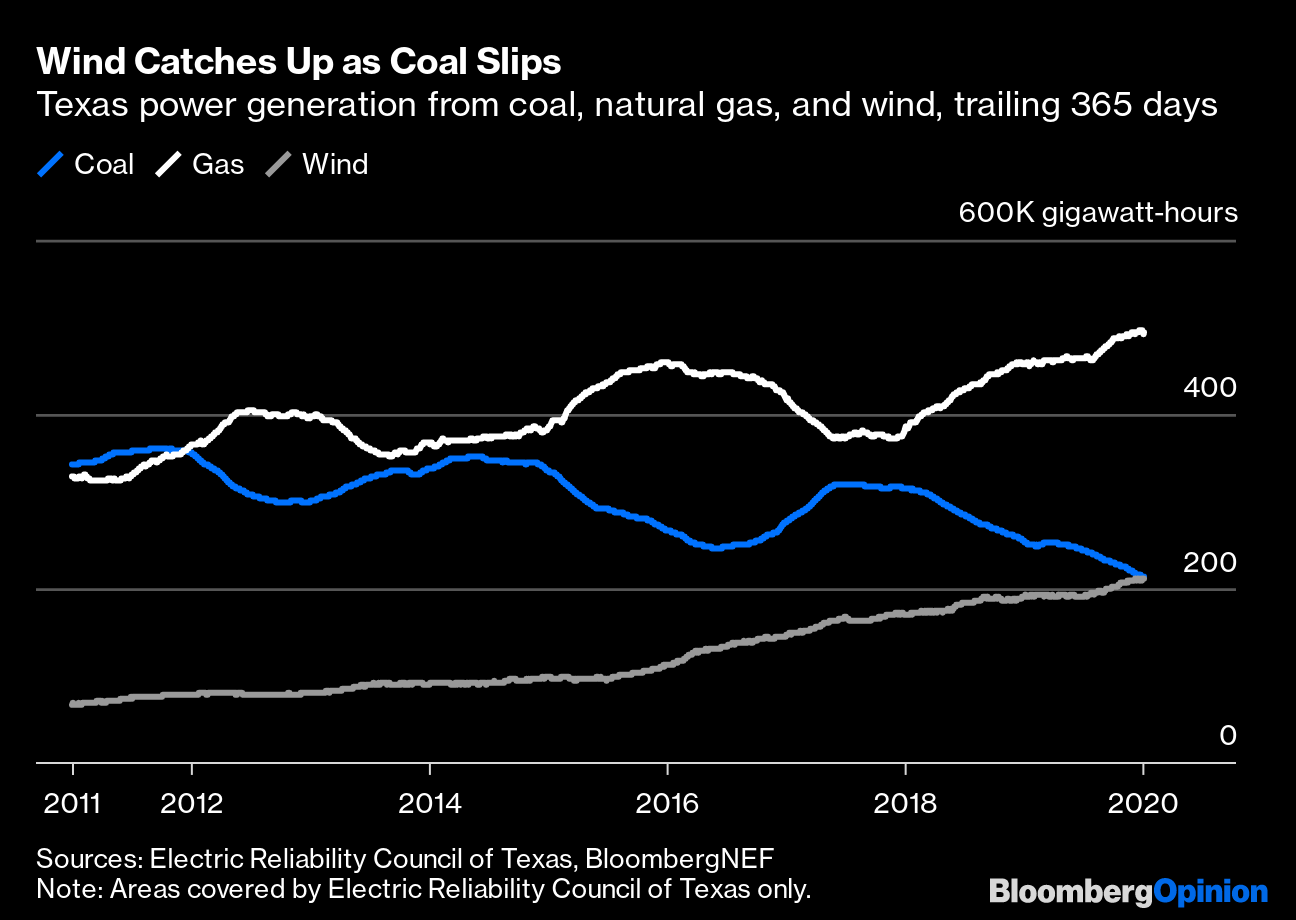 Despite having the fewest days in six years, shipping was shockingly not bad this holiday season, writes Brooke Sutherland. It was far better than in 2013, the last time this season was so short. 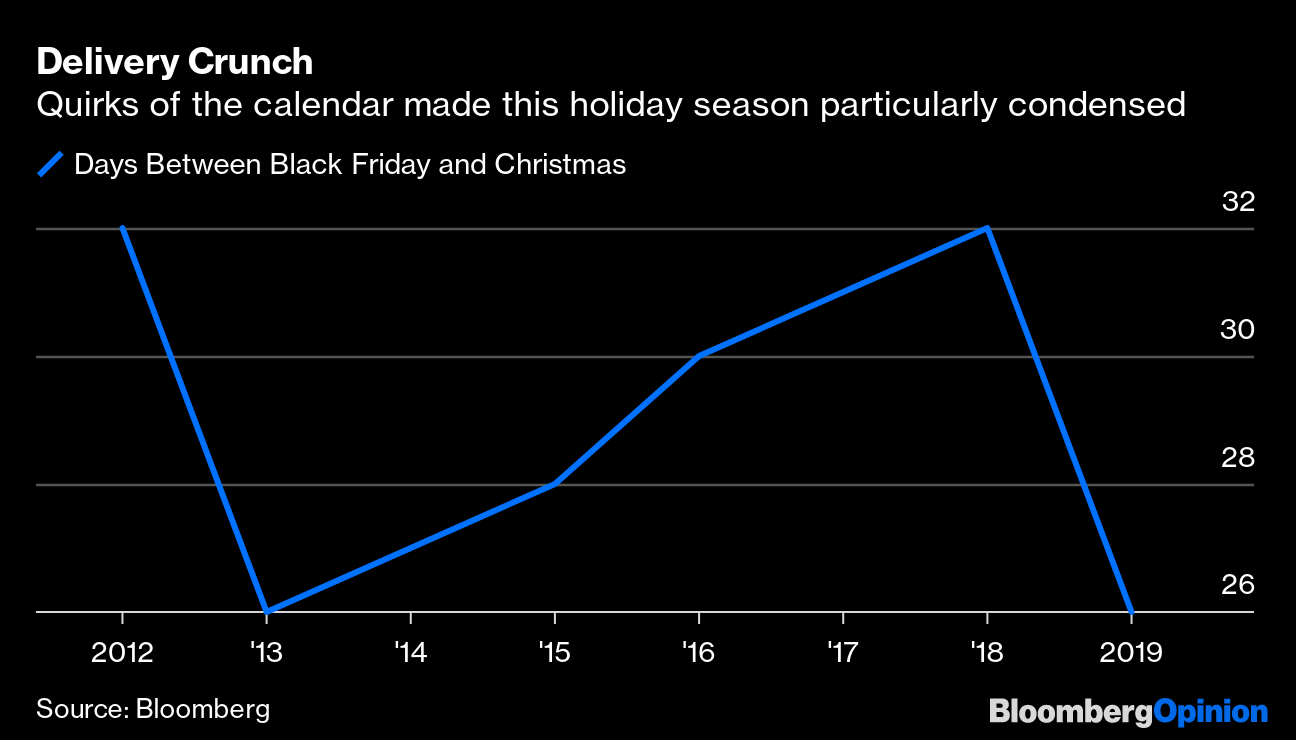 Further Reading Carlos Ghosn has tellingly little to say about Nissan's governance failures on his watch. — Anjani Trivedi Australia's wildfires are the perfect opportunity for some much-needed government spending. — Dan Moss Vladimir Putin is trying to rewrite World War II history to favor Russia. — Leonid Bershidsky A new history of Russia's gas industry suggests "energy dominance" is elusive. — Liam Denning BlackRock Inc., which seems designed to avoid populist ire, is now the target of it. — Lionel Laurent Big Tech has figured out a "heads I win, tails you lose" way to ignore patents. — Joe Nocera Apple Inc. is right to resist FBI calls to crack locked iPhones. — Stephen Carter Obamacare's Medicaid expansion keeps getting more popular, though Republicans may yet destroy it. — Jonathan Bernstein Critics who bemoan "late capitalism" ignore how fair and beneficial capitalism has been lately. — Michael R. Strain ICYMI U.S. officials are investigating whether Russia is targeting Joe Biden. Being a fugitive is costing Carlos Ghosn millions. Women now make up the majority of the U.S. labor force. Kickers Apple Pay readers cause some New York City subway riders to be charged twice. Are we watching the star Betelgeuse die? African grey parrots give charity to other parrots in need. Silicon Valley men are turning to plastic surgery to help their careers. Note: Please send subway fare and complaints to Mark Gongloff at mgongloff1@bloomberg.net. Sign up here and follow us on Twitter and Facebook. | 


Post a Comment