| Almost nobody at the forum was optimistic that the world can avoid a coming "splinternet," where the globe has two competing digital systems, one behind a firewall and the other free and open. But some damage from the trade war has already been done. Bill Gates said his scuttled experimental nuclear reactor plan for China set technology back five years, and Yahoo! Co-founder Jerry Yang (below) warned that the world may be heading back to the dark ages of technology as a result of U.S.-China tensions. Samm Sacks, a cybersecurity expert at New America, says blame for this state of affairs can be ascribed to U.S. "paranoia" and Chinese "techno-nationalism." 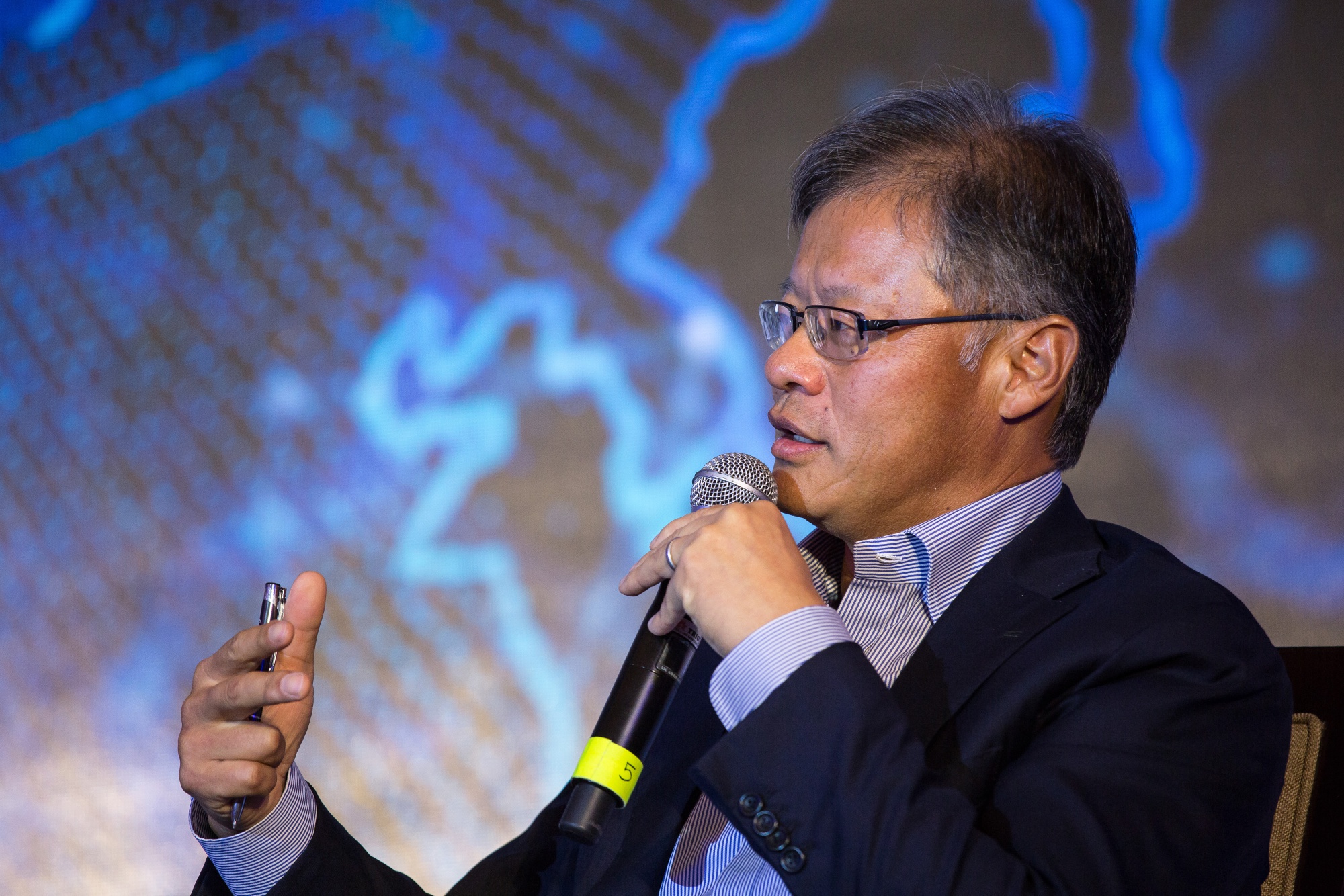 Huai Jinpeng of the China Association for Science and Technology said his nation needs to be more open, and that the flow of technology between China and the U.S. shouldn't be blocked. "Innovation knows no border," he said. Yang Yuanqing, chairman and CEO of the Lenovo Group, called for uniform standards across countries for 5G, and noted how globalization, market rules and competition had benefited his company. Global leaders agreed that a resolution of Trump's trade war is critical to the world economy in 2020. But the partial deal currently being discussed is seen as the easy part, and the prospects of a growing technological divide unavoidable. Corporate and political leaders at the forum said businesses must adapt to a world of perpetual trade uncertainty—one in which the U.S. and Chinese economies slowly pull apart. Goldman Sachs predicted that, if a partial deal is struck, China's economy will stabilize next year. The assessment is also contingent on a bottoming-out of global manufacturing activity and the continuation of cautious policy support, the bank said. China can become a fully developed economy that doesn't produce any carbon emissions by mid-century, a business group theorized. The nation's high savings and investment rate allow for the spending required to meet the twin goals, according to a report by The Energy Transitions Commission, a global coalition of executives from across the energy landscape committed to the Paris climate agreement. | 


Post a Comment