Today's Agenda 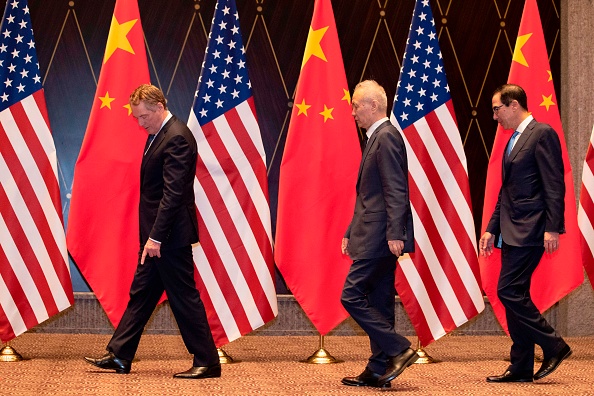 Trade War: The Re-En-Ratcheting Apparently President Donald Trump will do anything to get that bigger Fed rate cut he wants so badly. Yesterday, after the central bank finally, grudgingly delivered the stimulus he'd been hollering about for months, he complained it wasn't big enough. Then today, Trump chucked a bomb at the economy in the form of threatening new tariffs on $300 billion in Chinese goods that had been excluded from previous levies, possibly including many Apple Inc. products. This would be the last thing the already struggling smartphone market needs, notes Shira Ovide. Stocks, which had just gotten over their Fed disappointment, tumbled, along with bond yields. That should get the Fed moving! The fact is, Trump keeps claiming the U.S. is winning the trade war, but Noah Smith runs the numbers and finds it's still a wash at best. In terms of fiscal costs, it's a little worse than a wash. Factory jobs and activity haven't gotten much help. And consumers are paying more for imported stuff. We're just spitballing here, but maybe the Fed wouldn't need to act if there were no trade war hurting the economy. It's no coincidence that policy uncertainty is higher now, by one measure, than back in the days when President Barack Obama's critics complained about the uncertainty he created with his policies, notes Justin Fox. Trump may chip away at China's geopolitical strength, which may be his ultimate goal, but at what cost? The Fed's Conundrum Meanwhile, the Fed is stuck in monetary-policy quicksand: The harder it tries to get out of its trap, the deeper it sinks. Chairman Jay Powell didn't help himself with a confusing message about future moves, notes Robert Burgess. Though the Fed cut rates, the "yield curve" — the gap between short- and long-term interest rates — flattened afterward, in what is never a great sign for the economy. The cut may have been meant to spur a little inflation, but now the bond market is pricing in even less inflation than before, writes Brian Chappatta. To be fair, the economy isn't doing that badly, so the gentle adjustments Powell suggested he's delivering are probably all that's necessary, writes Dan Moss. Regardless, markets and Trump will keep up the pressure for more, writes Mohamed El-Erian. And the Fed's relative hawkishness strengthened the dollar, notes John Authers. That will further irritate Trump, who wants a currency war to go along with his trade war, and undermine the Fed's efforts to spark inflation. On the plus side, a stronger dollar is a gift to Europe, which needs the stimulus much more, notes Ferdinando Giugliano. That probably won't make Trump feel better. Savings Might Save Us Come to think of it, it is a bit weird for the Fed to cut interest rates when unemployment is hanging around a nearly 50-year low. And Conor Sen notes another sign of strength in the economy: Household savings rates are much, much higher than they were ahead of the previous two recessions. This will either cushion the economy in the next downturn or help avoid one altogether. In another possible sign of consumer strength, Procter & Gamble Co. reported it was able to raise prices on Pampers and Tide Pods and such in the latest quarter, notes Sarah Halzack. Then again, it may just be that P&G is making innovative, useful stuff for which consumers are willing to pay more. Apparel retailers stuck in the doldrums — cough, Gap Inc., cough — could learn a thing or two, Sarah suggests. Confusing Iran Policy Now More Confusing Yesterday we wrote how Trump's approach to making Iran stop doing bad stuff and building nukes and whatnot was misguided. As if to prove our point, the administration then sanctioned Iran's foreign minister, who has no real power and possibly no foreign assets to freeze. Along with being anti-diplomatic, the move is simply pointless and confusing, writes Eli Lake. So we can expect things to keep heating up between Iran and the U.S. And the risks of a military confrontation will keep rising, writes James Stavridis. Both sides want to avoid a war, but accidents will happen. Telltale Charts App Store ads are a growing revenue stream for Apple Inc., but they could attract more criticism of Apple's market power, writes Shira Ovide.  Further Reading Trump is wrong to ignore the growing Ebola outbreak in the Congo; it's a national security threat. – Bloomberg's editorial board Whether Dems support impeachment or not is mainly a matter of semantics. – Jonathan Bernstein Jay Inslee probably won't make the next Democratic debate stage, but climate change will. – Liam Denning Verizon Communications Inc. might soon find its smaller rivals are beating it in 5G. – Tara Lachapelle Hugo Boss is struggling to sell suits in America. – Andrea Felsted ICYMI Peter Thiel is cheerleading the trade war. Tom Barrack benefits from his ties to Trump. Want to live alone in New York? You'll need at least $100,000 a year. Kickers Scientists make the first paper battery. (h/t Uffe Galsgaard) Chemists take a step closer to figuring out the origin of life. The internet changed language for the better. Every musical genre, mapped. Note: Please send $100,000 and complaints to Mark Gongloff at mgongloff1@bloomberg.net. New to Bloomberg Opinion Today? Sign up here and follow us on Twitter and Facebook. | 


Post a Comment