Since 2009, when the 10-year Treasury yield falls below 2%, the S&P does this next...

| Using Kensho technology, CNBC will surface research and analytic insights designed to create actionable, historical content around market moving events. WHEN THE FED DOVES CRY
The yield on the benchmark 10-year Treasury note recently fell below 2 percent for the first time since 2016. This move followed a more dovish tone from the Federal Reserve in its June policy statement. The odds of a rate cut in July now stand at 100 percent, according to the CME FedWatch Tool. Historically, a move under the key psychological level of 2 percent on the 10-year treasury bodes well for stocks.
Over the past decade, the 10-year note has dropped below 2 percent on 7 other occasions (separated by at least 3 months between crosses), 2 months after these moves, the S&P has traded higher 100 percent of the time, logging an average return of 4 percent. 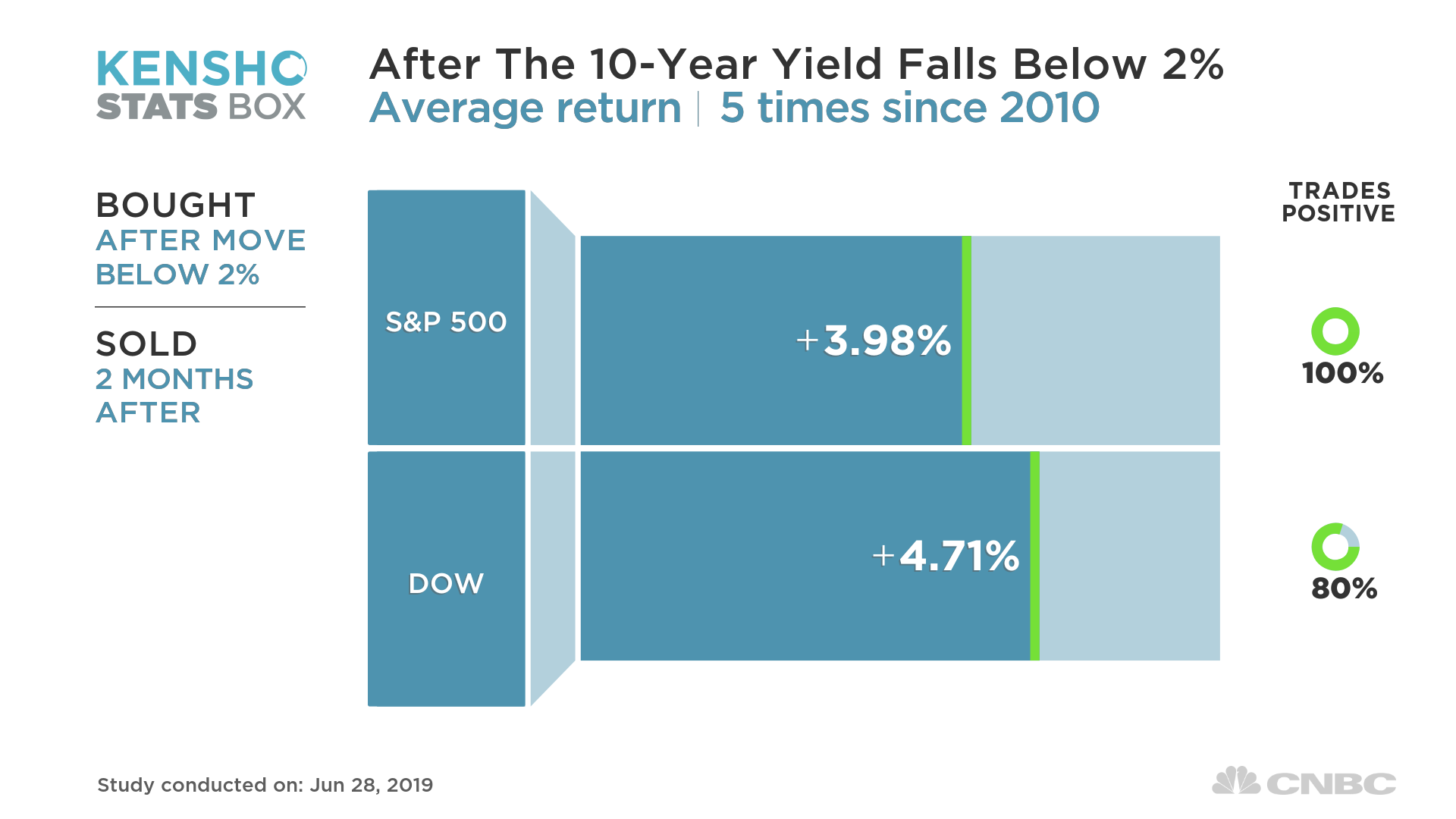
ONE MORE FOR THE BULL CASE... The first half of this year has been one for the history books - the S&P is up 17 percent year-to-date, the index's best first half performance since 1997 – strong momentum as we kick off the second half.
Since 1980, the S&P has jumped at least 10 percent in the first half of the year on 7 other occasions. Following those moves, the bullish trend tends to continue through the rest of the year - with the index adding another 11 percent to close out December, trading positively 100 percent of the time. 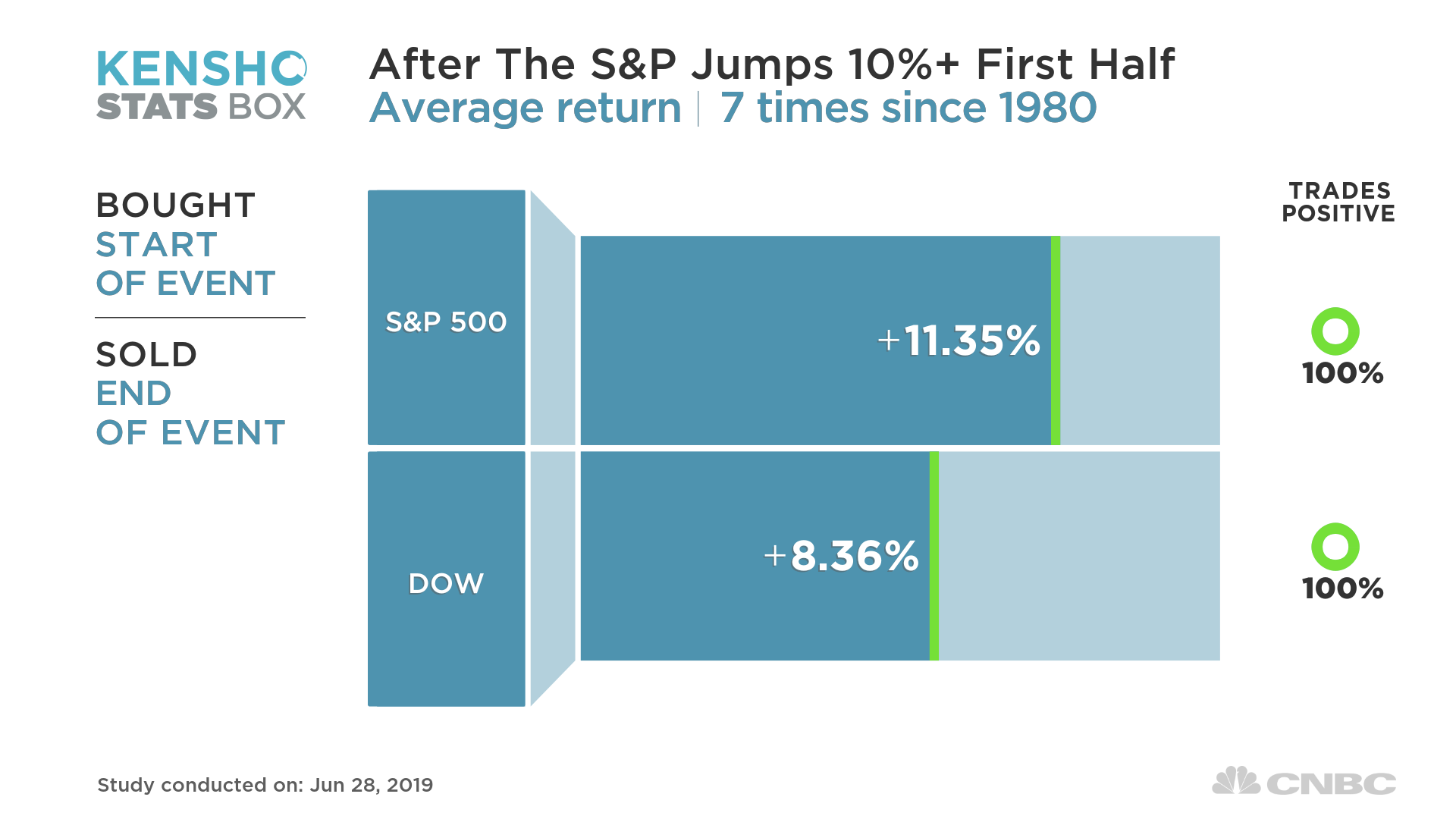 CHRISTMAS IN JULY? Over the past 20 years, July has been the only month between May and September when the Dow has logged an average gain - with all other months in that period posting average declines.
During Summer's first full month, the Dow trades positively 70 percent of the time, with an average gain of 1 percent. The S&P and Nasdaq are a positive trade 55 percent of the time, each inching up half a percent. 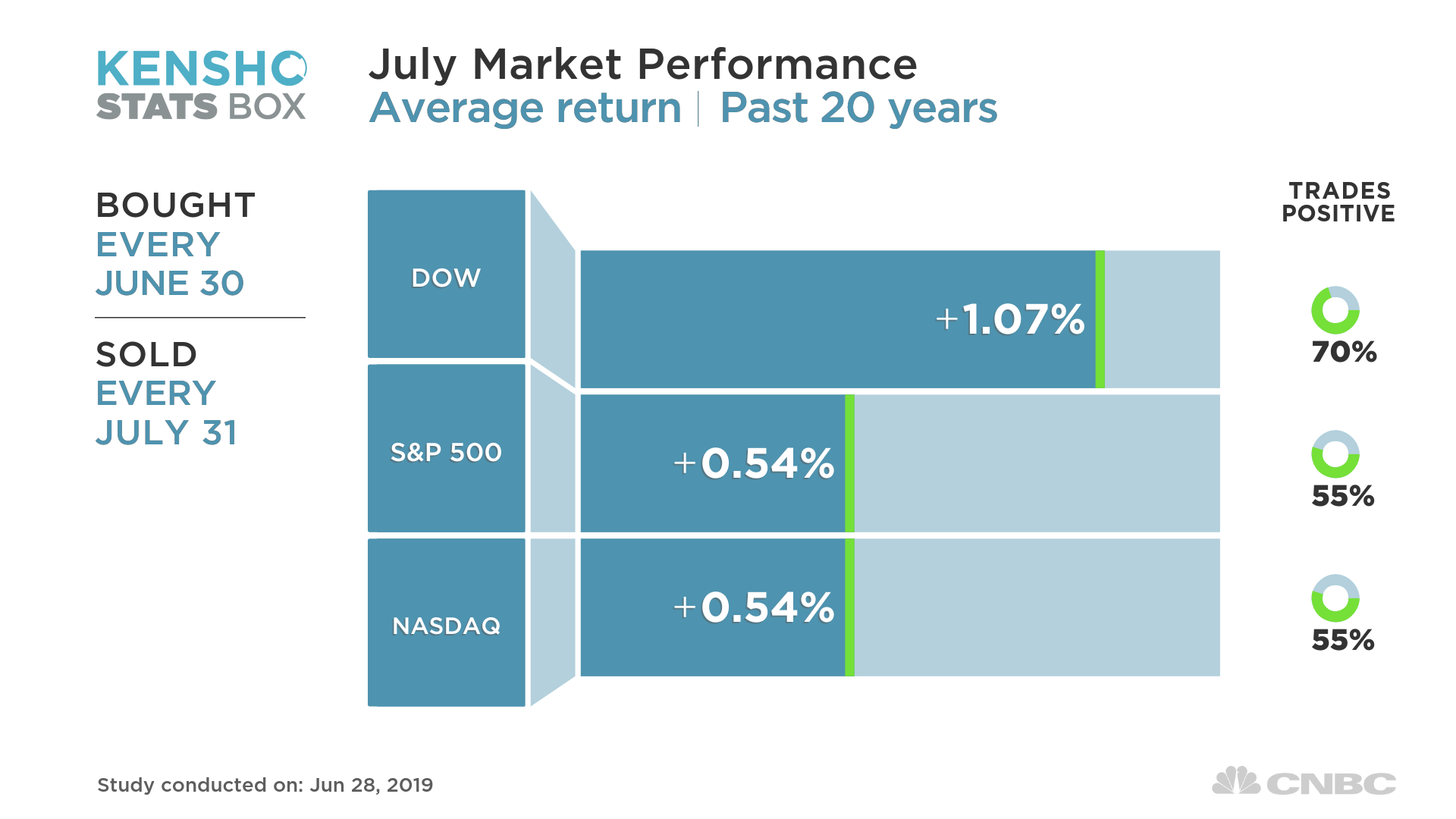
MORE FROM CNBC AND KENSHO
| ||||||||||||||||||||||||||||||||||||||||||||||||||||||||||||||||||||||||


Post a Comment