| This is Bloomberg Opinion Today, a time machine of Bloomberg Opinion's opinions. Sign up here. The green technology we really need right now is a time machine to take the whole Earth into the future, like how Superman reverses time to (spoiler alert) save Lois Lane, except in reverse. Meaning forward. I will not be reading your emails about the physics, which definitely make sense and which I definitely do understand. Renewable energy sources can still help us avoid the worst climate disasters, and the faster we adopt them, the more efficient and cheaper they get, write Oxford's Eric Beinhocker, J. Doyne Farmer and Cameron Hepburn. Instead of studying time travel like I did at Oxford (I have never been to Oxford), they discovered Moore's Law and Wright's Law apply to green tech the same way they apply to computer chips and such. Fun fact: They do not apply to fossil fuels, which are just as inefficient and expensive as they were 100 years ago. So fossil fuels are bad, paleo fuels. But they are also highly available fuels. That makes them important while we transition to the greener stuff. This is where the time machine would come in handy. We could, of course, just transition more quickly, as the Oxford trio suggests and as President Joe Biden's spending plan would do. But that requires political will, and have you seen our politics lately? Meanwhile, relying on fossil fuel for the transition keeps exposing people to shortages and price spikes. This in turn causes politicians to do desperate, knee-jerk stuff to energy prices, the net effect of which is to make decarbonization even more difficult, writes Liam Denning. It's one of the few things California, Texas and the United Kingdom all have in common, aside from a (basically) shared language and love of fried foods. The latter country is suffering its own energy crisis, with high gas prices and vanishing supply just ahead of winter. It has responded by hunkering down over its precious price caps and supplier bailouts, as one does. Therese Raphael suggests the U.K. needs a more fundamental reboot of its whole energy metaverse. But that requires political will, and have you seen our politics lately? So at some point consumer bills will rise, and consumers will blame green energy, and time will move backward instead of forward. Liam suggests a better way is to subsidize the consumers rather than the gas suppliers, to help smooth this changeover and offer saner incentives. If you don't have a time machine, money is often a good substitute. Bonus Biden Spending Bill Reading: When watching Democrats bargain, don't mistake negotiating stances for disarray. — Jonathan Bernstein The new Cold War could be won like the old Cold War, with economics and diplomacy. In both cases, the U.S. seems to have the upper hand over China, though it's a shaky hand. The newly launched AUKUS Coalition for Selling Submarines and Annoying the French is a sign of America's diplomatic strength, writes Minxin Pei (though the U.S. should probably stop annoying the French). Such alliances will make it impossible for China to win an arms race with the U.S. If it wants to avoid the Soviet Union's fate in that losing game, it needs to start playing nicer with its neighbors. Meanwhile, China's economy is not only slowing down but also teetering on the edge of a financial crisis. And China's neighbors are banding together in a new and improved CPTPP (now with more letters!), which promotes higher trade standards and could cause problems for China. So China is trying to jump into the CPTPP, likely hoping to poison it just as it poisoned the WTO, writes Mihir Sharma. If the U.S. wants to stop this, and make some new friends in the process, it should join the CPTPP. As we always said back at Oxford (we didn't), it's all about the acronyms. Bonus Great-Power-Struggle Reading: Latin America can't just be a pawn in this Cold War. — Shannon O'Neil The Fed yesterday signaled a plan to slow down its bond-buying next month and maybe start raising interest rates next year. Jay Powell played it off as if the Fed wasn't all that worried about inflation, but the Fed's latest "dot plot" betrayed him, writes Brian Chappatta, by suggesting rate hikes sooner than expected. This could be a problem for markets. For now, John Authers writes, the Fed has managed to signal a bond-buying taper without freaking out traders, which is an accomplishment. (Though rates have since jumped a little, Brian Chappatta notes.) But between the (still happening!) pandemic, supply-chain disruptions, the return of "Tiger King" and other uncertainties, the Fed must brace for even more surprises than usual, writes Bloomberg's editorial board. A dearth of jobs and a surfeit of crime mean New York City's full comeback is still a long way off, writes Justin Fox. 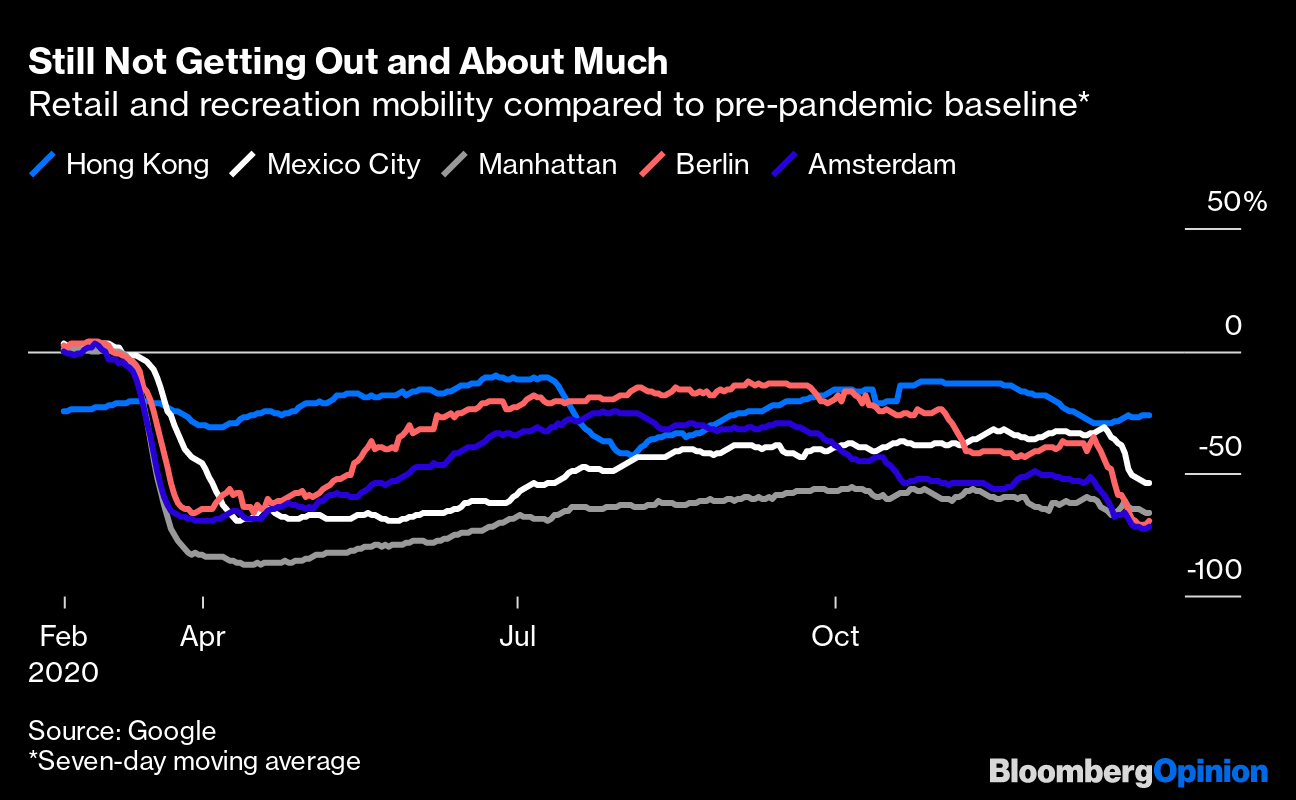 Evergrande has always been bad, but its political savvy has kept it from being brought to heel. — Shuli Ren Disney is now in cahoots with sports gambling. Will it sully the brand's rep? — Tim O'Brien Wells Fargo winning a CDO lawsuit is also a win for sensible fraud laws. — Stephen Carter Russia's sham election highlights the limitations of tech to protect democracy. — Leonid Bershidsky Sudan's fragile democracy hangs by a thread after a failed coup. The world must send money. — Bobby Ghosh The metric system's future is shaky in post-Brexit Britain. — Stephen Mihm U.S. household net worth hit a record. Arctic oil and gas production is booming. Microdrip irrigation could revolutionize farming. Today's the last day to enter our "guess four-sixths of the average" contest. Check out the rules here, and then submit your entry here. Kids (and some adults) may hate broccoli because of their microbiomes. (h/t Ellen Kominers) Lab-grown meat may be too expensive to ever replace the natural kind. Platypuses are weird because they have weird genes. Our brains exist in a state of controlled hallucination.  Notes: Please send broccoli and feedback to Mark Gongloff at markgongloff@bloomberg.net. Sign up here and follow us on Twitter and Facebook. | 






Post a Comment