| In this week's edition of the Covid Q&A, we look at the impact unvaccinated people are having on the pandemic. In hopes of making this very confusing time just a little less so, each week Bloomberg Prognosis is picking one question sent in by readers and putting it to experts in the field. This week's question comes to us from Robert in Northridge, California. Robert asks: I've heard that the longer we have unvaccinated people around, the likelier it is that a new Covid variant will develop that resists vaccines. Is this true?
The number of unvaccinated Americans is certainly a major public health concern. According to the Centers for Disease Control and Prevention, about 25% of U.S. adults are still unvaccinated, and many are clustered in regions where inoculation rates are especially low. Those clusters can easily become hot spots because they give the virus so many vulnerable hosts to attack. Indeed, that's what we've seen recently as cases skyrocketed in especially undervaccinated states like Louisiana and Arkansas.
As Christopher Martin, a professor of public health at West Virginia University, explains it, these undervaccinated pockets create more opportunity for the virus to mutate.
"Large numbers of unvaccinated people do make variants more likely," he says.
The virus that causes Covid-19 replicates only when inside a human host, and it does so by hijacking our cellular machinery to make more copies of itself instead of more copies of human cells. But that process is messy, and mistakes in the genetic code occur frequently as the virus copies itself. Those mistakes often result in mutations that create slightly different versions of the invading pathogen. "If any one of these random errors confers an advantage to that virus, such as making it more contagious like delta, that variant can quickly become the dominant one circulating in the population," says Martin. 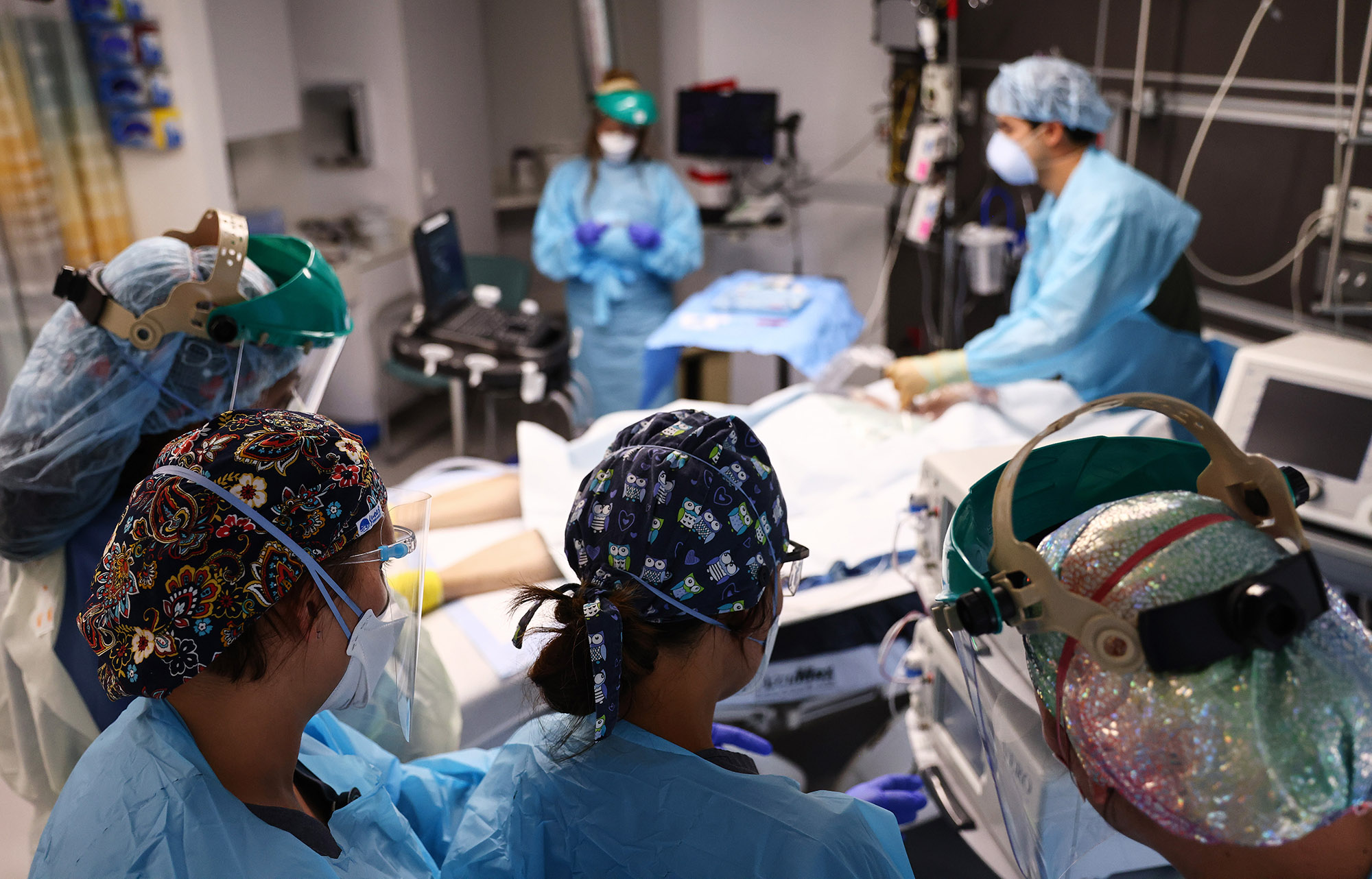 Clinicians work with a Covid-19 patient at Lake Charles Memorial Hospital in Louisiana, an under-vaccinated state that's been coping with a surge fueled by the delta variant. Photographer: Mario Tama/Getty Images Martin explains that because our world is so interconnected, variants can spread quickly. The delta version, for example, was first identified in India in late 2020 and in the U.S in early May (though it was likely here earlier). By July it was accounting for 80% of new U.S. Covid cases. Even as delta drives the current surge in the U.S., there are four other variants scientists are concerned about.
"More are to be expected so long as the virus is circulating widely," says Martin. And though the coronavirus does appear to be infecting vaccinated people as well in greater numbers than we expected, the unvaccinated are still far more likely to contract and spread the disease. "Each of us remains at risk so long as there are large numbers of unvaccinated people anywhere in the world," Martin says. Thanks to all of you for writing in this week! Next Sunday, we'll be answering the best question we receive again. So if you have any, we want to hear from you. Write to us at CovidQs@bloomberg.net—Kristen V. Brown | 



Post a Comment