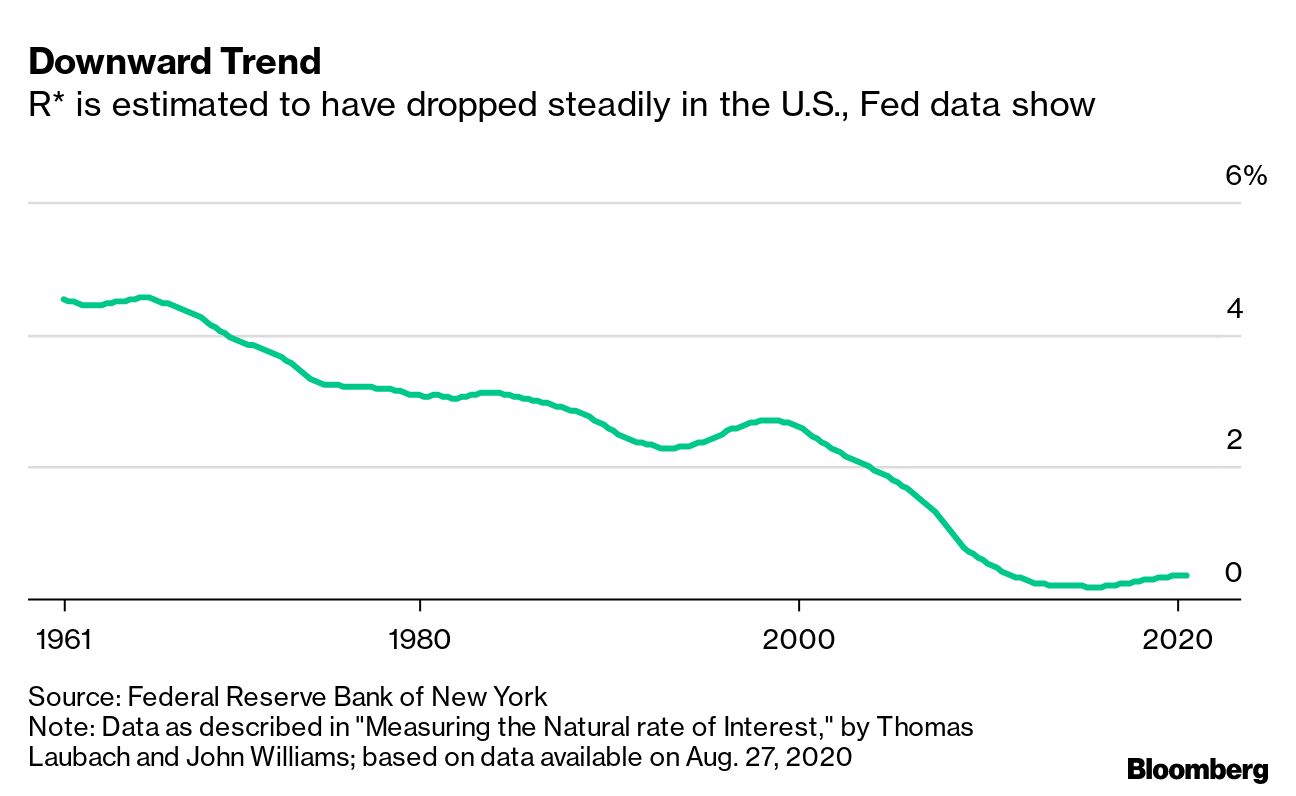
| Hello. Today we look at whether underlying economic shifts unleashed by the pandemic might mean monetary policy is looser than generally thought, warnings for Chinese President Xi Jinping and trends in American mortality. Economic chaos inflicted by the pandemic has been plain to see, but could the disruption it caused beneath the surface be even more profound? That's a question for global central bankers to puzzle over as they try to assess how the crisis has impacted their monetary policy bearings. Economists including Kristin Forbes at the Massachusetts Institute of Technology are wondering if one repercussion of the coronavirus might be an increase in advanced economies' neutral level of interest rate — the setting at which growth is neither stimulated nor constricted. As we explain here, a sudden shift toward digitization, a wave of innovation, structural labor-market changes, massive fiscal stimulus, and a wholesale return of risk appetite could all conspire to lift that equilibrium point, sometimes referred to as R*. That would mark a major reversal. Economists including New York Federal Reserve President John Williams have long judged the rate to have plummeted since the turn of the millennium, citing forces such as demographics or productivity growth. If it has drifted higher, that would mean central banks' already ultra-easy monetary policy is looser than generally thought. Such an outcome could have significant consequences. Officials might need to repeatedly raise interest rates in due course to brake the economy. And they could also misjudge how stimulative their stance is — opening the door to an enduring bout of inflation. Whether such analysis holds is something economists are likely to debate for years. They struggle even to agree on how to measure the rate, and there's little consensus either on the forces that drive it. One Fed maker even resorted to the Star Wars analogy of "the phantom menace" to describe it. In sum, where R* lies is a fundamental question for global economies. Just don't expect a definitive answer. — Catherine Bosley & Craig Stirling 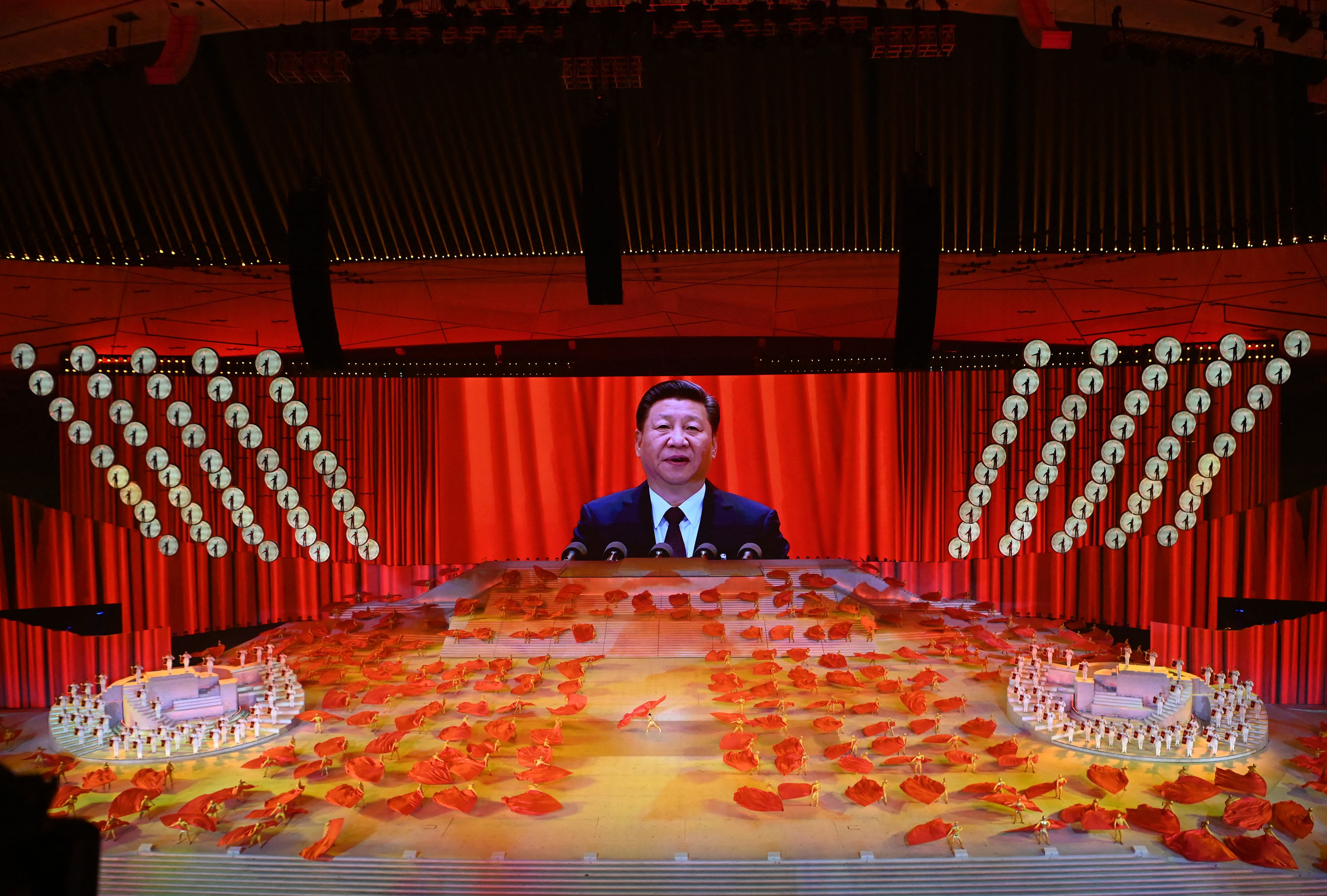 Photographer: NOEL CELIS/AFP Photographer: NOEL CELIS/AFP As Chinese President Xi Jinping ratchets up his regulatory assault, some big names in global finance are warning of dire consequences. Pascal Lamy, who has long talked about the negative effects of U.S. efforts to "decouple" elements of its economy from China's, said political trends there could stall the country's push to increase exports of digital services, potentially trapping it in "middle income" status. Read his interview here. George Soros criticized BlackRock's China push as a risk to clients' money and U.S. security interests, in the billionaire financier and philanthropist's latest broadside against investment in the world's second-largest economy. Soros said BlackRock appeared to misunderstand Xi, whose administration he said regarded all Chinese companies as "instruments of the one-party state." Read that story here. Click on the blue links to read any of the stories in full: - Harder path | Goldman Sachs economists revised down their forecast for growth in the U.S. economy this year, pointing to a "harder path" ahead for the American consumer than previously anticipated. Meanwhile deepening Democrat divisions threaten to hurt the chances of President Joe Biden managing to pass his $4 trillion economic agenda through Congress.
- Tax row | U.K. Prime Minister Boris Johnson will announce his long-awaited plan to reform social care on Tuesday, risking a major row with his own party over a potential tax rise that could hit young people hardest.
- Record trade | China's export growth unexpectedly surged in August as suppliers likely boosted orders ahead of the year-end shopping season, offsetting any port disruptions due to fresh outbreaks of the delta virus.
- German warning | Investor confidence in the German economy declined to the lowest in 1 ½ years after infection rates and global supply disruptions worsened, threatening to hurt Europe's strong recovery.
- Tightening belts | Japanese households cut spending for a third month in July as a renewed state of emergency over the virus kept consumers cautious and likely pushed back the timetable for a more robust economic recovery.
- Australia taper plan | The central bank pushed ahead with a cautious winding back of its bond-buying program, underlining its confidence in the economy's recovery prospects once a virus wave abates.
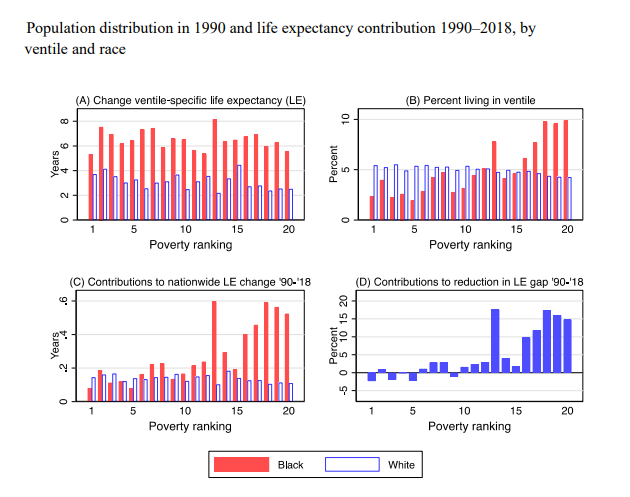
If improvements in mortality rates of White and Black Americans had continued at the 1990-2012 rate, the racial gap in life expectancy would have closed by 2036, according to new research published by the National Bureau of Economic Research. Although there is a large gap between Black and White American life expectancy, it fell 48.9% between 1990-2018, mainly due to mortality declines among Black Americans Instead, life expectancy for both Black and White Americans plateaued or slightly declined after 2012. The stalling was most evident among Black Americans even prior to the Covid-19 pandemic.
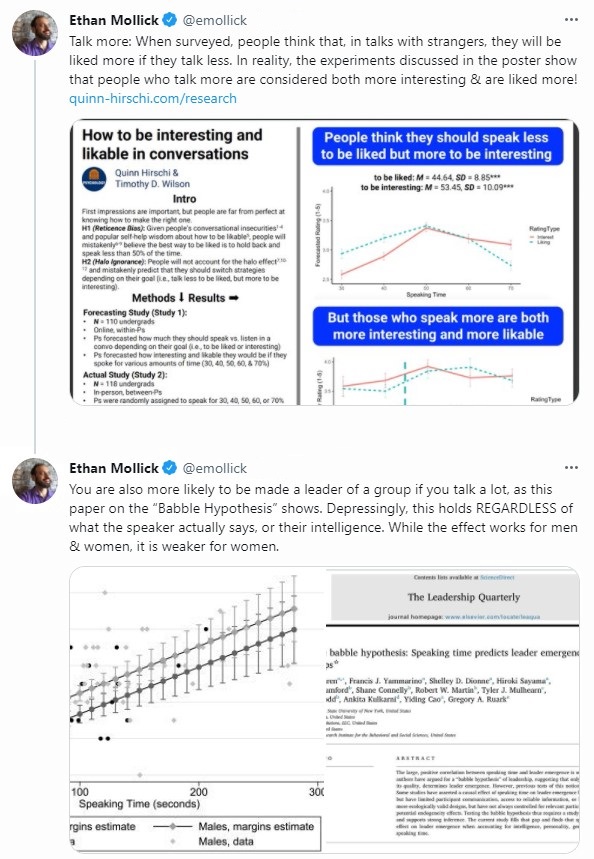
Read the full research here. Something to talk about… Read more reactions on Twitter - Click here for more economic stories
- Tune into the Stephanomics podcast
- Subscribe here for our daily Supply Lines newsletter, here for our weekly Beyond Brexit newsletter
- Follow us @economics
Bloomberg New Economy Conversations — China's Tech Crackdown: Join New Economy Forum Editorial Director Andrew Browne on Sept. 8 as he analyzes the sweeping regulatory crackdown underway in China. The private sector helped power China's economic rise, but President Xi Jinping seems determined to rein in what he sees as its excesses. Is this transitory or a game-changing shift? Joining Andy are Keyu Jin, Associate Professor of Economics at the London School of Economics & Political Science, and Kevin Rudd, President and Chief Executive Officer of the Asia Society. Register here. | 


Post a Comment