| This is Bloomberg Opinion Today, a packed stadium of Bloomberg Opinion's opinions. Sign up here. Nobody wants to declare premature victory in the war against Covid. Then again, you also don't want to be that last soldier stuck on an island (your living room) refusing to believe the war ended long ago. Covid-19 is apparently never going away, but there will come a day when it has been domesticated enough that "normal" life resumes, for a given value of normal. For some vaccinated people, this has already happened. There was widespread freaking-out this weekend over college football stadiums filled to capacity with people cheering, Jumping Around and welcoming Sandman. But many of those people were vaccinated. And Cathy O'Neil points out vaccines really are still very effective at preventing bad Covid outcomes, even with the delta variant. We're just buried in so many terrifying headlines and weird data that this message gets lost. Some of the scariest news has involved Israel, the Covid Gallant to much of the world's Covid Goofus, dealing with a new surge in cases despite widespread vaccination. But Zev Chafets points out Israel isn't really freaked out about this because the vaccinations are keeping breakthrough cases — which are still very rare — from being too awful. The hospitals aren't stressed, and people are mostly going on with their lives. (Shanah tovah 5782, by the way.) Back in the States, delta has caused many big employers to postpone September return-to-office plans until January. But Justin Fox points out that, if going back to work is too risky in September, then why would it be any better in the dead of winter? Between vaccinations and Covid protocols that responsible employers should already have in place, this may be as good a time as any for offices to reopen. At some point, hiding out on your island/living room goes from being a winning strategy to a losing one. Bonus Pandemic Reading: It seems possible infections offer stronger immunity than vaccinations. But they're not worth the risk. — Faye Flam Some of the people who might succeed Angela Merkel have vowed to cap speeds on Germany's Autobahn, in an effort to curb carbon emissions. This may not sound like fahr'n, fahr'n, fahr'n, but Chris Bryant writes slower traveling, either by road or by sea, really does help the planet. Until we electrify everything, we're going to need lower speed limits everywhere. And if you miss out on the thrill of the Autobahn, you can easily replicate the experience by hopping on, say, New Jersey's Garden State Parkway somewhere around Exit 130 and driving north for a while. Unfortunately, electrifying all the cars could take a long time, given how stubborn incumbent technologies can be. For example, Liam Denning points out the tractor took much longer than expected to supplant one of our stubbornest pieces of technology, the mule. It basically took a societal transformation to get all of America's farmers on John Deeres, and the same sort of thing may need to happen to get all of America's drivers in EVs. The Taliban unveiled Afghanistan's new government today, including an interior minister who the U.S. government accuses of being a terrorist. That could get things off to an awkward start, but it's not the worst of the new government's problems. Former Afghan central bank governor Ajmal Ahmady points out the country was in economic trouble even before the Taliban takeover. Now it will be under sanctions and much more isolated from the rest of the world. It can't even print its own money. Maybe it can get some help from Turkey, which seems eager to win influence in the country, Bobby Ghosh points out. President Recep Tayyip Erdogan is already pushing to provide the muscle around the airport in Kabul. This could help Erdogan keep refugees out and build his standing with the rest of the world. The Taliban, Pakistan and other regional influencers may have other ideas. Don't mistake temporary spikes in fossil-fuel prices for a sign they're winning the argument with clean energy, writes David Fickling. It really means they're just suffering temporary supply imbalances. In fact, their very price volatility is exactly what makes them undesirable for power suppliers. 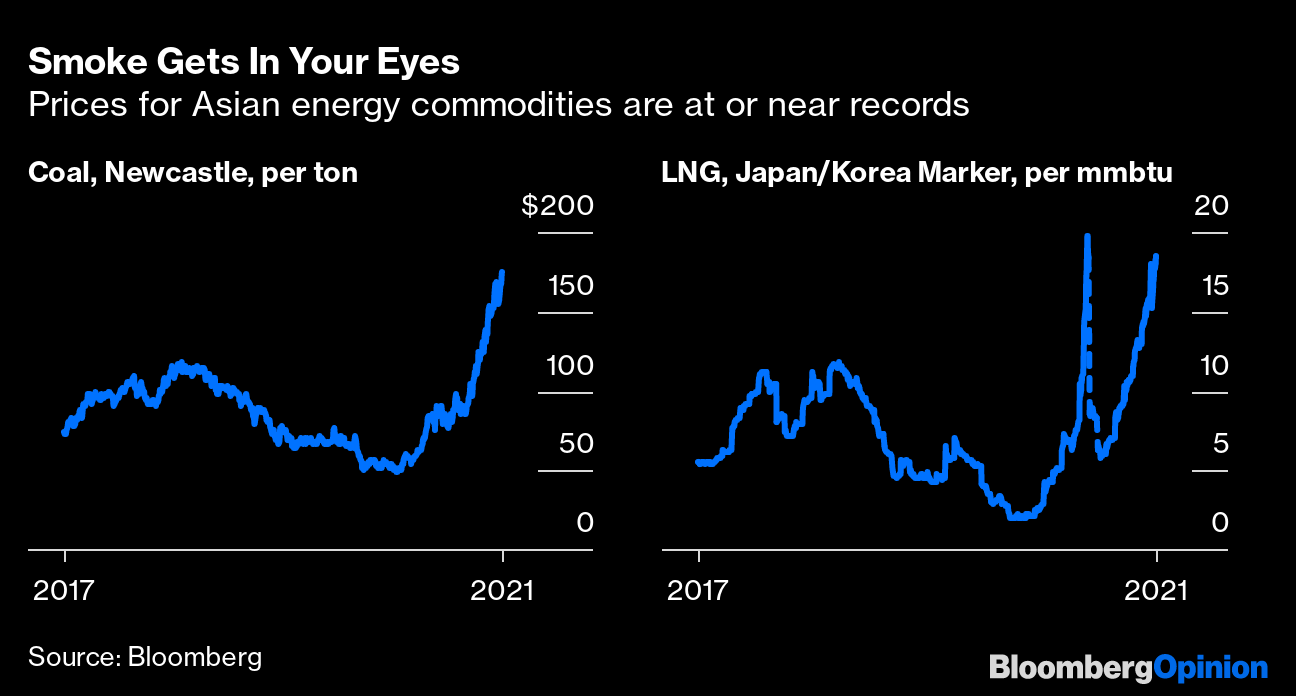 Similarly, OPEC shouldn't think oil prices will keep rising forever, letting it raise production indefinitely, writes Julian Lee. Very soon it will have to think about cutting production again, with all the intra-OPEC agita that brings. 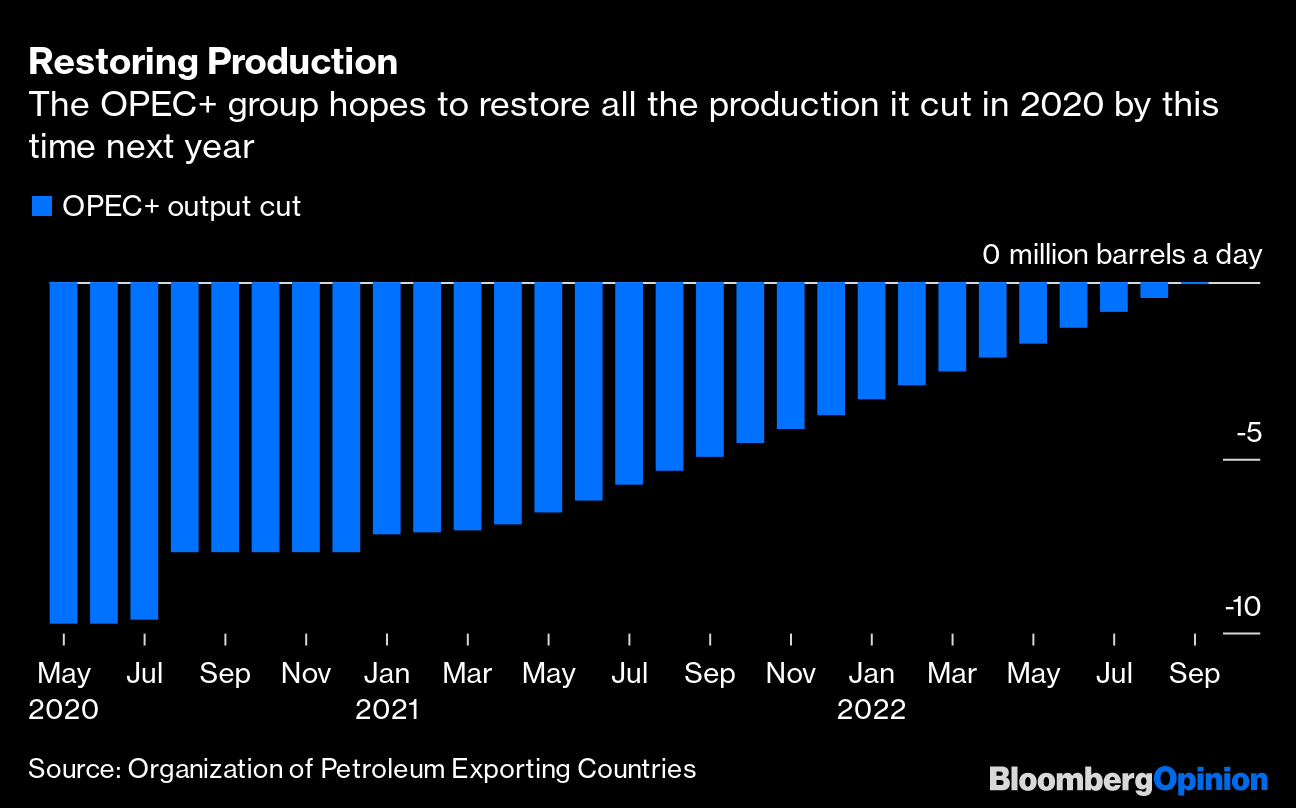 Gerrymandering is as repressive and undemocratic as any GOP voter-suppression tactic, but Democrats aren't fighting as hard to end it. — Bloomberg's editorial board Cops don't deserve qualified immunity. But in today's climate, they'll probably get to keep it. — Ramesh Ponnuru By asserting Communist Party authority over the economy, Xi Jinping could doom China to middle-income purgatory. — Matthew Brooker Guinea is falling prey to the resource curse, but its instability means it can't even benefit from its resources. — Clara Ferreira Marques and David Fickling Decentralized finance means regulators can't protect investors from every possible risk. Now they must educate. — Nir Kaissar If you're nearing retirement and sell your house for a huge profit, here's what to do with the money. — Alexis Leondis The U.S. hit 75% of adults with one vaccine shot. Bitcoin's having a day. Americans are less likely to work well into their 60s. RIP, Michael K. Williams. Pro tip: When setting a voicemail message for your business, edit out the curse words. (h/t Scott Kominers) Now you can browse the world's oldest web pages. Brain-machine interfaces keep getting more comfortable. Area billionaire plans to build a new city in the desert.  Notes: Please send voice messages and complaints to Mark Gongloff at mgongloff1@bloomberg.net. Sign up here and follow us on Twitter and Facebook. | 


Post a Comment