| Hello. Today we look at how central banks are taking a cautious stance when it comes to dialing back their bond buying, China's campaign to tame "disorderly" capital and inequality in American housing. Central banks in advanced economies are tapering the taper. As the delta variant of the coronavirus dampens the global economic outlook, monetary authorities are dialing back their plans to slow bond purchases or announcing surprisingly cautious moves to do so. "The lady isn't tapering," was European Central Bank President Christine Lagarde's spin on her plans to slow the pace of bond purchases in the final quarter. She described the ECB's decision as "a recalibration of the pandemic emergency purchase program for the next three months." Earlier in the week, Reserve Bank of Australia Governor Philip Lowe was forced to defer a planned November review of his bond purchase pace and pledge to keep buying at A$4 billion ($3 billion) a week until mid February. The decision "reflects the delay in the economic recovery and the increased uncertainty associated with the Delta outbreak," he said. As for the U.K., the central bank's eight-member committee is tied four-all as to whether the criteria has been met for tightening policy. While Bank of England Governor Andrew Baily is among those who think it has, he also acknowledged on Wednesday that the pace of the economy's rebound is plateauing as the spread of delta takes a toll. Meantime, the Bank of Canada released guidance for the first time on how it plans to eventually reduce monetary stimulus, saying it will first raise interest rates before curbing its holdings of government bonds. All of that follows those disappointing August payroll numbers that are all but certain to push Federal Reserve policy makers to delay considering a move to scale back asset purchases at their Sept. 21-22 meeting.
By contrast, some emerging markets are hiking interest rates. Peru did so by the most since 2010 on Thursday, while Russia is set to do so on Friday for a fifth straight meeting. Still, Bloomberg Economics nowcasts have taken a hit from delta too.
They show the world economy on track for a 5.7% annualized expansion in the third quarter, down from 7.4% in the reading a month ago. "We're not at panic stations - the data is pointing to a softer recovery not a reversal," said economist Bjorn Van Roye. "Still, the latest nowcast readings are a reminder that the virus remains a significant, negative, and hard to predict variable impacting the outlook,"
For the developed world's central banks, delta is delaying — though not yet derailing — their taper plans. — Malcolm Scott  Photographer: Andrea Verdelli/Getty Images AsiaPac Photographer: Andrea Verdelli/Getty Images AsiaPac Chinese President Xi Jinping's regulatory crusade is all about taming the "disorderly expansion of capital." That phrase has appeared five times in documents directly connected with Xi, according to a Bloomberg News review of nine years of the leader's speeches and meetings, with all mentions coming in the past 10 months. Dan Wang, chief economist at Hang Seng Bank China, suggests reviewing China's five- and 15-year plans to determine where capital expansion is encouraged. "Money flowing into sectors such as advanced manufacturing, new energy, new material, is not considered disorderly at all," she said. Read the full story by clicking here. Click on the blue links to read any of the stories in full: - Selling shares | Presidents of the Fed banks of Boston and Dallas said they are selling their individual stock holdings by Sept. 30, in moves aimed at quenching ethical concerns over their trading activity last year.
- New tools | China's central bank is increasingly making use of one of its lesser known policy tools to support the economy, a move that analysts say suggests less need for broad policy action like rate cuts.
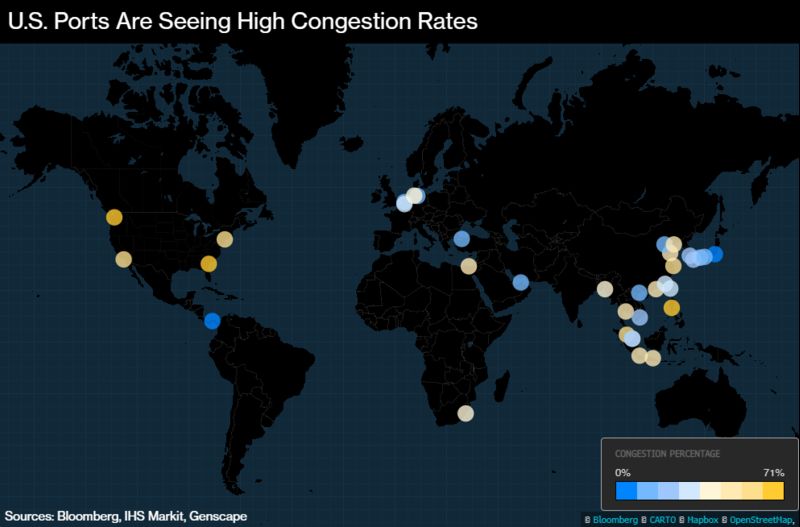
- Port congestion | The number of container ships waiting to enter America's top three ports have been on a steady rise since July, according to a Bloomberg index tracking port congestion globally.
 - South Africa deal | A debate is building over whether and how to swap debt relief for progress towards global climate goals.
- No austerity | France set out a plan to tackle its Covid-19 debt mountain by relying on investment to fuel stronger economic growth, resisting any temptation to raise taxes to repair its public finances.
- Change at the top | Sri Lanka's central bank Governor Weligamage Don Lakshmanwill step down Sept. 14 as the nation faces a deepening forex crisis that threatens its ability to import goods as well as service debt.
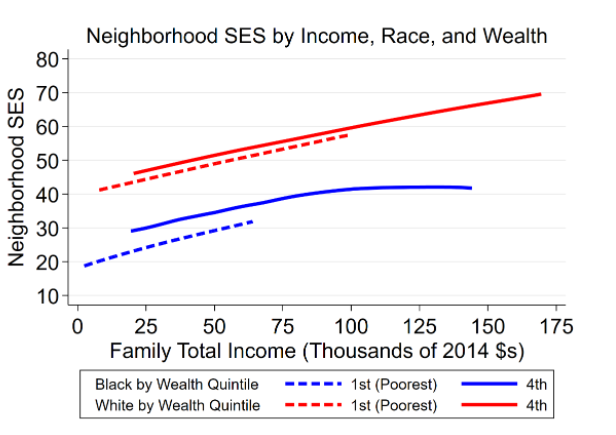
Some wealthy Black families still live in U.S. neighborhoods with relatively low incomes and high rates of unemployment, suggesting other factors such as housing discrimination are at play, according to a Federal Reserve study. Black households with high income and wealth still lack access to "opportunity neighborhoods," which have good schools and an abundance of other working professionals, according to a new analysis by the Federal Reserve Bank of Cleveland. Black families live in neighborhoods with a considerably lower socioeconomic status than their White peers at each level of income distribution, the report said.
Read the full story by clicking here. Read more reactions on Twitter - Click here for more economic stories
- Tune into the Stephanomics podcast
- Subscribe here for our daily Supply Lines newsletter, here for our weekly Beyond Brexit newsletter
- Follow us @economics
The fourth annual Bloomberg New Economy Forum will convene the world's most influential leaders in Singapore on Nov. 16-19 to mobilize behind the effort to build a sustainable and inclusive global economy. Learn more here. | 







Post a Comment